Rust for C++ Developers - What You Need to Know to Get Rolling With Crates
Explore Rust's advantages over C++ for safe, concurrent programming. Learn about ownership, enums, traits, and using external packages to write elegant code.
Writing Allocation Free Code in C#
Explore techniques for writing allocation-free C# code, focusing on structs, Span, and memory optimization to enhance performance without sacrificing readability or maintainability.

Introducing Jak - Safely Share Sensitive Files via Git
Learn about Jak, a tool for securely sharing sensitive files through Git, including its features, demo, and lessons learned during development.
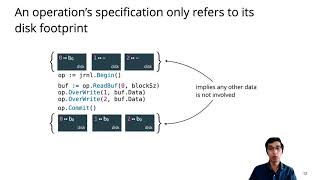
GoJournal - A Verified, Concurrent, Crash-Safe Journaling System
Explore GoJournal, a verified concurrent journaling system for storage applications. Learn about its implementation, performance, and the challenges overcome in its development and verification process.
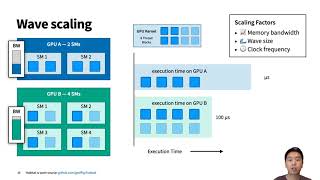
Habitat - A Runtime-Based Computational Performance Predictor for Deep Neural Network Training
Explore a runtime-based technique for predicting GPU performance in deep neural network training, aiding cost-efficient hardware selection for researchers and practitioners.
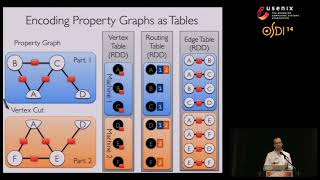
GraphX - Graph Processing in a Distributed Dataflow Framework
Explore GraphX, a graph processing framework built on Apache Spark, offering performance comparable to specialized systems while enabling broader computational capabilities and fault tolerance.
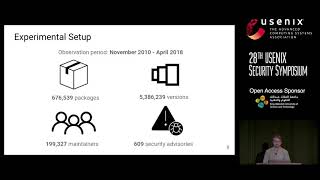
Small World with High Risks - A Study of Security Threats in the npm Ecosystem
Analyzes security risks in npm ecosystem, revealing vulnerabilities due to dependencies, maintainer influence, and lack of maintenance. Discusses potential mitigations for the JavaScript community.
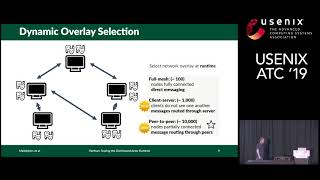
Scaling the Distributed Actor Runtime - PARTISAN
Presentation on PARTISAN, a runtime system for actor applications offering improved scalability and reduced latency through dynamic overlay selection, named channels, and affinitized parallelism.
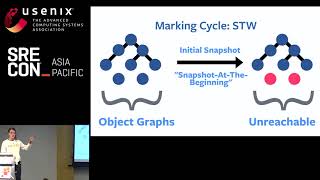
Tuning Java's G1 Garbage Collector for Realtime Services
Explore Java's G1 Garbage Collector tuning for realtime services, focusing on performance measurement, latency optimization, and effective settings for large heaps.
Let's Build a Distributed File System
Explore the architecture of typical and distributed file systems, including key components and operations. Learn through a simple Python implementation of a basic distributed file system.
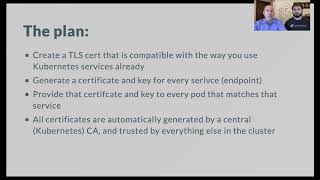
Achieving Mutual TLS - Secure Pod-to-Pod Communication Without the Hassle
Explore secure pod-to-pod communication using Mutual TLS, focusing on certificate management, implementation in Golang and Java applications, and integration with Kubernetes for streamlined security.
Take Me Down to the Paradise City Where the Metric Is Green and Traces Are Pretty
Explore OpenTelemetry for cloud-native observability, including its APIs and SDKs. Learn how to implement traces and metrics in Java and Go, with practical examples and insights on framework stability.
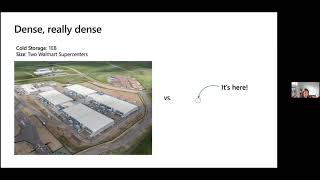
DNA Data Storage and Near-Molecule Processing for the Yottabyte Era
Explore DNA data storage and near-molecule processing for the yottabyte era, including encoding, decoding, random access, and potential for hybrid electronic/molecular computing systems.
How Your E-book Might Be Reading You - Exploiting EPUB Reading Systems
Uncover security vulnerabilities in e-book reading apps through analysis of EPUB format, revealing potential privacy risks and exploitation techniques across various platforms and devices.
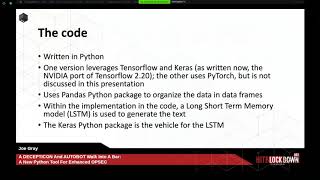
Python for Enhanced OPSEC
Python-based tool for enhancing OPSEC by autonomously posting on social media, using NLP and ML to mimic user behavior. Ideal for those needing to abandon targeted accounts without alerting adversaries.
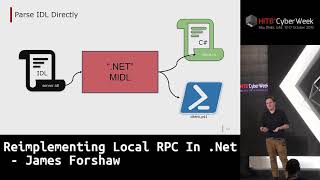
Reimplementing Local RPC in .Net
Reimplementing Windows RPC in .NET for privilege escalation, covering ALPC implementation, NDR parsing, and PowerShell integration. Includes bug discovery and tooling demonstration.
Unstructured Data Is the New Gold - ML + NLP Is the New Shiz
Explore machine learning and natural language processing for cybersecurity intelligence, leveraging unstructured data from social media and online sources to gain an edge in threat identification.
CSP Oddities
Explore Content Security Policy intricacies, common pitfalls, and innovative solutions. Learn to deploy effective CSP policies and discover potential vulnerabilities in web application security.
Exploiting Zoom on MacOS
Exploración detallada de una vulnerabilidad de ejecución remota de código en el cliente Zoom para macOS, incluyendo técnicas de ingeniería inversa y explotación aplicables a otras aplicaciones.
Overcoming Fear - Reversing With Radare2
Comprehensive guide to reversing with Radare2, covering installation, basic commands, visual modes, configuration, and practical applications. Suitable for beginners and professionals in computer security.

Hacking in the Far East
Explore security challenges and hacking techniques in Japan, South Korea, and Hong Kong. Gain insights into corporate policies, smart cards, social engineering, and unique cultural aspects affecting cybersecurity in East Asia.