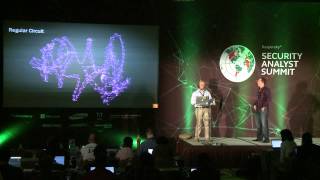
Tracking Internet Threats by Visualizing IP and DNS Data
Visualize IP and DNS data to track Internet threats using innovative techniques like particle physics models and network graphs for enhanced cybersecurity intelligence.
XSS Mitigation - The State of the Art
Comprehensive overview of XSS attacks and modern defense strategies, covering browser-based, server-side, and framework-specific mitigations for web developers and security professionals.
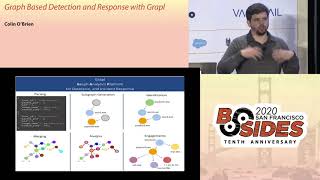
Graph Based Detection and Response with Grapl
Explore graph-based security analytics with Grapl, leveraging Python for powerful attack detection, behavior analysis, and streamlined investigations in complex environments.
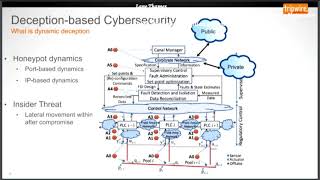
Honeypots 2.0 - A New Twist on Defending Enterprise Networks
Explore dynamic deception at scale using Python's Twisted framework for enhanced network defense, focusing on scalable honeypot technologies and their implementation in enterprise environments.
Introduction to Windows Kernel Mode Debugging
Explore Windows kernel debugging essentials, including symbol servers, BSOD analysis, and live debugging. Learn practical approaches to diagnose CPU issues, deadlocks, and blue screens for improved software security.
Netrepser - A JavaScript Targeted Attack
Explore Netrepser, a unique JavaScript-based espionage tool using freeware utilities for targeted attacks. Learn its techniques, impact, and how it blends into environments for data exfiltration.
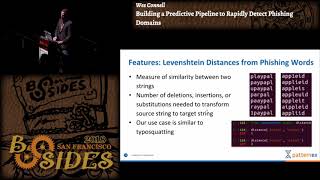
Building a Predictive Pipeline to Rapidly Detect Phishing Domains
Learn to build a predictive pipeline using Python and machine learning to detect phishing domains in real-time, leveraging Certificate Transparency logs and supervised learning techniques.

Two-Faces of WASM Security
Explore WebAssembly's dual nature: its potential for malicious use in sophisticated attacks and the vulnerabilities it introduces, presenting challenges for both users and web developers.
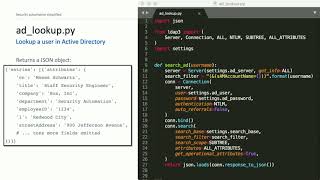
Security Automation Simplified
Practical guide to implementing security automation using existing tools and basic coding, demonstrating how to streamline SecOps processes and save time without relying on expensive products.
How Live Music Is Evolving in a Post-Pandemic World
Explore the evolution of live music in a post-pandemic world, focusing on remote performances, browser APIs, and innovative technologies for distributed musical experiences.
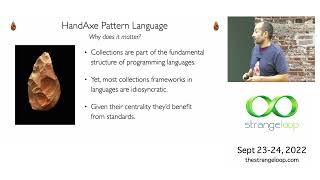
Introducing the HandAxe Collections Pattern Language
Explore a pattern language for designing consistent, composable collection protocols in programming languages, emphasizing clarity and expressive power through rigorous terminology and a unified approach.

Stop Writing Dead Programs
Explore the future of programming with a critical look at current practices and innovative ideas for live programming environments that could revolutionize problem-solving in technology.
Artisanal, Machine-Generated API Libraries
Explore Stripe's journey in automating API library generation across multiple languages, delving into the custom-built compiler tool and valuable insights gained during development.
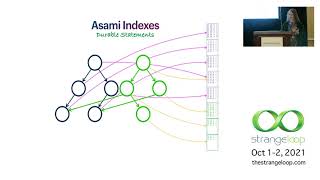
Turn Your JSON into a Graph in 2 Lines
Explore Asami, an open-source graph database with flexible data structures, functional operations, and easy JSON-to-graph conversion. Learn its architecture and novel graph analysis capabilities.
Nim Nuggets - Systems Programming & Metaprogramming Magic
Explore Nim's advanced features for systems programming, metaprogramming, and static introspection through real-world examples and practical applications.
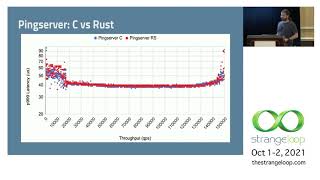
Whoops! I Rewrote it in Rust
Explore rewriting a C caching framework in Rust, discussing performance challenges, benefits of Rust tooling, and new features like efficient TTL sorting and PMEM support.

Functional Composition
Explore music theory through functional programming, building from sine waves to Bach's canon using Clojure and Overtone. Discover how coding and music creation intersect.

Systems That Run Forever - Self-Heal and Scale
Explore architectural principles for building scalable, fault-tolerant systems using isolated parallel components, error detection, and live code upgrades, with insights from Erlang's design.
Pushing the Limits of Web Browsers
Explore advances in virtual machine technology and programming languages shaping web development's future, with insights from a veteran virtual machinist on JavaScript, V8, and Dart.
Fast and Dynamic
Explore the evolution of dynamic language optimization, from Smalltalk to modern JIT compilers, and discover techniques to enhance performance in expressive programming languages.

Visualization Driven Development
Interactive visualizations for understanding algorithms: techniques and examples using HTML, CSS, JavaScript, and D3 to supplement traditional testing and improve code comprehension.