Recreating Forgotten Programming Languages, for Art
Explore the revival of early computer graphics languages, focusing on ART 1's recreation to understand vintage digital art techniques and limitations.
Alda's Dynamic Relationship with Clojure
Explore the intertwined history of Alda music programming language and Clojure, discussing their complex relationship, ZeroMQ, Open Sound Control, and native executable creation.
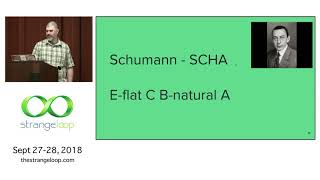
Musical Steganography - Hiding Things in Music
Explore techniques for concealing messages in music, from Bach's compositions to modern digital methods. Learn to apply steganographic principles using TidalCycles and Haskell.
Understanding TypeScript's Structural Type System
Explore TypeScript's structural type system, its benefits for JavaScript development, and how it balances flexibility with type safety through shape-based typing.
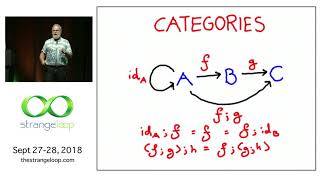
Categories for the Working Hacker
Explore category theory's relevance to developers through Java, Haskell, and blockchain languages. Learn how categories model basic data types and their connection to logic and computing.
A Tale of Two Asyncs - Open Source Language Design in Rust and Node.js
Explore asynchronous programming in Rust and Node.js, comparing language design approaches, technical constraints, and governance models to understand open source language evolution.
Proof Theory Impressionism - Blurring the Curry-Howard Line
Exploring approaches to bridge the gap between proof assistants and production languages, focusing on Rust and its potential for incorporating provable system capabilities.
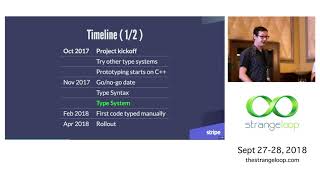
Gradual Typing of Ruby at Scale
Explore Stripe's journey in implementing gradual typing for their large Ruby codebase, including key design decisions and their impact on developer productivity and code quality.
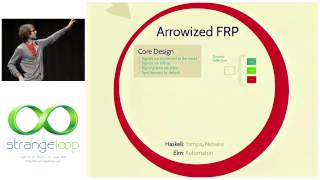
Controlling Time and Space - Understanding the Many Formulations of FRP
Explore diverse formulations of Functional Reactive Programming, their historical and theoretical connections, and how Elm's FRP variation enables features like hot-swapping and time-traveling debugging.
How Developers Can Treat Ovarian Cancer
Explore how developers leverage genomics and bioinformatics to create an evidence-based engine for personalized ovarian cancer treatment, using technologies like Clojure and Neo4J.
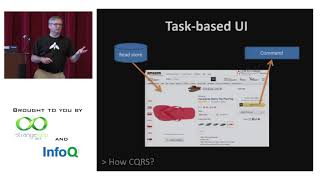
CQRS with Erlang
Explore CQRS implementation in Erlang, highlighting its advantages for distributed systems and eventual consistency. Learn how Erlang's features complement CQRS principles.
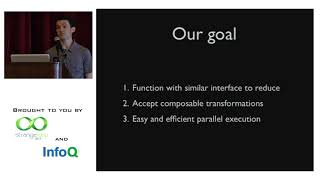
Dissecting Clojure Reducers
Explore Clojure Reducers through live coding, uncovering functional abstractions and performance improvements for parallel solutions. Learn from ground-up implementation and real-world examples.
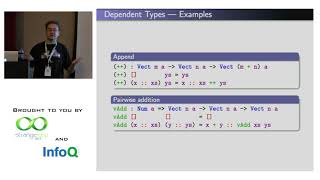
Scala vs Idris - Dependent Types, Now and in the Future
Exploring dependent types in Scala and Idris: current capabilities, limitations, and future possibilities. Demonstrates rich type systems' potential for program verification and static constraint capture in functional programming.
The JavaScript Interpreter, Interpreted
Demystifying JavaScript's core concepts: function objects, prototypes, scope, and 'this'. Gain a clear understanding of the language's interpreter for better vanilla JavaScript programming.
Native Speed on the Web - JavaScript and asm.js
Exploring asm.js: Compiling C++ to JavaScript for near-native web performance. Demos, limitations, and future directions of this approach to optimize JavaScript execution while maintaining compatibility.
Patterns for Scalable Web Services in Go
Explore Go's features and packages for building scalable web services, covering HTTP, JSON, reflection, testing, deployment, logging, and more. Learn battle-ready patterns for production.
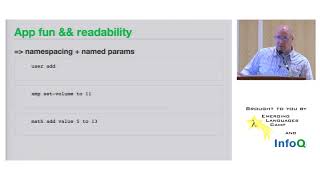
Daimio - A Language for Sharing
Explore Daimio, a new language for secure functionality sharing. Discover architectural possibilities, security techniques, and comparisons to similar systems. Witness practical applications in browser-based projects.
Gershwin - Stack-based, Concatenative Clojure
Explore Gershwin, a stack-based language fusing Clojure and Factor concepts. Learn about its unique features, implementation, and seamless Clojure interop while building a program during the presentation.
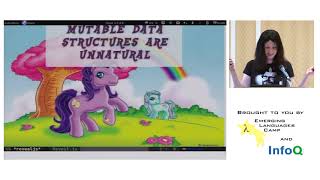
BODOL, or How to Accidentally Build Your Own Language
Explore language design principles and prototype development using functional programming, inspired by Clojure and Haskell. Learn about BODOL, a unique toy language combining Lisp and Haskell features.
Functional Reactive Programming in Elm
Explore Functional Reactive Programming in Elm, a powerful approach for creating interactive web interfaces and games with concise, readable code. Learn key concepts and see live coding of a Mario game.
Rebuilding Optimizing Compiler for Dart
Explore Dart's evolution from dynamic to static typing, its VM architecture changes, and the balance between language design and optimization in this insightful talk on compiler rebuilding.