Making Games for 1920s Hardware
Explore the development of "Hello, Operator!", a game using a 1927 telephone switchboard. Learn about blending old and new tech, hardware challenges, and cross-platform game engine design.
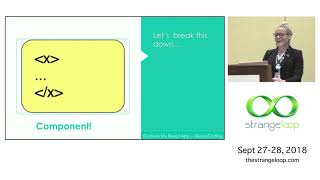
Why I Chose to Modularize the Ducks in My React App
Learn to modularize React and Redux code for better state management, scalability, and maintainability using the "ducks" pattern, illustrated through a TV show ranking app example.
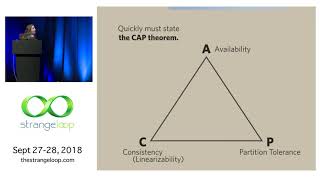
Towards Language Support for Distributed Systems
Exploring language-level solutions for distributed systems challenges, focusing on CRDTs and serverless function compositions to simplify development and enhance reliability.
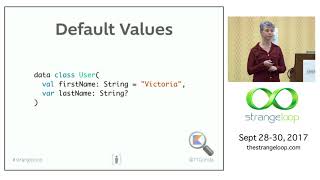
Kotlin - Uncovered
Explore Kotlin's inner workings by decompiling to Java, examining data classes, lambdas, and delegation to gain deeper understanding and tools for further investigation.
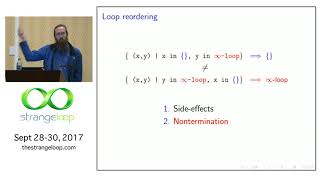
Datafun - A Functional Query Language
Exploring Datafun: a functional query language bridging general-purpose and database languages. Simplifies data manipulation, optimizes queries, and integrates database theory with programming language concepts.
Universal Reason
Explore building universal ReactJS apps with ReasonML, a typed language compiling to JavaScript. Learn language basics, library bindings, and full-stack development for modern web applications.
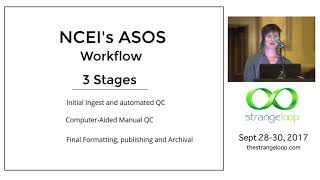
Onyx-Native, Information Flow Models and Scientific Computing
Explore Onyx-Native library for modernizing legacy scientific computing systems, focusing on information flow models and their application to complex, long-lived codebases like NOAA's ASOS Ingest System.
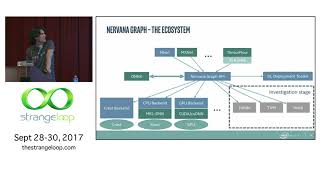
Towards New Deep Learning Abstractions on Top of Existing Frameworks
Explore Nervana Graph, a Python library for efficient neural network implementation across platforms. Learn about its modular design, computational efficiency, and hardware flexibility.
Build Your Child Their Very Own Node.js Frozen Bot
Create a voice-responsive NodeBot using Node.js, robotics frameworks, and Arduino. Learn step-by-step bot creation for customizable functionality.

Changing the Engine in Flight - Rebuilding Monitoring at Scale
Explore real-time data processing architecture for high-traffic monitoring, including distributed systems, Go-based microservices, and Kafka with ElasticSearch. Learn from successes and failures in upgrading monitoring systems.
Point-Free or Die - Tacit Programming in Haskell and Beyond
Explore tacit programming in functional languages, its benefits, drawbacks, and applications. Learn eta-reduction, develop intuition, and examine its use in libraries and specialized languages.
PureScript & Pux - A Safer, More Expressive Way to React
Discover PureScript and Pux: a powerful alternative to Elm for React development, offering gradual adoption, hot reloading, and advanced typing features while maintaining compatibility with existing components.
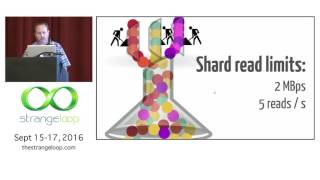
Distributed Commit Log - Application Techniques for Transaction Processing
Explore techniques for leveraging distributed commit logs in transaction processing, including handling duplicates, sharding, exceptions, and debugging in real-time systems.
Relevance of ClojureScript
Explore ClojureScript's relevance in modern web development, comparing its features with ES6 and showcasing code examples to help developers make informed decisions about its adoption.
Specter - Overcome Your Fear of Nested Clojure Data
Discover Specter, a library simplifying manipulation of nested data structures in Clojure. Learn to efficiently query and transform complex data, enhancing code readability and performance.
A History of Programming Languages for 2 Voices
A musical journey through programming language history, exploring parallels between significant developments in coding and recorded music to deepen appreciation for both fields.
Probabilistic Programs Which Make Common Sense
Explore probabilistic programming as a step towards machines with common sense. Learn about Sigma, a language for functional probabilistic models, and its applications in automated reasoning and inference.
Streams - The Data Structure We Need
Explore streams, a powerful data structure, with history, real-world demos, and JavaScript examples. Learn about IO streams, ES6 generators, and current developments to enhance your programming skills.
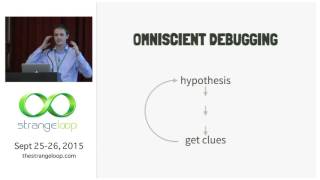
Visualising Program Execution
Explore techniques for visualizing program execution, including generating traces, advanced scaling methods, and practical tools to enhance debugging and programming efficiency.
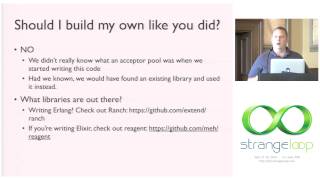
Elixir and the Internet of Things
Explore Elixir's power in efficiently connecting IoT devices, featuring real-world production system examples, OTP behaviors, restart strategies, and Acceptor Pool implementation.
Clojure in Unity 3D - Functional Video Game Development
Integrating Clojure with Unity 3D for game development, enabling REPL-based live coding, optimizing macros, and persistent data structures. Explore new possibilities in AI, logic programming, and game state management.