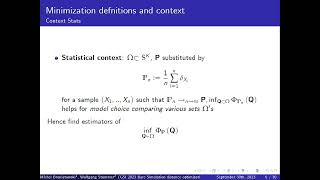
On a Cornerstone of Bare Simulation Distance Divergence Optimization
Explore distance divergence optimization in bare simulation, uncovering key principles and advanced techniques for enhanced computational efficiency.
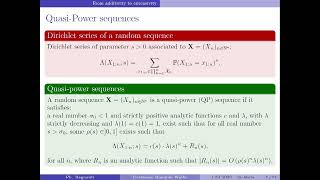
Extensive Entropy Functionals and Non-Ergodic Random Walks
Explore extensive entropy functionals and non-ergodic random walks in statistical physics and complex systems.
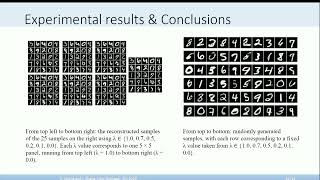
Deformed Evidence Lower Bound (λ-ELBO) Using Rényi and Tsallis Divergence
Explore advanced variational inference techniques using Rényi and Tsallis divergences to optimize the Deformed Evidence Lower Bound (λ-ELBO) for improved probabilistic modeling.
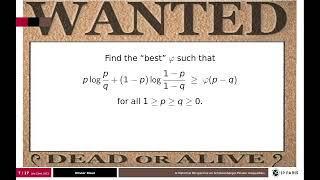
A Historical Perspective on Schützenberger-Pinsker Inequalities
Explore the historical development and significance of Schützenberger-Pinsker inequalities in information theory and probability theory.
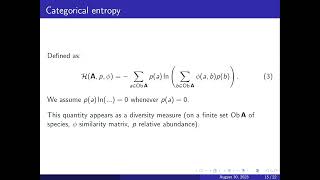
Categorical Magnitude and Entropy
Explore categorical magnitude and entropy concepts, enhancing understanding of data analysis and information theory principles.
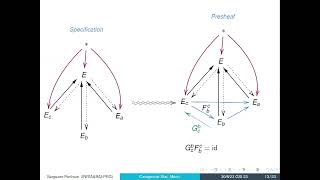
A Categorical Approach to Statistical Mechanics
Explore statistical mechanics through a categorical lens, gaining insights into complex systems and thermodynamic principles.
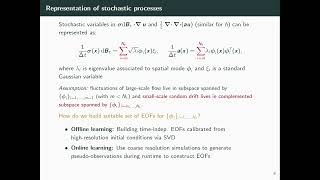
Casimir Dissipation Stabilized Stochastic Rotating Shallow Water Equations on the Sphere
Explore stochastic rotating shallow water equations on the sphere, focusing on Casimir dissipation stabilization techniques and their applications in geophysical fluid dynamics.
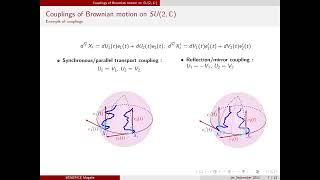
Couplings of Brownian Motions on SU2 and C
Explore couplings of Brownian motions on SU2 and C, delving into advanced mathematical concepts and their applications in stochastic processes.
Finding the Value of Pi from a Random Walk Using Python
Explore Python coding to calculate pi using random walks, from 1D to 3D simulations. Enhance mathematical understanding through practical programming.
Offline Bayesian Estimation - MATLAB Demo
Explore offline Bayesian estimation techniques through hands-on MATLAB demonstrations and practical applications.
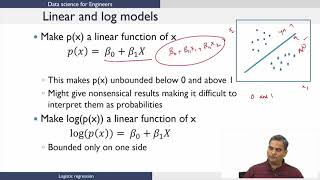
Logistic Regression: Introduction to Binary Classification and Linear Classifiers
Master logistic regression for binary classification, covering linear classifiers, sigmoid functions, parameter estimation, and log-likelihood functions.
Neural Probabilistic Logic Programming in Discrete-Continuous Domains - UAI 2023 Oral Session 1
Explore neural-symbolic AI integration with DeepSeaProbLog, combining logic, probability, and neural networks for discrete and continuous domains. Learn about its semantics, inference, and unbiased learning algorithm.
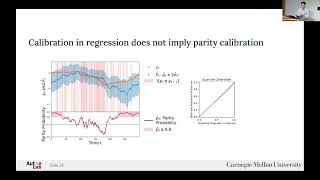
Parity Calibration in Sequential Regression - Forecasting Increase-Decrease Events
Explore parity calibration in sequential regression, focusing on predicting increase-decrease events rather than exact values. Learn its applications in epidemiology, weather forecasting, and nuclear fusion control.
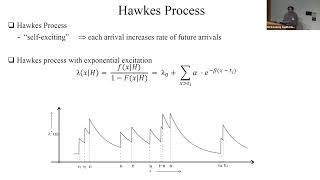
Keep-Alive Caching for the Hawkes Process - UAI 2023 Oral Session 4
Explore optimal caching policies for serverless computing, focusing on Hawkes processes. Learn to balance cache retention costs with miss costs and evaluate performance using simulations and Azure Functions data.
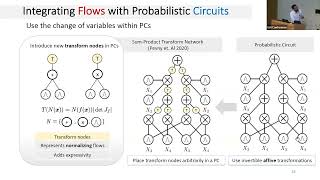
Probabilistic Flow Circuits: Towards Deep Models for Tractable Inference - Oral Session 6
Explore a novel approach combining probabilistic circuits with normalizing flows for enhanced expressivity while maintaining tractable inference in deep probabilistic models.

ME3255 - Evaluating a NYSE Monte Carlo Model
Evaluate a NYSE Monte Carlo model using advanced statistical techniques. Gain insights into financial modeling and risk assessment for stock market analysis.

Combined Stochastic Models for Cancer Patient Trajectories
Integrating diverse clinical data into a unified stochastic model for cancer patient trajectories, combining tumor growth, metastasis, and survival data using Julia for simulation and Bayesian inference.
The CHSH Game - Quantum Computer Programming - Lesson 77
Explore the CHSH Game, a cooperative challenge for separated players using colored coins, in this quantum computing lesson.
Classical Win Probability of CHSH Game - Quantum Computer Programming Lesson 78
Explore the classical win probability limit of 75% in the CHSH Game, a key concept in quantum computing and information theory.
Correlation in Boolean Functions - Quantum Computer Programming - Lesson 32
Explore the concept of correlation between Boolean functions in quantum computing, enhancing your understanding of this fundamental relationship in programming logic.
Machine Learning in the Real World
Explore real-world challenges in IoT and big data, focusing on data quality, precision, and practical considerations before diving into machine learning algorithms.