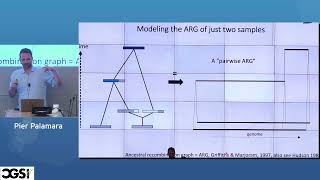
Large-Scale Inference of Ancestral Recombination Graphs for Genealogy-Based Association of Complex Traits
Explore large-scale inference of ancestral recombination graphs and its application in genealogy-based association of complex traits, advancing genomic research and population genetics.
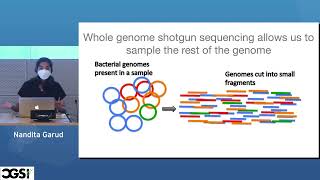
How to Detect Evolution from Microbiome Data
Explore methods for detecting microbial evolution in the gut, examining strain diversity, biogeography, and rapid adaptation. Gain insights into population genetics and its impact on microbiome ecology.
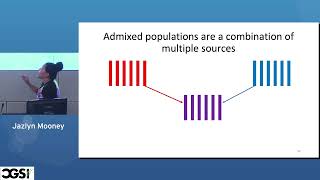
On the Number of Genealogical Ancestors Tracing to Source Groups in Admixed Populations
Explore genealogical ancestry in admixed populations through a mechanistic model. Gain insights into African American history and the impact of the Trans-Atlantic Slave Trade on genetic heritage.
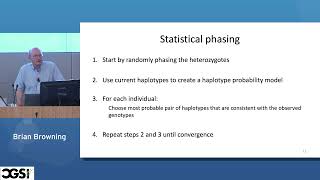
Haplotype Phasing: Methods and Accuracy
Explore haplotype phasing methods and accuracy with Professor Brian Browning. Learn about fast two-stage phasing, integrative estimation, and genotype error impacts on trio-based accuracy.

Sardinia Population History and Complex Trait Variation - CGSI 2022
Explore Sardinia's unique genetic history and its impact on complex trait variation, uncovering insights into population dynamics, selection, and disease risk.
Generating Realistic Chromosome-Scale Simulations for Population Genomics Studies
Explore realistic chromosome-scale simulations for population genomics using advanced tools and techniques. Learn to generate accurate models for genetic studies and research.
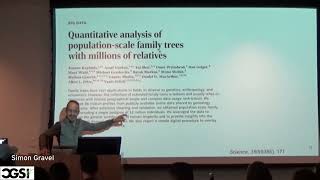
Population Genetics in Large Genealogies
Explore population genetics using large genealogies, focusing on data analysis, relationship inference, and historical insights from Quebec's French Canadian population.
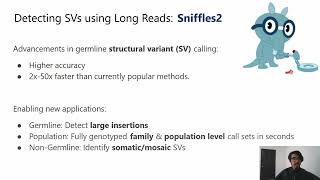
Comprehensive Structural Variant Detection: From Mosaic to Population Level
Explore advanced structural variant detection using Sniffles2, a powerful tool for identifying complex genomic alterations with increased accuracy, speed, and functionality in long-read sequencing data.
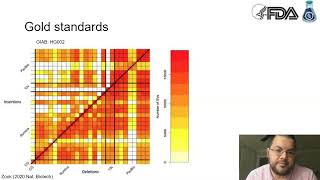
A Structural Variation Map of 499 Han Chinese Individuals Using Long-Read Sequencing Data
Explore a comprehensive structural variation map of Han Chinese genomes using long-read sequencing, uncovering genetic insights and implications for human evolution and disease.

Confounding in Biobanks: Challenges and Implications
Explore confounding factors in biobank research and their impact on genetic studies, focusing on educational attainment and height analyses.
Dissecting the Contribution of the Repeatome to Complex Traits
Explore the impact of repetitive DNA sequences on complex traits through genome-wide association studies, focusing on short tandem repeats and their role in human phenotypes and gene expression.
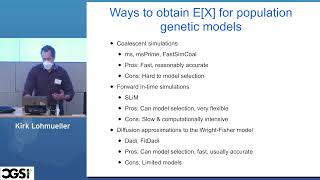
The Poisson Random Field Model in Population Genetics
Explore the Poisson Random Field model's applications in population genetics, gaining insights into its theoretical foundations and practical implications.
Lessons from the Largest Genome-Wide Association Study of Human Height
Explore insights from the largest genome-wide association study on human height, examining genetic variants, heritability, and the impact of rare variations on this complex trait.
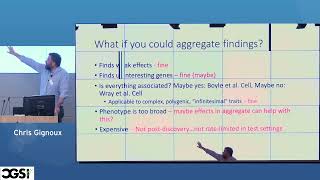
Applying Polygenic Scores at Biobank Scale - CGSI 2022
Explore applying polygenic scores at biobank scale, examining reporting standards, reproducibility, health disparities, and clinical applications in genomic risk prediction.
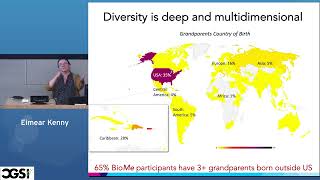
Population Genetics in an Era of Genomic Health
Explore population genetics' role in genomic health, focusing on electronic health records, personalized medicine, and genetic disease identification in specific populations.

How Genetics Can Help Untangle Institutionalized Health Inequity
Explore how genetic research can address health inequities, focusing on case studies involving racial disparities in medical diagnoses and treatment decisions.
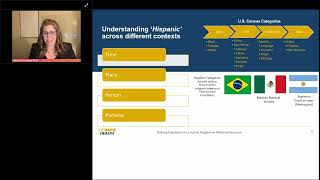
How Population-based Metrics for Diversity Shape Human Genomics Research and Reference Resources
Explore how population-based diversity metrics influence human genomics research and reference resources. Gain insights into the complexities of racial and ethnic classification in biomedical studies.
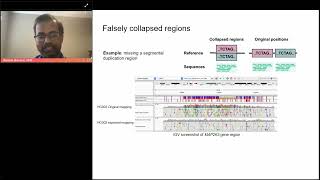
Improving Genomic Analysis by Fixing Reference Errors
Discover how to enhance genomic analysis by correcting GRCh38 reference errors, impacting variant calling in 33 protein-coding genes. Learn about FixItFelix for efficient re-analysis while maintaining existing annotations.

STRUCTURE Harvester: Determining Optimal Subpopulations Using Python Scripts
Master the STRUCTURE Harvester analysis method using Python scripts to determine optimal subpopulation numbers in genomic data, with practical demonstrations and result interpretation guidance.

Using Biobanks to Study People That Are Not in It - CGSI 2024
Discover innovative approaches to extend biobank research benefits beyond direct participants, exploring methodologies for broader population health insights and applications.
Promises and Pitfalls of Scaling in Population Genetic Simulations
Explore the complexities of population genetic simulations, focusing on scaling methodologies, their potential benefits, and inherent limitations in computational genomics research.