
Neutral Evolution - Genetic Drift and Molecular Clocks
Explore genetic drift and neutral evolution, understanding how random changes in genes can impact species over time without affecting reproductive success.

The Nature of Evolution: Selection, Inheritance, and History - Lecture 1
Explore evolutionary biology's key concepts: natural selection, adaptation, genetic drift, and life's history, from its origins to major evolutionary milestones over 3.7 billion years.
The Evolutionary Causes of Quantitative Genetic Variation
Explore the genetic architecture of quantitative traits, examining how mutation, selection, and drift shape heritable variation. Gain insights into missing heritability and interpret genome-wide association studies findings.
MPG Primer: Introduction to Population Genetics (2024)
Explore fundamental concepts of population genetics, including genetic variation, inheritance patterns, and evolutionary forces shaping populations.
Heredity and Evolution Biology - CBSE Class 10
You will learn about inherited traits, Mendel’s experiment, dominant and recessive traits, chromosomes, homologous and heterologous chromosomes, principles of inheritance, evolution, speciation, evidence of evolution, human evolution, and much more.
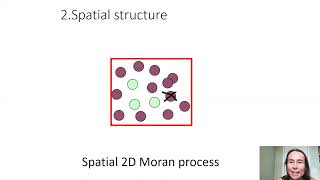
Evolutionary Modeling of Cancer
Explore mathematical methods for studying cancer evolution, including selection, mutation, and drift. Gain insights into loss-of-function and gain-of-function mutations in carcinogenesis.
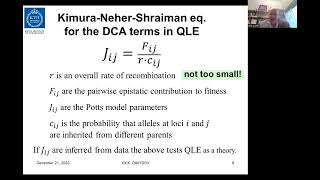
Statistical Genetics in and Out of Quasi-Linkage Equilibrium
Explore statistical genetics principles and quasi-linkage equilibrium concepts through advanced theoretical physics perspectives and mathematical modeling approaches.
Statistical Physics of Biological Evolution by Joachim Krug
Explore stochastic models of population dynamics, including Wright-Fisher and Moran models, fixation, and diffusion theory. Delve into natural selection, experimental evolution, and genetic drift in biological systems.
Basics of Drift and Migration - Sampling and Allele Frequency; Fst and Wahlund Effect by Uma Ramakrishnan
Explore genetic drift, migration, and population structure through concepts like allele frequency, FST, and the Wahlund effect. Gain insights into fundamental population genetics principles.

What Darwin Won't Tell You About Evolution - With Jonathan Pettitt
Explores evolutionary complexity beyond natural selection, discussing genetic drift, non-coding DNA, and unique mechanisms in C. elegans, challenging traditional views on how organisms evolve.
Drift, Inbreeding, and Ne
Explore genetic drift, inbreeding, and effective population size through probability theory, distributions, and evolutionary concepts. Gain insights into population genetics and its applications in evolutionary biology.
Introduction to the Coalescent Theory - Lecture 3
Explores coalescent theory in population genetics, covering selection models, detecting selection, local adaptation, and challenges in interpreting genetic data for evolutionary insights.
Introduction to the Coalescent Theory - Lecture 2
Explore coalescent theory, population genetics, and evolutionary processes. Covers effective population size, migration, recombination, and linkage disequilibrium. Includes examples and simulations to illustrate key concepts.
Introduction to Coalescent Theory - Lecture 1
Explore coalescent theory in population genetics, covering Wright-Fisher models, mutation rates, and applications to human evolution. Gain insights into analyzing genetic data and detecting population changes.
The Population-Genetic Environment - Lecture 1
Explore population genetics theory, covering genetic drift, mutation rates, and recombination. Gain insights into evolutionary processes and their impact on population dynamics across different organisms.
Drift, Mutation, and Evolution by Michael Lynch
Explore genetic drift, mutation, and evolution with Michael Lynch. Gain insights into fundamental processes shaping biodiversity and the mechanisms driving evolutionary change in populations.
Effective Population Size by Mike Whitlock
Explore effective population size in evolutionary biology, examining its impact on genetic diversity and evolutionary processes in natural populations.
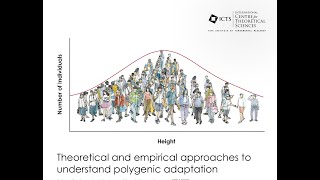
Polygenic Adaptation - Lecture 1
Explore polygenic adaptation in evolutionary biology, integrating diverse perspectives on genetic variation's role in phenotypic traits and adaptive dynamics.
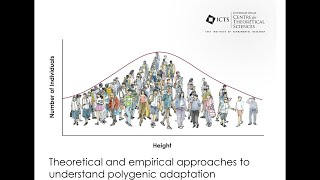
Drift and the Concept of Effective Population Size - Lecture 1
Explore genetic drift and effective population size in evolutionary biology, examining their impact on genetic variation and adaptation in populations.
Drift and the Concept of Effective Population Size - Lecture 2
Explore genetic drift and effective population size concepts in evolutionary biology, examining their impact on genetic variation and adaptation in populations.
Mutation and Drift - Lecture 3
Explore mutation and genetic drift's impact on evolutionary dynamics, focusing on their roles in shaping genetic variation and adaptation in populations.