Archaic Admixture in Human History - Next in Evolution
Exploring human evolution through genetic analysis, focusing on interbreeding with archaic species like Neanderthals and Denisovans, and its impact on modern human DNA and health risks.
Ocean Expert Exchange - Mangrove Research & Conservation
Explore mangrove ecosystems, their global importance, and conservation efforts. Learn about different species, benefits, threats, and genetic research advancing protection strategies.

The Future of Human Evolution - What Darwin Didn't Know
Explore the potential future of human evolution, from larger heads to robotic implants, as science takes over from nature. Discover how technology and medicine could shape our species' development.
Genetic Prediction of Traits and Diseases Across Diverse Populations - Next in Evolution
Exploring genetic prediction of traits and diseases across diverse populations, focusing on innovative research in evolution, genetic adaptations, and cross-disciplinary approaches to understanding human genetics.
Evolution of Life in the City - Next in Science Series
Exploring urban evolution through white clover genetics, this talk examines how cities drive genetic changes and challenges assumptions about urban environments' impact on species adaptation.
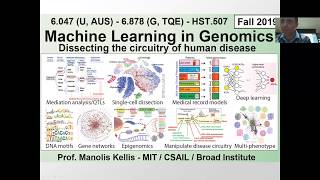
Machine Learning in Genomics - Fall 2019
Comprehensive exploration of computational biology techniques, from dynamic programming to deep learning, applied to genomics, epigenomics, and systems biology. Covers cutting-edge topics like single-cell genomics and genome engineering.
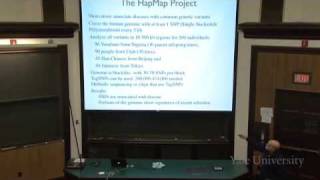
The Origin and Maintenance of Genetic Variation - Lecture 6
Explore genetic diversity's origins through mutations, selection, and recombination. Discover how population size impacts evolution and genetic variation maintenance in different scenarios.

Neutral Evolution - Genetic Drift and Molecular Clocks
Explore genetic drift and neutral evolution, understanding how random changes in genes can impact species over time without affecting reproductive success.

Species and Speciation - Principles of Evolution, Ecology and Behavior
Explore the process of speciation, including definitions, mechanisms, and stages. Learn about reproductive isolation, ecological specialization, and genetic factors in species divergence.

The Nature of Evolution: Selection, Inheritance, and History - Lecture 1
Explore evolutionary biology's key concepts: natural selection, adaptation, genetic drift, and life's history, from its origins to major evolutionary milestones over 3.7 billion years.
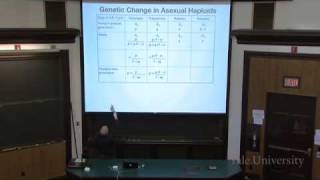
How Selection Changes the Genetic Composition of Population - Principles of Evolution, Ecology and Behavior
Explore genetic systems, their impact on evolution, and how selection alters population genetics. Learn about adaptive genetic change rates and the math behind genetic shifts in populations.

The Expression of Variation - Reaction Norms - Lecture 8
Explore reaction norms in evolution and ecology, examining how genotypes produce varied phenotypes across environments, population differences, and developmental constraints.
The Evolutionary Causes of Quantitative Genetic Variation
Explore the genetic architecture of quantitative traits, examining how mutation, selection, and drift shape heritable variation. Gain insights into missing heritability and interpret genome-wide association studies findings.
On the Evolution of Sex and the Advantages of Recombination - 2013 Science Board Symposium
Explore the evolution of sex and recombination advantages with Sarah Otto. Delve into epistasis, costs, finite population effects, and analytical models in this comprehensive examination of sexual reproduction.
The Dynamics of Genomic Sequence Evolution in 40 Adapting Budding Yeast Populations - 2013
Explore genomic sequence evolution in adapting budding yeast populations, uncovering insights into evolutionary dynamics and genetic adaptation mechanisms.
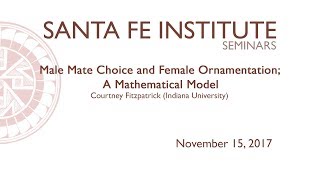
Male Mate Choice and Female Ornamentation - A Mathematical Model
Explores mathematical model challenging assumptions about male mate choice and female ornamentation in polygynous species, revealing weak sexual selection on female traits despite common inferences.
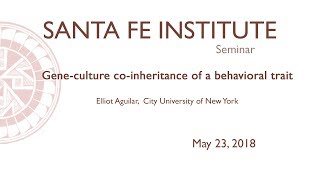
Gene-Culture Co-Inheritance of Behavioral Traits: A Price Equation Approach
Explores gene-culture co-inheritance of behavioral traits using a Price equation model, examining how cultural selection can overcome genetic selection and modify genetic selection pressures for complex phenotypes like altruism.
The Evolution of Behavior Within and Between Groups
Explore the dynamics of behavioral evolution within and between groups, examining how social interactions shape collective outcomes and adaptive strategies.
Unifying the Study of Biodiversity Across Timescales - What a MESS!
Explore a mechanistic model of community assembly that integrates macro-ecology, phylogeography, and macro-evolution to predict biodiversity patterns and infer complex histories of island assembly.
Modelling Genes
Explore genetic variation patterns through mathematical models, examining inheritance, natural selection, and population dynamics to interpret DNA data and understand evolutionary mechanisms.
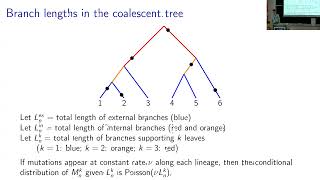
The Site Frequency Spectrum in Growing Cancer Cell Populations
Explore a lecture on the site frequency spectrum in growing cancer cell populations, delivered by Jason Schweinsberg from the University of California, San Diego. Delve into the mathematical aspects of cancer evolution as part of the Fields Institute's T…