
Rousseau on State of Nature and Education - Foundations of Modern Social Thought
Rousseau's ideas on general will, education, and human nature explored. Discusses "Emile," negative education, and the corruption of individuals by society. Examines social transformation and gender roles.

Rousseau - Popular Sovereignty and General Will - Lecture 5
Explore Rousseau's influential ideas on popular sovereignty, general will, and social contract, shaping modern political thought and the French Revolution.

The Division of Powers - Montesquieu's Theory of Separation of Powers
Explore Montesquieu's influential ideas on separation of powers, government classification, and the impact of environment on society in this Yale lecture on modern social thought foundations.

John Locke's Political Theory - Equality, Freedom, Property, and Dissent
Explore Locke's political philosophy, focusing on equality, freedom, property rights, and government by consent. Contrasts with Hobbes' views and examines separation of powers in state governance.

Hobbes - Authority, Human Rights and Social Order in Modern Social Thought
Explore Hobbes's political philosophy, examining his views on human nature, social contracts, and the role of sovereign power in maintaining social order and individual security.

Marx's Theory of Capitalism - Foundations and Labor Theory of Value
Explore Marx's theory of capitalism, focusing on wealth creation, labor theory of value, exploitation, and surplus value. Gain insights into the foundations of Marxist economic thought.
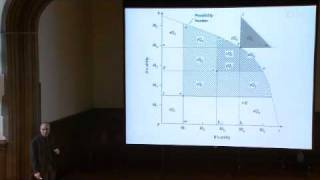
From Classical to Neoclassical Utilitarianism - Moral Foundations of Politics
Explore neoclassical utilitarianism's economic foundations, comparing it with classical utilitarianism. Examine key concepts like Pareto principle and indifference curves, and their implications for redistribution and status quo.

Moral Foundations of Politics - The Trial of Adolf Eichmann and Government Legitimacy
Explore the moral complexities of the Eichmann trial, examining governmental legitimacy and the ethical foundations of political systems through critical analysis and discussion.
Moral Foundations of Politics - Introduction and Course Overview
Introduction to political philosophy course exploring government legitimacy through Enlightenment traditions, anti-Enlightenment thinking, and democratic theory. Covers key concepts and course structure.

The Sovereign State: Hobbes' Leviathan - Introduction to Political Philosophy
Explore Hobbes' political philosophy, examining his views on sovereignty, human equality, and the social contract theory, while comparing his ideas to other influential thinkers.

The Mixed Regime and the Rule of Law: Aristotle's Politics IV - Lecture 8
Explore Aristotle's concept of regime in Politics, examining its impact on community identity, rights, customs, and moral dispositions in comparative political systems.

Philosophers and Kings - Plato's Republic, Books III-IV - Lecture 5
Explore Plato's Republic through key figures and their arguments on justice, virtue, and the ideal city. Delve into philosophical debates that shaped Western political thought.

New Modes and Orders - Machiavelli's The Prince (Chapters 13-26)
Explore Machiavelli's radical redefinition of virtue and vice in "The Prince," examining his concepts of manliness, fortune, and the ethical dilemmas of political leadership.

Democratic Statecraft - Tocqueville's Democracy in America - Lecture 23
Explore Tocqueville's insights on democracy, examining moral and psychological aspects, institutional development, and the role of statesmen in shaping democratic societies.

In Defense of Politics - Introduction to Political Philosophy
Explore key concepts in political philosophy, from patriotism and nationalism to cosmopolitanism, examining the ideas of influential thinkers and the role of education in understanding politics.

The Sovereign State - Hobbes' Leviathan and the State of Nature
Explore Hobbes' Leviathan: state of nature, individuality, human nature, and laws of reason. Gain insights into political philosophy and the foundations of sovereign power.

New Modes and Orders - Machiavelli's The Prince Chapters 1-12
Explore Machiavelli's revolutionary political philosophy, examining his concept of the modern state and new leadership paradigm in Renaissance Florence.

The Mixed Regime and the Rule of Law - Aristotle's Politics VII - Lecture 9
Explore Aristotle's concept of polity as a balanced regime, its role in controlling factions, and the foundations of political science in this insightful lecture on ancient political philosophy.

Philosophers and Kings - Plato's Republic, Book V
Explore Plato's Republic, focusing on self-control, justice, and the concept of the philosopher-king. Delve into the idea of harmony in both city and soul.

Philosophers and Kings - Plato's Republic, Books I-II
Explore Plato's Republic: moral psychology, justice, poetry, and the ideal city. Delve into its meanings, utopian vision, and key concepts through an in-depth analysis of the text's opening.

Socratic Citizenship: Plato's Crito - Lecture 3
Explore Socratic citizenship through Plato's Crito, examining civil obedience, philosophical reasoning, and the citizen's duty to uphold community laws in ancient Athens and modern contexts.