Planetary Exploration and Discovery - Whipple Lecture
Thomas B. McCord delivers the Whipple Lecture at AGU Fall Meeting 2002, offering insights on planetary science and exploration despite potential video quality issues due to the recording's age.
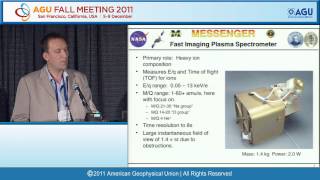
Mercury - The View from Orbit III
Explore the latest findings from Mercury's orbit, including geological insights and planetary observations from recent space missions.
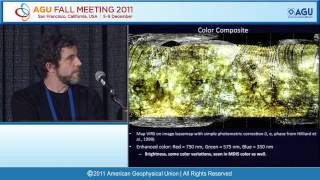
Mercury - The View from Orbit II
Explore the latest findings from Mercury's orbit, including new data and insights from recent space missions. Discover the planet's unique features and geological history.
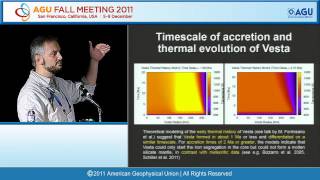
Dawn Explores Vesta III - Fall Meeting 2011
Explore the latest findings from NASA's Dawn mission to Vesta, including detailed surface analysis, geological features, and insights into the asteroid's formation and evolution.
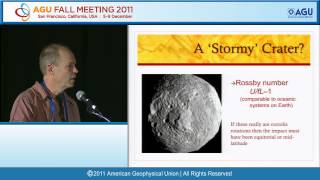
Dawn Explores Vesta I - Fall Meeting 2011
Explore the latest findings from NASA's Dawn mission to Vesta, including its geology, composition, and evolution. Gain insights into this fascinating protoplanet and its role in understanding solar system formation.
A Search for Exoplanets - Discovering New Worlds Through Microlensing
Discover the groundbreaking microlensing technique used to find exoplanets with renowned astronomer Scott Gaudi, exploring the potential for uncovering Earth-like worlds beyond our solar system.
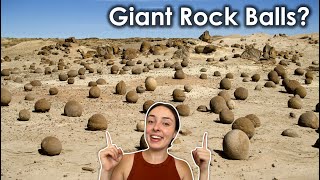
How Giant Rock Balls Form - Concretions in Geology
Explore the fascinating world of giant rock concretions, their formation process, and unique locations worldwide. Learn about their differences from geodes and their presence on Mars.

Mars Exploration - Curiosity Rover and Future Missions
Aerospace engineer Anita Sengupta discusses NASA's Curiosity rover mission to Mars, detailing the complex landing process and exploring current and future Mars exploration efforts in this engaging podcast.
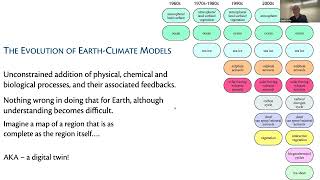
Planetary Climates and Paleoclimates - Old Problems and New Approaches
Explore planetary climates and paleoclimates, examining longstanding issues and innovative solutions with Professor Geoffrey Vallis from the University of Exeter.
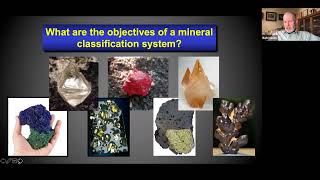
Earth's Co-evolving Geosphere and Biosphere - A Mineral Evolution Perspective
Explore Earth's geosphere and biosphere evolution through mineral perspectives with Robert M. Hazen, examining the interplay between geological and biological processes over time.
Earth System Perspectives Inspired by Carl Sagan - AGU Lecture
Explore Earth system perspectives inspired by Carl Sagan's work in this lecture featuring expert discussions, Q&A, and an early career panel, honoring Sagan's contributions to astrobiology and science education.
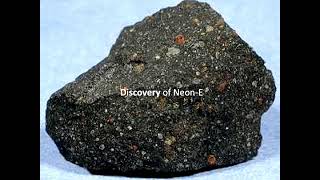
Adventures in Planetary Science 1960-2020 - Fred Whipple Lecture
Explore six decades of planetary science advancements, from early discoveries to recent breakthroughs. Gain insights into the field's evolution and its impact on our understanding of the cosmos.

James Webb Space Telescope and the Search for Earth-Like Exoplanets
Panel discussion exploring JWST's potential to revolutionize exoplanet research, featuring astrophysicists discussing the telescope's capabilities to discover Earth-like planets and search for signs of life beyond our solar system.
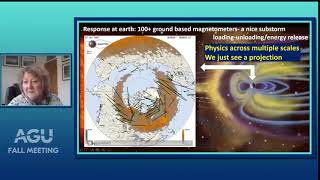
Multiscale Nonlinear Space Physics: From Fundamental Physics to Quantifying Risk - Ed Lorenz Lecture
Introduction to nonlinearity, complexity, and scaling in earth science processes, focusing on solar system plasmas. Explores challenges and progress in applying nonlinear physics concepts to space weather and magnetospheric dynamics.
Cassini's Chronicle of Carbon in the Saturn System - Eugene Shoemaker Lecture
Explore Saturn's carbon cycle through Cassini mission findings, revealing insights into the planet's atmosphere, rings, and moons in this AGU lecture honoring planetary scientist Eugene Shoemaker.
Stolen Moon Ice - Origins and Potential Uses in Future Lunar Missions
Explore lunar ice origins and potential uses for future space missions. Scientists discuss how the moon acquired its ice and its significance for astronauts.

What Might Life Be Like Beyond Earth and How Will We Recognize It? - AbSciCon22 Roundtable 1
Explore potential forms of extraterrestrial life and methods for its detection with experts in astrobiology, discussing diverse environments, biosignatures, and future research directions.
Latest Science from NASA's Juno Mission to Jupiter
Discover the latest findings from NASA's Juno mission, including Jupiter's Great Blue Spot, polar cyclones, magnetosphere, and interior. Explore citizen scientists' contributions and hear Ganymede's magnetosphere sounds.

Latest NASA Juno Mission Science Results
Latest findings from NASA's Juno mission on Jupiter's polar cyclones, magnetosphere, Great Red Spot, atmosphere, and interior. Highlights scientific and aesthetic contributions of citizen scientists to the mission.

Exoplanetary Ecosystems - What We Know and Need to Know
Explore the fascinating world of exoplanetary ecosystems, examining current knowledge and future research directions in this captivating plenary talk by Hilairy E. Hartnett.
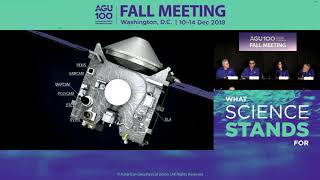
First Asteroid Science Data from OSIRIS-REx Mission - Fall 2018
Discover groundbreaking findings from NASA's OSIRIS-REx mission to asteroid Bennu. Scientists reveal new data on shape, imaging, spectral properties, and comparisons to Earth-based observations.