Towards a Mathematical Theory of Pre-Reflective Self-Consciousness: From Metamathematics to the Projective Consciousness Model
Explore mathematical approaches to modeling pre-reflective self-consciousness, examining theories from metamathematics to projective geometry and their implications for understanding subjective experience.
Homogeneous Spaces and Pre-reflective Self-consciousness in Agent Models
Delve into mathematical perspectives on pre-reflective self-consciousness through homogeneous spaces, group actions, and their implications for understanding agent-environment relationships and introspection.
Structuralism and Consciousness: The Two-Factor Interaction View
Explore the relationship between consciousness mechanisms and phenomenal experience structure through experimental designs and theoretical frameworks for testing consciousness theories.
Minimal Self-Consciousness as Perspectival Information
Explore the concept of Minimal Self-Consciousness through perspectival information and its role in self-location, examining how consciousness manifests without traditional spatial-temporal boundaries.
Structuralist Representationalism: A New Approach to Phenomenal Consciousness
Explore the intersection of consciousness and representation through structuralist theory, examining how neural states correspond to phenomenal experiences and quality spaces.
Measuring the Richness of Perception Through Free Reports - A Critical Analysis
Explore the relationship between conscious visual experience and verbal descriptions, examining how word choice reflects perceived richness in experimental psychology research.
How rCTM Answers Questions About Consciousness - A Robot with CTM Brain Model
Explore how the Conscious Turing Machine Robot (rCTM) model addresses fundamental questions about consciousness through a theoretical framework and formal machine modeling approach.

How AI Will Become Self-Aware and When - The Path to Machine Consciousness
Explore the potential for AI consciousness, its implications, and timeline. Delve into theories of machine awareness and the future of artificial intelligence.

Determining AI Consciousness - Key Indicators and Limitations
Explores the minimal ingredients for consciousness and examines whether AI models like ChatGPT possess consciousness, discussing limitations of robot consciousness and implications for future AI development.
AI and the Future of Consciousness Science - Exploring Artificial Systems and Consciousness
Explore the complex relationship between AI advancement and consciousness, examining philosophical challenges and how human-machine interactions may ultimately shape our understanding of machine consciousness.
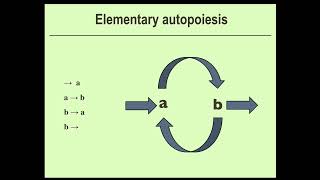
The Origins of Agency, Cognition, and Consciousness
Explore the fundamental concepts of agency, cognition, and consciousness through expert insights from leading researchers in cognitive science and philosophy of mind.
A Deep Computational Phenomenology of MPE as Metacognitive Free Energy Optimization
Explore the computational modeling of minimal phenomenal experience through Bayesian mechanics and free energy principles, examining belief dynamics and metacognitive processes.
Computational Phenomenology, Mathematical Phenomenology and Pre-Reflective Self-Awareness
Explore the intersection of computational and mathematical phenomenology, examining methodological foundations and their application to pre-reflective self-awareness in consciousness studies.
Subjectivity vs Phenomenal Character - Understanding Consciousness Theory
Explore the fundamental distinction between subjectivity and phenomenal character in consciousness, examining their roles in contemporary debates and theoretical frameworks.
Discovering Pattern and Structure in Cultural Traces: Death and Dreams in Low Dimensions
Explore data-efficient methods for analyzing large corpora using word embeddings and sparse dictionary learning. Discover patterns in violent death reports and dream narratives through innovative topic modeling techniques.
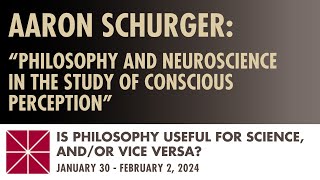
Philosophy and Neuroscience in the Study of Conscious Perception
Explore the intersection of philosophy and neuroscience in understanding conscious perception with insights from Aaron Schurger's conference talk.
On the Hard Problem of Pain - Understanding Higher-Level Intelligence
Explore the complex nature of pain through AI, psychology, and neuroscience perspectives, delving into higher-level intelligence and its implications.
Consciousness and Large Language Models - Understanding Higher-Level Intelligence
Explore the intersection of consciousness and AI through philosophical and scientific lenses, examining implications for higher-level intelligence and cognitive science.
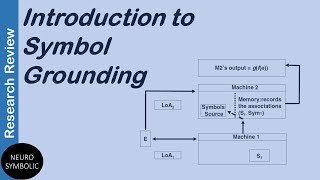
Introduction to Symbol Grounding
Explore the symbol grounding problem, its philosophical roots, and major approaches including representationalist, semi-representationalist, and non-representationalist solutions.
Fundamental Physics: Nonthermal Production Mechanisms in an Expanding Universe - Class 2
Explore nonthermal production mechanisms in an expanding universe, focusing on fundamental physics concepts like Feynman diagrams, phenomenology, and magnetic fields.
The Argument from Understanding for Property Dualism About Experiential Properties
Explore philosophical arguments for property dualism, examining how phenomenal experiences and consciousness relate to physical properties through the lens of experiential understanding.