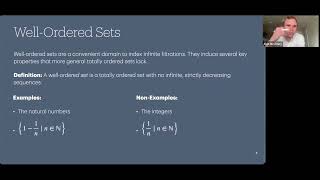
Persistent Homology for Infinite Complexes - Extending Theory to Infinite CW Complexes
Explore the extension of persistent homology to infinite CW complexes, including key theorems and applications in topological data analysis.
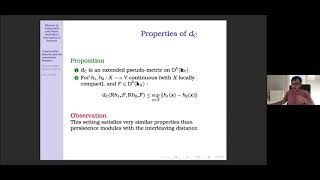
Sheaves as Computable and Stable Topological Invariants for Datasets
Explores sheaf theory in topological data analysis, connecting level-sets persistence with derived sheaves. Presents functorial equivalences, stability theorems, and barcode decompositions for continuous data analysis.
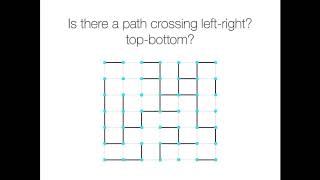
Homological Percolation: The Formation of Giant Cycles
Explore homological percolation, analyzing giant cycles in random structures and their phase transitions. Learn to differentiate signal from noise in persistence diagrams and discover connections to Euler characteristic curves.
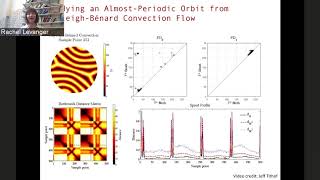
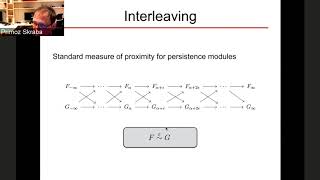
Rachel Levanger - A Comparison Framework for Interleaved Persistence Modules
Explore rigorous tracking of noise in persistent homology, comparing approximation techniques and addressing non-uniform sub-level set filtrations in topological data analysis.
An Approximate Nerve Theorem
Explore the Nerve Theorem's application in topological data analysis, focusing on epsilon-acyclic covers and their impact on persistent homology approximations in space filtrations.
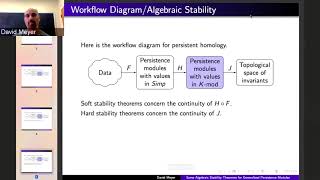
David Meyer - Some Algebraic Stability Theorems for Generalized Persistence Modules
Algebraic stability theorems for generalized persistence modules, exploring interleaving metrics, bottleneck metrics, and isometry theorems in the context of poset algebras and quiver representations.
Pawel Dlotko - A Few Simple Stories on Topology in Action
Explore practical applications of computational topology in material science, dynamical systems, and brain research. Learn how theory and algorithms work together to solve real-world problems.
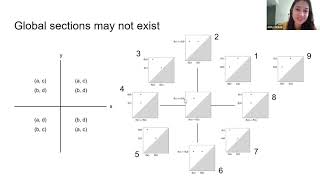
Persistence Diagram Bundles- A Multidimensional Generalization of Vineyards
Explore persistence diagram bundles, a multidimensional generalization of vineyards for analyzing topological changes in data sets with multiple parameters, including computation methods and potential applications.

New Results in Computing Zigzag and Multiparameter Persistence
Explore new advancements in computing zigzag and multiparameter persistence, including efficient conversion methods and improved algorithms for 2-parameter persistence modules.
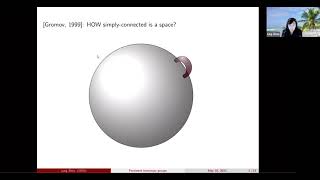
Persistent Homotopy Groups of Metric Spaces
Explore persistent homotopy groups of metric spaces, their stability, and advantages over persistent homology. Learn about tree-like structures and ultrametrics in fundamental groups.
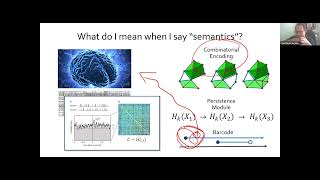
An Approach to Assigning Semantics to Persistent Homology Classes
Explore a novel approach to interpreting persistent homology classes in applied settings, overcoming traditional limitations by leveraging comparative measurements against known models.
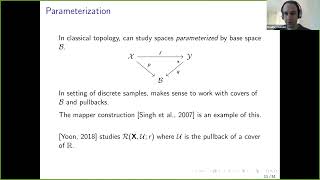
Bradley Nelson: Parameterized Vietoris-Rips Filtrations via Covers
Explore computational topology techniques for large filtered geometric complexes, focusing on Vietoris-Rips filtrations and cover-based methods for parallel computation and compression.
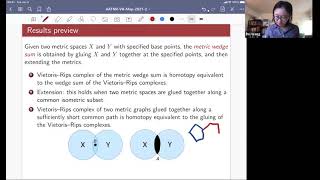
Homotopy Types of Vietoris–Rips Complexes of Metric Gluings
Explore homotopy types of Vietoris-Rips complexes in metric wedge sums and gluings, with applications to persistent homology of metric graphs and insights into open research directions.
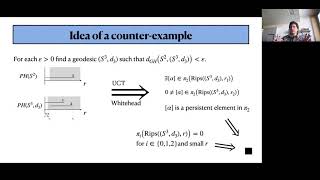
A Counter-Example to Hausmann's Conjecture
Explore a counter-example to Hausmann's conjecture on Vietoris-Rips complexes, challenging long-held beliefs in algebraic topology using persistent homology.
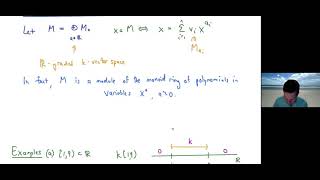
Homological Algebra for Persistence Modules
Introduction to persistence modules in algebraic topology, exploring tensor products, Hom operations, and their role in homological algebra. Insights into preserving exact sequences and advanced concepts.
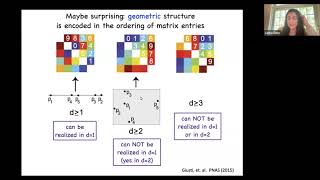
Using Topology to Study the Geometry of Neural Correlations
Explore how topology and persistent homology uncover hidden structures in neural data, focusing on Betti curves and their applications in analyzing hippocampal, olfactory, and zebrafish brain activity.
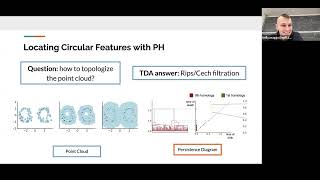
Cohomology Classes in the RNA Transcriptome
Explore how cohomology classes in single-cell sequencing data can model transient biological processes, using persistent cohomology and differential forms to infer gene expression dynamics.
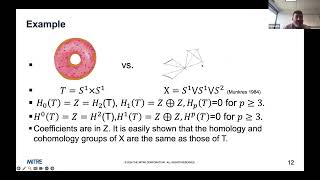
Steenrod Squares and Data Science - Exploring Connections in Algebraic Topology
Explore the potential link between advanced algebraic topology concepts and data science classification, examining how increasing algebraic complexity may solve harder geometric problems.
Understanding Complex Biological Systems: A Journey into Computational Topology
Explore computational topology's role in decoding complex biological systems. Learn how algorithms interpret data from molecular biology, genetics, and medicine, offering unique insights into disease progression and protein structures.
On the Applications of Topology
Explore topological methods for analyzing complex data sets, focusing on persistent homology and mapper, with applications in computer vision, biology, and medicine.
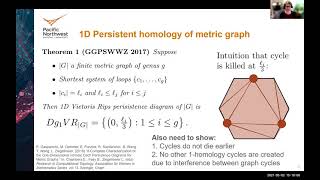
Homology of Graphs and Hypergraphs
Explore topological structures of graphs and hypergraphs, including recent findings on homology and persistent homology, with applications in combinatorial and metric space analysis.