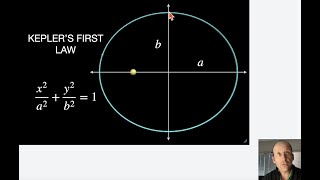
Modeling Kepler's First Law with Python
Model Kepler's first law of planetary motion using Python, demonstrating elliptical orbits through code implementation and visual plotting.
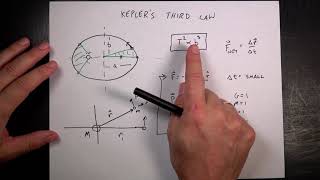
Demonstration of Kepler's Third Law Using Python
Explore Kepler's Third Law through Python modeling, calculating orbital periods and semi-major axes for various orbits to verify the law's validity.
Modeling the Earth-Moon System with Python
Model the Earth-Moon system using Python to simulate orbital dynamics and explore celestial mechanics.
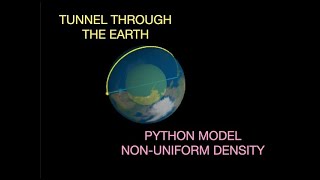
Falling Through the Center of a Non-Uniform Density Earth - Python Simulation
Explore Earth's interior through a 3D Python model, comparing orbital and tunnel travel times with varying density distributions.
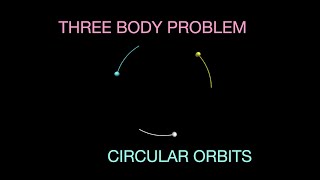
How to Achieve Circular Orbits in the Three-Body Problem
Explore stable circular orbits for three equal-mass planets using Python simulations and gravitational calculations.
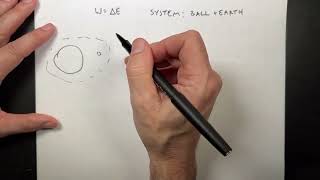
Escape Velocity Calculation and Simulation with VPython
Model Earth's gravitational influence on objects and derive escape velocity using VPython, with accompanying code and derivation resources.
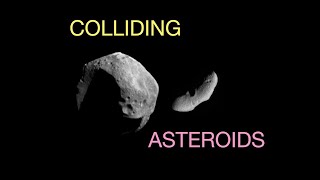
Calculating Asteroid Collision Velocities
Calculate asteroid collision velocities using gravitational potential energy and Python simulations. Explore physics concepts through practical space scenarios.
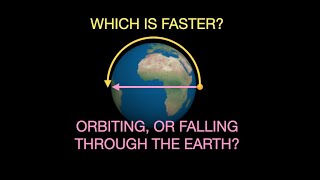
Is It Faster to Fall Through the Earth or Orbit Halfway Around?
Explore the physics behind falling through Earth vs. orbiting halfway around, comparing travel times and analyzing factors affecting motion in both scenarios.
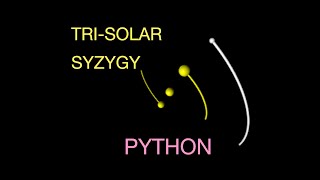
Modeling the Tri-Solar Syzygy with Python
Explore Python modeling of the Tri-Solar Syzygy from "The 3 Body Problem," simulating stable orbits and planetary positions in a three-star system.
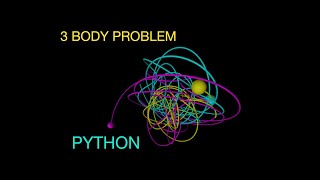
Calculate the Three-Body Problem Just Like the San-Ti
Explore the physics of the 3-body problem, its significance in "The Three-Body Problem" media, and learn computational methods to solve it.

ME3255 - Rocket Science Solutions with Python
Explore rocket science solutions using Python, covering advanced concepts and practical applications in aerospace engineering.
Tidal Sculpting of Short-Period Exoplanets
Explore how tidal forces shape short-period exoplanets, their orbital patterns, and interior structures, with insights from JWST observations and explanations for demographic mysteries in planetary systems.

Reimagining Space: A Two-Way Bridge to a Better Planet | Mr. A. Vineel Judson | TEDxJNTU Hyderabad
In this talk, Mr. A. Vineel Judson explores how rethinking our relationship with space can help protect life on Earth. Drawing from his journey with Taramandal, he presents space not as a one-way destination,but as a sustainable two way bridge with Reusable Satellite Technology which could unlock a