
Kepler's Laws and Planetary Motion - Fundamentals of Physics
Explore planetary motion and gravitational interactions through Kepler's laws, deriving orbital mechanics and energy conservation principles in this comprehensive physics lecture.
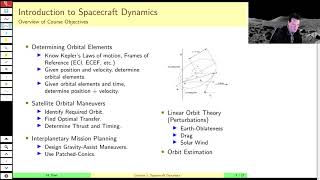
Orbital Mechanics and Spacecraft Dynamics
Comprehensive exploration of orbital mechanics, spacecraft dynamics, and mission planning. Covers historical context, mathematical foundations, orbital maneuvers, and spacecraft design principles.
Man-Made Debris Problems in Geosynchronous Orbit
Explore geosynchronous orbital debris: sources, impacts, and challenges. Learn about satellite collisions, tracking methods, and potential solutions for space sustainability.
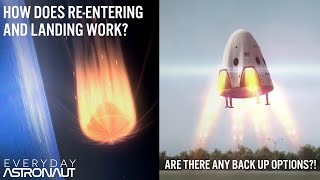
How Does SpaceX's Dragon Get Back to Earth from Orbit? How Exactly It Re-Enters and Lands
Detailed exploration of SpaceX Dragon's return journey from orbit, covering deorbiting physics, reentry hardware, and landing procedures. Includes timeline, criteria, and orbital mechanics.
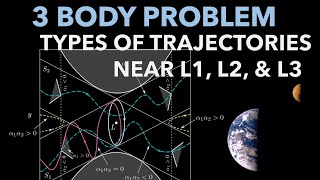
Trajectory Types Near L1, L2, and L3 in the Three Body Problem - Theory and MATLAB Examples
Explore trajectory types near Lagrange points in the three-body problem. Learn analytical solutions, MATLAB simulations, and applications to Earth-Moon and Sun-Jupiter systems. Gain insights into orbital dynamics and space mission design.
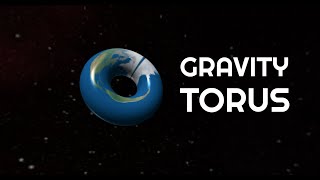
Gravity Torus - Simulating Orbits Around a Doughnut-Shaped Planet
Explore the unique gravitational effects of a doughnut-shaped planet through simulation, uncovering fascinating orbital dynamics and challenging conventional understanding of planetary physics.
Root Finder in Space - Calculating Aphelion - Episode 2
Learn to calculate the aphelion of orbiting bodies using Scilab. This tutorial covers code setup for determining the farthest point in various celestial orbits.
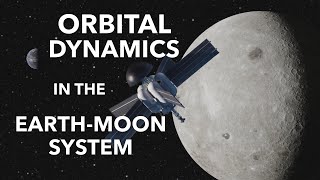
Earth-Moon-Spacecraft 3-Body Orbital Motion in Cislunar Space
Explore orbital dynamics in cislunar space using the restricted 3-body model. Learn about Lagrange points, periodic orbits, and manifolds with MATLAB demonstrations and real-world applications.

Orbit vs Sub-Orbit - Orbits, Zero-G & the Karman Line
Explore orbital mechanics, zero gravity, and the Karman line. Learn about space vs. orbit, weightlessness, gravity in space, and key concepts like apogee and perigee in this comprehensive overview.
Practicalities of Orbital Space Travel
Explore the practicalities of orbital space travel with Dr. Charles Simonyi, a high-tech pioneer and space traveler. Gain insights into the realities of space exploration from his firsthand experience.
Calculating Energy Required to Put Hubble Space Telescope into Orbit
Explore the physics behind launching the Hubble Space Telescope, calculating its orbital speed, period, and energy requirements for deployment.
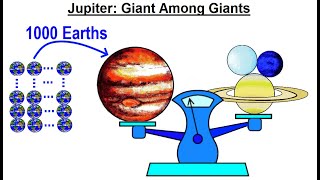
Astronomy - Jupiter
Comprehensive exploration of Jupiter's characteristics, including composition, atmosphere, interior structure, magnetic field, rings, and moons, with detailed explanations of its unique features.
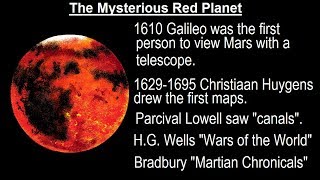
Astronomy - Mars
Explore Mars' mysteries, from its wet history to modern missions. Learn about surface features, atmosphere, moons, and the search for life on the Red Planet.
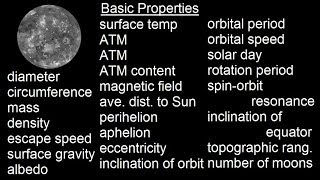
Astronomy - Mercury
Comprehensive exploration of Mercury's properties, orbit, geology, atmosphere, and space missions, including detailed analysis of Mariner 10 and MESSENGER missions and their discoveries.
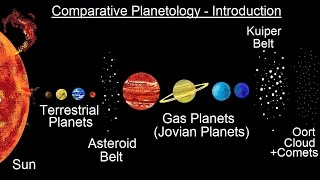
Astronomy - The Solar System - Comparative Planetology
Comprehensive exploration of solar system planets, comparing their physical properties, orbits, atmospheres, and compositions. Includes discussions on moons, asteroids, comets, and water distribution.
Advanced Course in General Relativity - Lecture 2
Explore advanced general relativity concepts, including test particle equations, orbits, light behavior, and gravitational radiation in this in-depth lecture on theoretical physics.
Earth's Seasons: Earth's Tilt and Orbital Mechanics - Lecture 5
Explore Earth's climate dynamics, from orbital mechanics to monsoon systems, uncovering the intricate factors shaping our planet's seasons and long-term climate patterns.
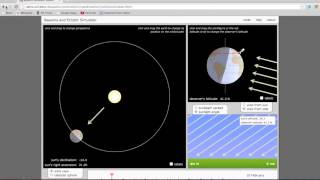
Introductory Astronomy - Causes of the Seasons
Explore Earth's seasonal changes through an in-depth examination of astronomical factors, utilizing interactive simulations and expert insights to enhance understanding of this natural phenomenon.
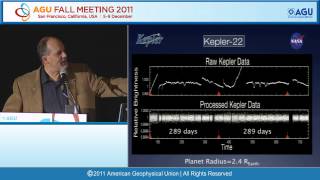
Radii, Masses, Densities, and Occurrence for Planets Within 0.25 AU - Sagan Lecture
Explore planetary characteristics and occurrence rates for exoplanets within 0.25 AU, focusing on radii, masses, and densities in this insightful lecture by Geoffrey W. Marcy.
Pioneering Planetary Defense - What Comes Next After DART's Asteroid Impact
Experts discuss DART mission's asteroid impact, analyzing momentum transfer, ejecta, and implications for future planetary defense strategies against potentially hazardous asteroids.
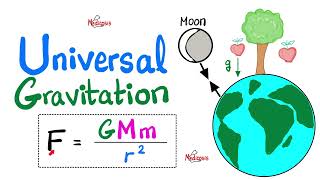
Universal Gravitational Law, Gravitational Field Intensity, and Satellite Velocity - Physics Concepts
Explore Newton's Universal Gravitational Law, gravitational field intensity, and satellite motion. Learn key concepts of gravity, centripetal force, and orbital mechanics for physics exams.