Gravity Simulator - Exploring Motion in Phase Space - Episode 4
Explore phase space plots in gravity simulations, offering deeper insights into system behavior beyond real-space animations. Includes VPython code examples and references to Stephen Hawking.
Root Finder in Space - Power Trip - Episode 6A
Explore gravitational potential energy's impact on aphelion and perihelion using different power laws. Discover the importance of log plots in analyzing orbital mechanics.
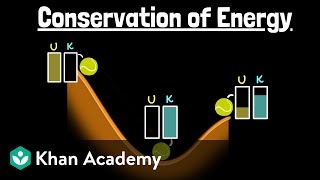
Conservation of Energy in Physics
Explore energy conservation principles across various systems, from friction to orbits and electron transitions, in this comprehensive physics lesson.

How Space and Time Form Spacetime - Understanding the 4D Universe
Explore how space and time unite in spacetime, the foundation of modern physics. Discover the math, implications, and reasons behind our 3+1 dimensional universe.
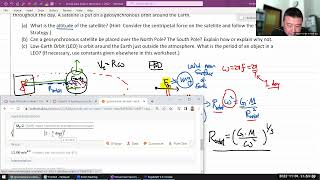
Physics 4A - Geosynchronous Orbit and Other Earth Orbits
Explore geosynchronous and other Earth orbits, understanding their principles and applications in satellite technology and space exploration.
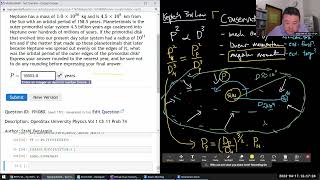
Physics 4A - Kepler's Third Law and Orbital Mechanics - Problem 74
Explore planetary motion and Kepler's 3rd Law through a detailed problem-solving session, enhancing understanding of celestial mechanics and orbital dynamics.
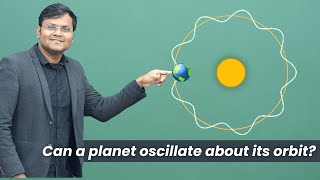
The Physics of Planetary Oscillations - Potential Energy Analysis of Circular Orbits
Explore planetary oscillations in circular orbits through potential energy analysis, understanding stable orbits, perturbations, and calculating oscillation frequencies and periods.
Universal Law of Gravity and Planetary Motion - General Physics Lesson 7.3
Explore gravity's impact on planetary motion, learn escape speed calculations, and understand Kepler's Laws. Master orbital mechanics and gravitational potential energy concepts through practical problem-solving.
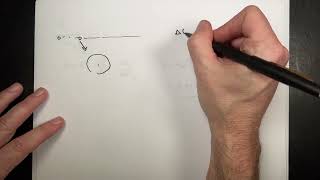
Physics Problem: Spacecraft Deflection due to an Asteroid
Explore spacecraft deflection by an asteroid using physics principles and Python code to calculate momentum changes.
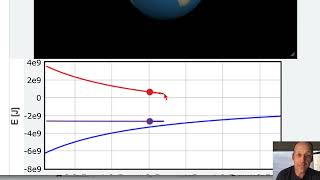
Escape Velocity with Energy Plots
Explore escape velocity through energy plots, analyzing kinetic, potential, and total energy in gravitational systems.
Physics Problem: Orbital Altitude for Geosynchronous Orbits
Calculate the altitude of geosynchronous orbits above Earth's surface using orbital mechanics and gravitational principles.
Science and Technology Q&A for Kids and Others - Part 143
Explore diverse science and technology topics with Stephen Wolfram in an unscripted Q&A session, covering eclipses, lunar dynamics, space colonization, and the capabilities of AI and large language models.
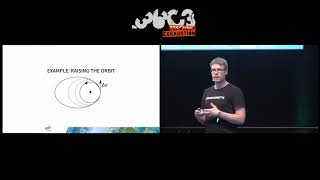
Thrust Is Not an Option - How to Get to Mars Really Slow
Explore low-energy space trajectories using chaos theory and three-body problem physics. Learn about orbital mechanics, Lagrangian points, and the interplanetary transport network for efficient space travel.
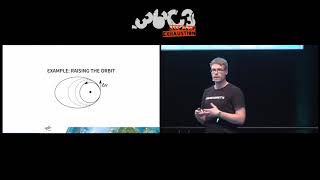
Thrust is Not an Option - How to Get to Mars Really Slow
Entdecken Sie faszinierende Einblicke in die Orbitalmechanik und chaotische Trajektorien für Raumfahrzeuge im Sonnensystem. Erfahren Sie mehr über energiearme Transfers und das interplanetare Transportnetzwerk.
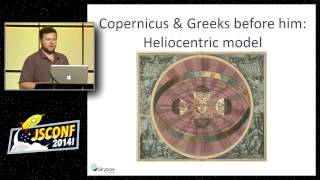
Realtime Satellite Tracking in the Browser
Explore real-time satellite tracking in browsers using JavaScript, learning orbital mechanics concepts and mapping techniques with Leaflet.js and satellite.js.
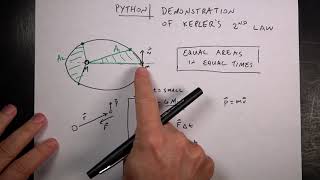
Verifying Kepler's Second Law with Python and Physics
Model planetary orbits and verify Kepler's 2nd Law using Python, demonstrating equal area sectors in equal time periods through orbital motion simulations and sector area calculations.
Gravity and Orbital Mechanics - Physics 101 / AP Physics 1 Review with Dianna Cowern
Explore gravity and orbital mechanics, covering gravitational force, orbital velocity, and Einstein's theories. Includes practical exercises and real-world applications like the ISS orbit.
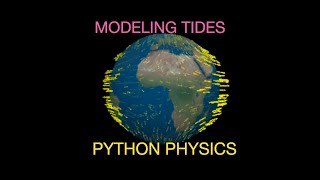
Modeling Earth's Tides with Python - Classical Mechanics
Explore the physics behind Earth's tides through Python modeling, understanding gravitational forces and creating visual simulations of tidal patterns and movements.
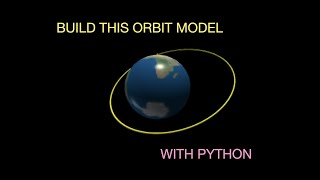
Creating a 3D Orbit Model in Python
Create a 3D model in Python to visualize spacecraft orbits, enhancing understanding of orbital mechanics and space exploration concepts.
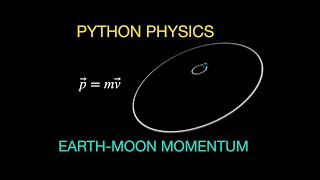
Python Physics: Conservation of Momentum for the Earth-Moon System
Explore conservation of momentum in the Earth-moon system using Python, enhancing understanding of fundamental physics concepts.
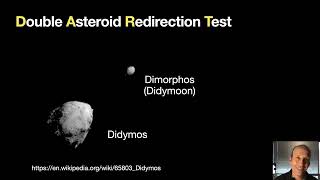
Modeling the DART-Dimorphos Collision in Python
Model the DART-Dimorphos collision using Python, exploring binary orbits, elastic and inelastic collisions, and conservation of momentum. Experiment with different parameters to understand asteroid redirection techniques.