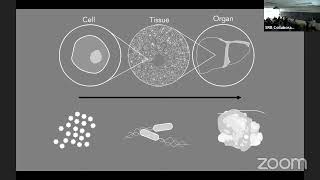
Bi-directional Lessons Between Traditional Evolutionary Biology and Cancer
Explore evolutionary biology's impact on cancer research and vice versa, uncovering insights that bridge these interconnected fields.

Computational Modeling of Chemotaxis - The Best Way to Understand Cell Migration
Explore computational modeling techniques for understanding cell migration and chemotaxis, enhancing knowledge of cellular movement mechanisms.
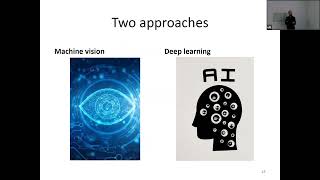
Machine Vision vs Deep Learning in Cancer Detection
Explore machine vision and deep learning applications in cancer diagnosis, comparing their strengths and limitations. Gain insights into innovative computer-aided methods for analyzing microscopic images of breast cancer tissue.
EIC Accelerator Challenge: Novel Biomarker-Based Assays for Personalized Cancer Treatment
Explore novel biomarker-based assays for personalized cancer treatment. Learn about EIC Accelerator Challenge, its objectives, and innovative approaches in cancer diagnostics and therapy.
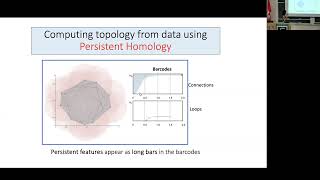
Applications of Topological Data Analysis in Cancer - Lecture 2
Explore applications of topological data analysis in cancer research, focusing on mathematical modeling of treatments, resistance, and optimization.
Leveraging Machine Learning and Clinico-Genomic Data for Cancer Care and Drug Discovery
Discover how machine learning and genomic data from 500,000 cancer cases drive innovations in cancer treatment and pharmaceutical development through advanced computational approaches.

Gastric Cancer - Achieving Health Equity Among Asian Americans
Explore the critical health disparity of gastric cancer in Asian American communities, examining risk factors, treatment outcomes, and innovative approaches to achieve equitable healthcare delivery.
Tipping Points in Cancer - Mathematical Oncology and Computational Biology
Explore the mathematical dynamics of cancer progression through computational analysis of fluid mechanics, biology, and critical transition points in tumor development.
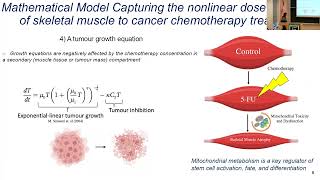
Chemotherapy-Induced Cachexia and Model-Informed Dosing to Preserve Lean Mass in Cancer Treatment
Explore mathematical modeling approaches for optimizing chemotherapy dosing to minimize muscle loss while maintaining effective cancer treatment strategies.
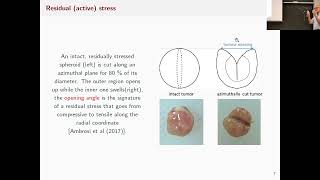
Stress and Growth in Tumor Spheroids
Explore the mathematical modeling of tumor growth dynamics, focusing on stress factors and spheroid development in oncological research and computational biology.
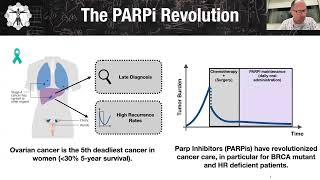
De-escalating PARP Inhibitor Maintenance Therapy in Ovarian Cancer Using Adaptive Therapy
Explore innovative approaches to PARP inhibitor maintenance therapy in ovarian cancer, focusing on adaptive treatment strategies and de-escalation methods for optimal patient outcomes.
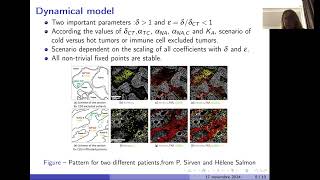
How Cancer-Associated Fibroblasts Promote T-Cell Exclusion in Human Lung Tumors: A Physical Perspective
Explore the physical mechanisms behind cancer-associated fibroblasts and their role in T-cell exclusion within lung tumors through mathematical and biological perspectives.
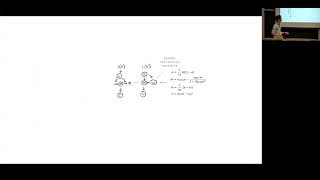
Balancing Interpretability and Predictive Accuracy in Mathematical Models of T Cell Activation
Explore mathematical modeling approaches for T cell activation, examining the trade-offs between model interpretability and accuracy in immunological systems.
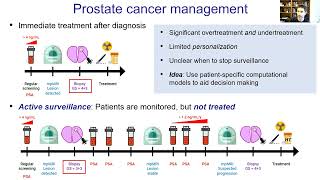
Prostate: Small Organ, Big Problems - Informing Clinical Decisions with Computational Models
Explore how computational models enhance clinical decision-making for prostate-related conditions through advanced mathematical and biological approaches.

Practical Parameter Identifiability and Handling of Censored Data with Bayesian Inference in Models of Tumour Growth
Explore Bayesian inference techniques for tumor growth modeling, focusing on parameter identification and censored data analysis in mathematical oncology research.
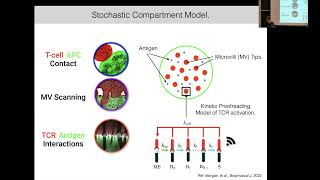
Applications of Extreme Statistics to Cellular Decision Making and Signaling
Explore how extreme statistics influence cellular behavior and decision-making processes, focusing on mathematical approaches in biological signaling systems.

Fenbendazole as a Potential Anti-Cancer Treatment: Case Studies and Clinical Evidence
Explore the potential of Fenbendazole (FBZ), a veterinary anti-parasitic drug, as a promising cancer treatment through three case studies showing complete response in genitourinary malignancies with minimal side effects.
Identifying Clinically Relevant Mutations in Somatic NGS Testing
Discover how to effectively identify and interpret clinically significant mutations in NGS cancer testing, focusing on practical approaches to overcome data interpretation challenges in precision medicine.
Unraveling the Roles of Copy Number Variants in Tumorigenesis
Explore genomic analysis of cancer cells, focusing on Copy Number Variants (CNVs) as biomarkers and their detection through OncoScan CNV assays for understanding tumor development and progression.
Comprehensive Profiling of Cancer Neoantigens From Aberrant RNA Splicing
Discover how computational methods identify and analyze cancer neoantigens from aberrant RNA splicing, focusing on DNA mutations and de novo RNA aberrations for advancing immuno-oncology treatments.
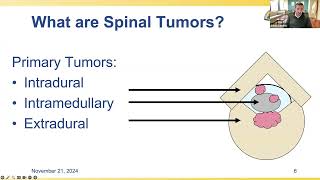
Understanding and Treating Spinal Tumors
Gain insights into spinal tumor types, diagnosis methods, and current treatment approaches from Johns Hopkins' leading neurosurgery expert in this comprehensive medical overview.