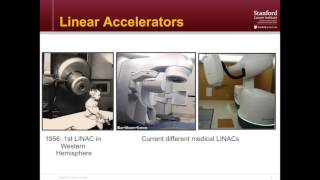
Targeted Approaches with Radiotherapy for Cancer
Explore targeted radiotherapy approaches for cancer treatment, including motion management, SABR, and hadron therapy. Learn about clinical research advancements and potential new applications.

Yale Radiology Global Outreach - Interventional Radiology in Tanzania
Explore Yale's global outreach efforts in interventional radiology in Tanzania, covering facilities, training, and long-term plans for sustainable healthcare development.
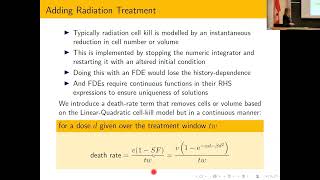
Modelling Cancer Radiotherapy: Fractional vs Ordinary Differential Equations
Explore a 19-minute conference talk on modeling cancer radiotherapy, comparing fractional and ordinary differential equations. Delivered by Kathleen Wilkie from Toronto Metropolitan University on September 23, 2024, as part of the Frontiers in Computatio…
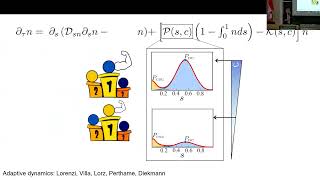
Modelling the Impact of Intra-Tumour Heterogeneity on Radiotherapy Outcomes
Explore a 39-minute lecture on the impact of intra-tumour heterogeneity on radiotherapy outcomes, delivered by Giulia Celora from University College London. Delve into the complex world of mathematical oncology as part of the Fields Institute's Thematic…
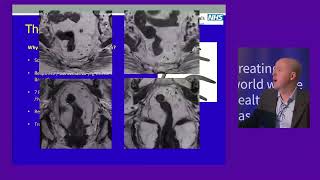
MRI in Oncology Imaging and Radiotherapy
Explore advanced MRI techniques in oncology imaging and radiotherapy, focusing on clinical applications and best practices for cancer diagnosis and treatment planning.
The Future of Image-Guided Radiotherapy: Advances in MR-Guided Techniques
Exploring MR-guided radiotherapy: its history, advantages, and future potential in cancer treatment. Discusses advancements in image-guided radiotherapy and the impact of on-board MR imaging.
A Dozen Uses for Medical Radiation
Explore 12 innovative applications of medical radiation in cancer treatment and diagnosis, presented by Dr. Shane Hopkins from the William R. Bliss Cancer Center.
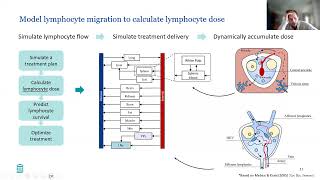
A Stochastic Model of Blood Flow to Calculate Blood Dose During Radiotherapy
Explore a stochastic model for calculating blood dose in radiotherapy, enhancing understanding of treatment effects on blood flow and improving patient outcomes.
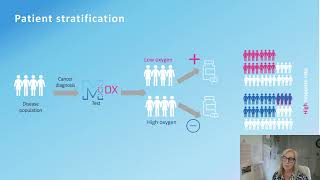
Hypoxia Biomarkers - Personalizing Cancer Treatments by Targeting Hypoxia
Explore hypoxia biomarkers for personalized cancer treatments. Learn about tumor microenvironments, prognosis impacts, and treatment resistance. Gain insights into targeting hypoxia for improved patient outcomes.

Understanding Radiation Exposure and Improving Patient Outcomes from Radiotherapy - Part 2
Explore advancements in radiotherapy, including hypofractionation and SBRT, to improve cancer treatment outcomes and patient quality of life.

Understanding Radiation Exposure and Improving Patient Outcomes from Radiotherapy - Part 1
Explore epidemiological approaches to understanding radiation exposure effects from radiotherapy and improving patient outcomes in cancer treatment.
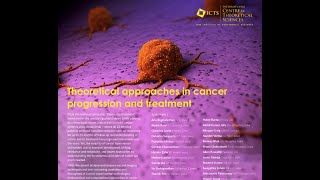
Understanding Tumour Responses to Radiotherapy Using Mathematical Models - Lecture 2
Explores mathematical modeling of tumor responses to radiotherapy, focusing on theoretical approaches to understand and predict treatment outcomes in cancer progression.

How Particle Accelerators Are Used to Cure Cancer - With Simon Jolly
Explore how particle accelerators revolutionize cancer treatment through proton beam therapy, offering precise tumor targeting and reduced damage to healthy tissue.
Advancing Personalized Medicine and Radiotherapy through AI-Enabled Computer Vision
Explore AI and computer vision's impact on medical imaging for personalized medicine and radiotherapy, covering research, tools, and real-world applications.
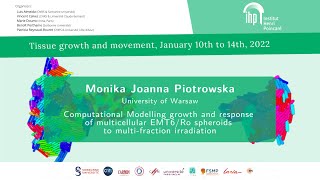
Computational Modelling of Growth and Response of Multicellular EMT6/Ro Spheroids to Multi-Fraction Irradiation
Explore computational modeling of EMT6/Ro spheroid growth and response to multi-fraction irradiation, enhancing understanding of cancer dynamics and potential therapeutic improvements.
An ML System for Radiotherapy Cancer Care - From Lab to Lives
Explore ML algorithm deployment for prostate cancer radiation therapy planning in a clinical study. Learn about evaluation methods, physician assessments, and real-world impact on patient treatment.
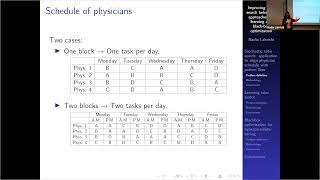
Stochastic Tabu Search and Improvements - Application for Physician Scheduling
Explore stochastic tabu search for physician scheduling, including hyperparameter tuning and learning algorithms to enhance efficiency in radiotherapy centers.
An ML System for Radiotherapy Cancer Care - From Lab to Lives
Explore an innovative ML system revolutionizing radiotherapy cancer care, from research to real-world implementation and patient impact.

Supporting Leukemia Care | Sahasra Charkam | TEDxHopkinton HS Youth
NOTE FROM TED: Please do not look to this talk for medical advice and seek professional help before modifying your diet. This TEDx event was independently organized by volunteers by and for a youth audience and only represents the speaker's personal views and understanding of diet, the gut microbiom

Touch Your Ta-Tas! | Kristina Keller | TEDxGreenhouse Road
1 in 8 women will be diagnosed with breast cancer in their lifetime. While it is widely known that monthly breast self-exams are critical in early detection and treatment, only about one-third of women do the exam. Kristina Keller, a stage IV breast cancer survivor shares her struggles and why many
AI w diagnostyce obrazowej i planowaniu radioterapii | Armand Cholewka | TEDxKatowice
Współczesna medycyna dynamicznie rozwija się dzięki technologii, szczególnie w diagnostyce i terapii. Jeszcze kilkadziesiąt lat temu parametry zdjęć rentgenowskich ustawiał ręcznie elektroradiolog, dziś robią to algorytmy. Coraz większą rolę w tym procesie odgrywa sztuczna inteligencja, wspierając d