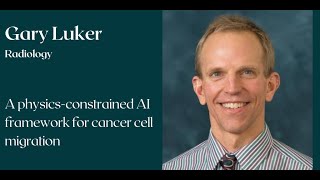
Physics-Constrained AI Framework for Cancer Cell Migration
Explore a physics-constrained AI framework for understanding cancer cell migration, enhancing research in radiology and biomedical engineering.

Artificial Intelligence for More Effective Cancer Diagnosis - Part 2
Explore AI's role in enhancing cancer diagnosis through digital pathology, improving research, diagnostics, and genomics for more effective patient care.

Artificial Intelligence for More Effective Cancer Diagnosis - Part 1
Explore machine learning applications in radiology for improved cancer diagnosis with Professor Andrea Rockall's insights on whole body MRI, frailty, and patient safety.
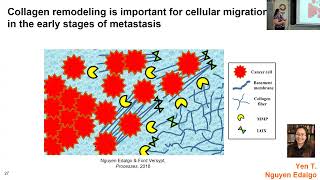
Agent-Based Modeling of Cancer Cell Migration in Response to Tumor Microenvironmental Signals
Explore computational modeling techniques for simulating cancer cell migration and interactions within tumor microenvironments, enhancing understanding of disease progression.
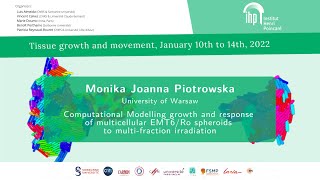
Computational Modelling of Growth and Response of Multicellular EMT6/Ro Spheroids to Multi-Fraction Irradiation
Explore computational modeling of EMT6/Ro spheroid growth and response to multi-fraction irradiation, enhancing understanding of cancer dynamics and potential therapeutic improvements.
Working on Cancer
Exploring whole genome sequencing for cancer treatment using Clojure, Neo4j, and domain-specific languages. Discusses challenges, solutions, and non-traditional team approaches in clinical settings.
An ML System for Radiotherapy Cancer Care - From Lab to Lives
Explore ML algorithm deployment for prostate cancer radiation therapy planning in a clinical study. Learn about evaluation methods, physician assessments, and real-world impact on patient treatment.
Medical Physics Education Programs at Johns Hopkins - Training Leaders in Radiology
Discover comprehensive medical physics education programs at Johns Hopkins, including MS and PhD tracks, with insights from students and details about career paths in clinical and research settings.
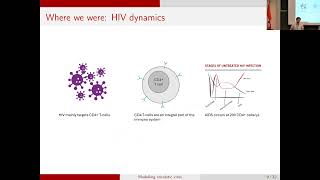
What Can Viral Dynamics Teach Us About Modeling Immunotherapies?
Explore mathematical modeling approaches from viral dynamics and their applications in understanding immunotherapy responses and tumor-immune system interactions.
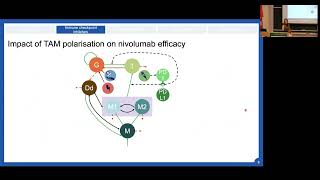
Overcoming Immune Evasion in Glioblastoma by Targeting Tumour-Associated Macrophages
Explore groundbreaking research on targeting macrophages to combat immune evasion mechanisms in glioblastoma treatment, featuring mathematical oncology approaches and therapeutic strategies.
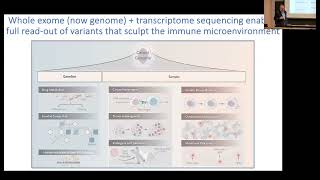
Measuring Cancer and Immune Systems Using Cell-free DNA Sequencing
Discover groundbreaking techniques in cancer detection through cell-free DNA sequencing, exploring how immunotherapy measurements can revolutionize cancer treatment and immune system monitoring.
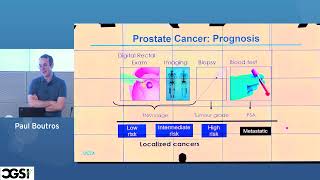
Computational Methods to Quantify Lethal Cancer Evolution
Explore computational methods for quantifying lethal cancer evolution. Gain insights into driver mutations, evolutionary history, and genomic correlates of prostate cancer's epigenetic landscape.
Computational Insights into Cancer Immunology
Explore computational approaches in cancer immunology, focusing on RNA sequencing, tumor microenvironment analysis, and immunotherapy response prediction in non-small cell lung cancer.
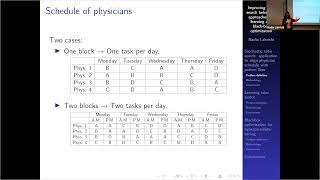
Stochastic Tabu Search and Improvements - Application for Physician Scheduling
Explore stochastic tabu search for physician scheduling, including hyperparameter tuning and learning algorithms to enhance efficiency in radiotherapy centers.
Machine Learning for Chronic Disease Management - Focus on Precision Oncology
Explore machine learning applications in chronic disease management, focusing on precision oncology, statistical modeling for multiple myeloma, and deep learning for risk stratification.
An ML System for Radiotherapy Cancer Care - From Lab to Lives
Explore an innovative ML system revolutionizing radiotherapy cancer care, from research to real-world implementation and patient impact.
A Labor of Love - The MODEL Program - 27 March 2024
Explore the MODEL Program's impact on medical education through expert insights from Stanford's Department of Medicine faculty and leadership.
Tissue Fluidification in Pathophysiology: Contact Percolation Sets Phase Transitions - Lecture
Explore tissue fluidification in cancer progression, focusing on unjamming transitions, cell motility, and the impact of contact percolation on collective cell behavior and gene expression.
Unlocking the Potential of Ultra-Low Frequency Variant Identification for Cancer Research
Explore advanced techniques for identifying ultra-low frequency variants in cancer research, enhancing biomarker discovery and personalized treatment strategies.

Overcome Challenges in Cancer Research with xGen NGS Solutions for Oncology and MRD Research
Explore advanced NGS solutions for cancer and MRD research, enhancing library complexity and offering customizable hybridization capture approaches.

It's Your Mindset That Makes the Difference - Overcoming Childhood Cancer
Discover how overcoming childhood cancer shaped a resilient mindset. Learn to value life, find identity, and make a positive impact on others through personal experiences.