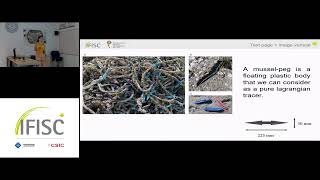
Lagrangian Transport of Floating Plastics at Local and Regional Scales Using MOHID-Lagrangian
Explore Lagrangian transport modeling for floating plastics using MOHID-Lagrangian, focusing on local and regional scale applications.
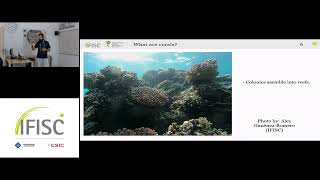
On the Formation of Coral Reefs
Explore the fascinating process of coral reef formation, delving into the complex ecological systems and environmental factors that shape these underwater wonders.
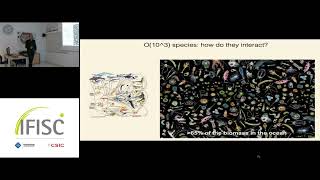
Understanding the Structure and Functioning of Oceans' Microbiomes - Toward a Holistic View
Explore ocean microbiomes' structure and function, gaining a holistic perspective on these complex ecosystems and their impact on marine environments.
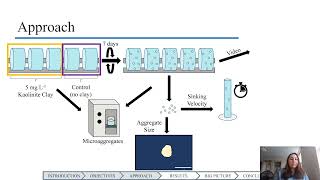
Role of Particle Associated Bacteria in Aggregate Formation in the Current and Future Ocean
Explore the role of particle-associated bacteria in marine snow formation and its impact on the biological carbon pump in current and future ocean conditions.
Machine Learning Methods for Climate Science - Lecture 4
Explore machine learning applications in climate science, focusing on advanced techniques for analyzing and predicting complex atmospheric and oceanic processes.
Machine Learning Methods for Climate Science - Lecture 2
Explore machine learning applications in climate science, focusing on advanced techniques and their impact on understanding and predicting climate phenomena.
Machine Learning Methods for Climate Science - Lecture 3
Explore machine learning applications in climate science, focusing on advanced techniques for analyzing and predicting complex atmospheric and oceanic processes.
Machine Learning and the Earth David Hall
Explore machine learning's potential in addressing urgent global challenges like climate change, with insights on strategies, risks, and implications for various fields.
Machine Learning Meets Data Assimilation - Physics-Based Data-Driven Digital Twins
Explore the intersection of machine learning and data assimilation for creating physics-based, data-driven digital twins in weather and climate modeling.
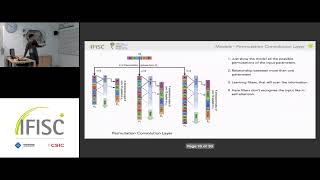
Deep Learning Applied to the Analysis of Dissolved Carbon Dioxide in Coastal Areas of the Balearic Islands
Explore deep learning techniques for analyzing dissolved CO2 in Balearic coastal areas, covering self-attention, permutation convolution, and symbolic regression.

Wiring an Interactive Ocean
Explore the groundbreaking underwater network of cameras and sensors transforming our oceans into a global interactive laboratory, sparking an explosion of rich data about the world below.

The Intriguing Sound of Marine Mammals
Explore the fascinating world of underwater sound and discover how whales use song to communicate across vast ocean distances, revealing hidden wonders of marine life.

On the Shoulders of Giants
Renowned oceanographer Dr. Sylvia Earle shares insights on ocean exploration, conservation, and technological advancements, emphasizing the importance of protecting marine ecosystems for global sustainability.

Tagging Tuna in the Deep Ocean
Explore cutting-edge tagging technology used to track tuna, revealing insights into their behavior, migration patterns, and ocean habitats while highlighting conservation efforts for these threatened marine athletes.
Early Returns from Four Far-Flung Field Experiments
Insights from NASA's global field experiments: Arctic ecosystems, coral reefs, and climate change. Scientists share initial observations and future research opportunities from four innovative projects spanning diverse Earth systems.
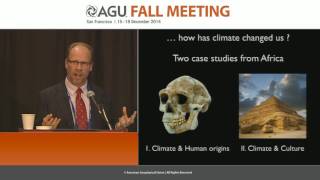
Climate and Life - A Human Retrospective
Explore climate's impact on human evolution, from early hominins to Holocene populations. Discover how paleoclimate data reveals connections between environmental changes and human development.
The Science and Ethics of Ocean-Based Carbon Dioxide Removal
Explore ocean-based carbon dioxide removal strategies and the scientific code of conduct guiding research into their durability and scalability for climate solutions.
Intensifying Storms and Flooding in a Changing Climate
Experts discuss climate change's impact on storm intensity, rainfall, and flooding. Insights on hurricane intensification, data collection, and population displacement due to extreme weather events.
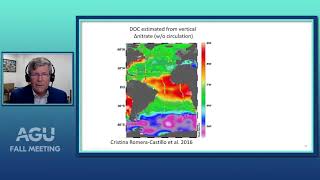
Oceanic Dissolved Organic Carbon - The World Tour
Explore the dynamics of oceanic dissolved organic carbon, a major carbon reservoir, through global observations and data analysis. Uncover sources, sinks, and controls across ocean basins.
The Southern Ocean’s Role in Glacial Cycles - Engine Not Caboose?
Explore the Southern Ocean's critical role in Earth's climate engine and glacial cycles through multiple proxies, focusing on its impact on atmospheric CO2 levels and ocean dynamics.
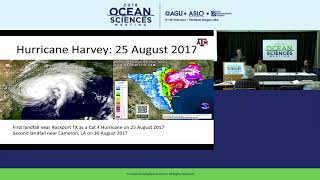
Unusual Ocean Conditions and Hurricane Harvey
Exploring unusual Gulf of Mexico conditions that contributed to Hurricane Harvey's intense rainfall, atypical storm surge, and rapid intensification through new research findings.