Data Assimilation and Dynamical Systems in Earth Sciences
Explore data assimilation in Earth sciences, covering theory, methods, and applications in weather, climate, and environmental monitoring. Gain hands-on experience with various techniques and uncertainty estimation.
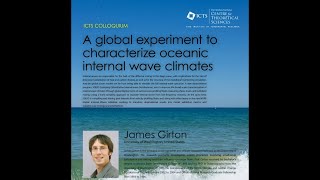
A Global Experiment to Characterize Oceanic Internal Wave Climates
Explore oceanic internal waves' impact on global climate, mixing processes, and circulation patterns through the SQUID program's innovative global observations and data analysis techniques.
Data Assimilation and Dynamical Systems in Earth Sciences - Lecture 3
Explore data assimilation theory and applications in Earth sciences, focusing on dynamical systems. Gain hands-on experience with practical techniques for integrating observations and forecasts in weather and climate models.
Bayesian Theory, Cost Function, Minimization, and Incremental Optimization in Data Assimilation
Explore data assimilation in weather and climate models, covering theory, methods, and applications. Gain hands-on experience with various techniques and their use in atmospheric and oceanic studies.
Ocean Data Assimilation - Lecture 2
Explore advanced ocean data assimilation techniques, their applications in climate modeling, and methods for integrating diverse oceanic observations to improve forecasting accuracy and understanding of marine systems.
Ocean Data Assimilation - Applications in Weather and Climate Models
Explore ocean data assimilation techniques, their applications in monitoring and understanding climate variability, and integration with atmospheric and land surface studies.
Europa Clipper Mission Preview - NASA's Search for Life on Jupiter's Moon
NASA's Europa Clipper mission: Exploring Jupiter's icy moon to determine its potential for supporting life. Experts discuss the mission's goals, technology, and significance for understanding icy worlds beyond Earth.
Data Assimilation - Basic Theory - Lecture 2
Explore advanced data assimilation theory, methods, and applications in weather and climate modeling. Gain insights into uncertainty estimation and remote sensing observation utilization.
Data Assimilation - Basic Theory - Lecture 1
Explore fundamental concepts and theory of data assimilation in weather and climate modeling, focusing on its applications in atmospheric and oceanic sciences.
Exploring Internal Gravity Wave Interactions with Eddies and Waves
Investigación sobre interacciones entre ondas de gravedad internas, remolinos y otras ondas en fluidos geofísicos, examinando su impacto en la dinámica atmosférica y oceánica.
Impact of a Mesoscale Eddy on the M2 Internal Tide in 5km ICON-O
Explore the influence of mesoscale eddies on M2 internal tides using high-resolution ICON-O simulations. Gain insights into complex ocean dynamics and energy transfers in geophysical fluid systems.
On Scaling Theories of Vortex Dynamics in Two-dimensional Turbulence
Explores scaling theories of vortex dynamics in 2D turbulence, examining energy transfers and cascades in geophysical fluid systems. Contributes to understanding multi-scale interactions in atmospheric and oceanic flows.
Impact of Tides and Eddies on Ocean Energy Spectra in Submesoscale Resolving Simulations
Explore the influence of tides and eddies on ocean energy spectra at submesoscale resolutions, examining their impact on energy transfers and dynamics in geophysical fluid systems.
Instabilities in Neural Autoregressive Models of Geophysical Flows
Explores instabilities in neural autoregressive models for geophysical flows, discussing challenges and advancements in predicting complex atmospheric and oceanic dynamics using machine learning techniques.
Energetically Consistent Ocean Model Parameterisations - Lecture 2
Explores energetically consistent parameterizations for ocean models, focusing on advanced techniques to accurately represent complex oceanic processes and energy transfers across scales.
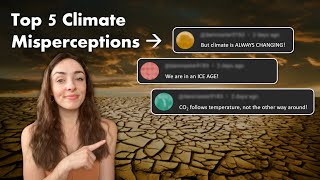
Busting Climate Change Myths - How Climate Change Actually Works
Debunking common climate change misconceptions, explaining the science behind global warming, and addressing the impact of CO2 on Earth's ecosystems and oceans.
A Forensic Scientist's Approach to Microplastics
Forensic scientist explores innovative solutions to plastic pollution, drawing on expertise in fiber analysis to address environmental challenges and develop sustainable alternatives.
How Uncertain is Future Sea Level Rise
Explore the uncertainties surrounding future sea level rise with expert Tamsin Edwards in this insightful keynote talk from Climate Informatics 2024.
Dark Oxygen Discovery Follow-Up - Addressing Comments and Questions
Explores "dark oxygen" produced by seafloor nodules, addressing formation, recharging, hydrogen fate, synthesis potential, oxygen contribution, and implications for marine life and Earth's evolution.
Discovery of Dark Oxygen Produced at the Sea Floor - Reshaping Our Understanding of Earth's Oxygen Cycle
Explores groundbreaking discovery of 'dark oxygen' produced in deep ocean, challenging our understanding of Earth's oxygen cycle and its implications for life origins and marine ecosystems.
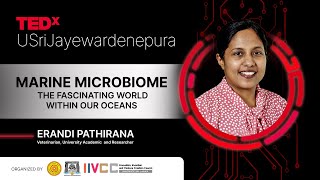
The Fascinating World of the Marine Microbiome
Explore the vital role of marine microbes in producing oxygen and maintaining ocean health. Discover the untapped potential of the marine microbiome for biodiscovery and its significance for our planet's future.