Performant Python
Discover tools and techniques for optimizing Python code performance without sacrificing readability. Learn to write "pythonic" code, utilize built-in features, and leverage the ecosystem for faster execution.
Developing a Real-Time Automated Trading Platform with Python
Aprenda a desarrollar una plataforma de trading automatizado en tiempo real utilizando Python, explorando sistemas multiagente, procesamiento de datos y visualización con herramientas como ZeroMQ, NumPy y PyQtGraph.
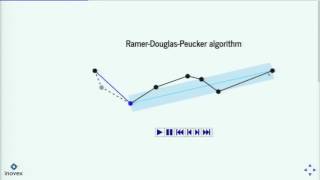
Handling GPS Data with Python
Learn to handle GPS data in Python, from reading/writing tracks to visualizing on OpenStreetMap. Explore libraries, add elevation data, and understand algorithms like Douglas-Peucker and Kalman filters for track simplification and smoothing.
A Gentle Introduction to Neural Networks - with Python
Explore neural networks and create your own using Python. Learn about AI challenges, biologically-inspired networks, training methods, and achieve 97.5% accuracy in recognizing handwritten numbers.
Scientist Meets Web Dev - How Python Became the Language of Data
Explore Python's evolution as a data science powerhouse, blending scientific computing with web development. Learn how this versatile language empowers researchers and analysts to tackle complex data challenges.
PyPy Meets Python 3 and Numpy
Explore PyPy's advancements in supporting Python 3.x and scientific computing with Numpy, offering improved performance and expanded application domains for Python developers.
Pybind11 - Seamless Operability Between C++11 and Python
Explore pybind11, a lightweight C++11 library for creating Python extension modules with minimal boilerplate. Learn to write bindings, handle complex data structures, and understand internal mechanisms.
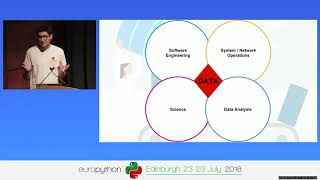
The Rise of Python in the Data Communities
Explore Python's growing influence in data-driven industries, its impact on the ecosystem, and future challenges in scaling for massive data processing.
Air Quality & Python - Developing Online Analysis Tools
Explore Python-based online tools for analyzing air quality data, integrating libraries like Pandas and NumPy with Django and Plot.ly to create interactive visualizations and support research and education.
From Linear Algebra to Machine Learning
Explore the mathematical foundations of machine learning, from linear algebra to optimization, with practical Python implementations using NumPy, SciPy, and TensorFlow.
Change Music in Two Epochs
Explore deep learning applications in music: instrument detection, isolation, and generation. Learn to build synthesizers, create datasets, and adapt models for increasing complexity.

Understanding Numba - The Python and Numpy Compiler
Explore Numba, a JIT compiler for Python and Numpy, to accelerate numerical code. Learn implementation techniques, performance optimization, and compare with other high-performance computing options.
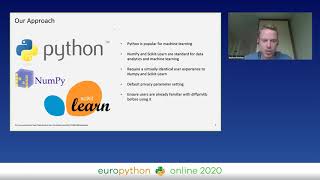
Diffprivlib - Privacy-Preserving Machine Learning with Scikit-Learn
Explore differential privacy in machine learning using Diffprivlib, a tool for training accurate models with robust privacy guarantees, seamlessly integrating with scikit-learn and numpy.
Live-Coding a Music Synthesizer
Live-coding session using NumPy and SoundDevice to create realistic instrument sounds with math. Gradually build a synthesizer from simple sine waves to playing classical music, while exploring music theory concepts.
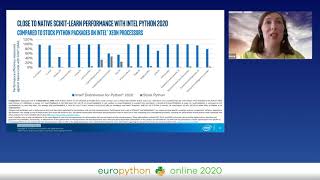
The Painless Route in Python to Fast and Scalable Machine Learning
Learn to optimize Python for high-performance machine learning, from Intel-enhanced packages to scalable data processing and analytics pipelines that rival C++/MPI performance on large datasets and clusters.
Top 15 Python Tips for Data Cleaning - Understanding
Discover 15 essential Python tips for effective data cleaning and understanding, focusing on Pandas and NumPy libraries to enhance your data analysis skills.
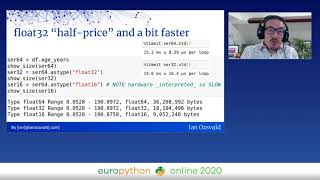
Making Pandas Fly
Optimize Pandas for larger datasets: compression techniques, faster operations, and alternatives like Dask and Vaex. Learn to process more data efficiently and boost your data analysis capabilities.
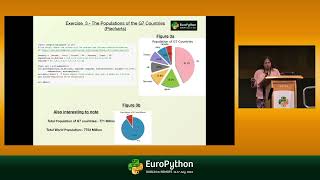
Creating the Next Generation of Billionaires - Part 4
Explore how young people use Python to analyze real-world issues like climate change and population growth, showcasing the impact of early programming education on problem-solving skills.
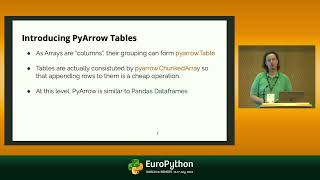
PyArrow and the Future of Data Analytics
Explore PyArrow's transformative impact on data analytics, covering its in-memory format, disk format, network protocol, dataframe library, and query engine integration with NumPy and Pandas.
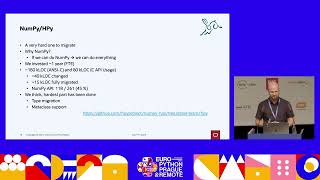
HPy - The Future of Python Native Extensions
Explore HPy, a new C extension API for Python that ensures compatibility across versions and implementations, with insights from porting NumPy to HPy.
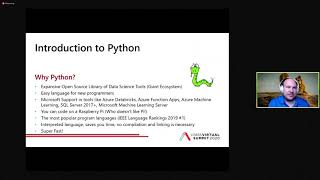
Code Like a Snake Charmer Version 2.0 - Introduction to Python
Comprehensive introduction to Python for data science, covering basics and machine learning using real-world datasets. Ideal for beginners looking to integrate Python into Microsoft tools.