
Give Rust a Chance for High-Performance Data Processing in Python
Explore high-performance data processing in Python using Rust modules. Create Rust modules with Python bindings and discover why Rust is replacing C in data libraries.
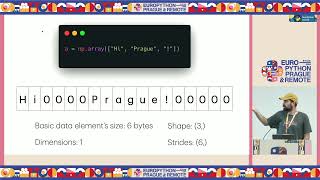
How We Sped Up NumPy's String Operations for NumPy 2.0
Explore performance improvements in NumPy 2.0's string operations, delving into ufunc internals, dtypes, and type promotion for a deeper understanding of the enhancements.

ME3255 - Python Code Examples from Discussion
Learn Python coding techniques for mechanical engineering applications through practical examples and discussions.
Equivalence by Canonicalization for Synthesis-Backed Refactoring
Explore a novel program synthesis framework for refactoring code to use library components, featuring a sound equivalence checking technique and applications in functional and numerical computing.

Distributed and Parallel Image Processing on Livebook - ElixirConf EU 2023
Explore distributed and parallel image processing in Elixir using Livebook. Learn to implement face-hiding techniques with Nx and Evision, leveraging Flow for faster and more robust processing.
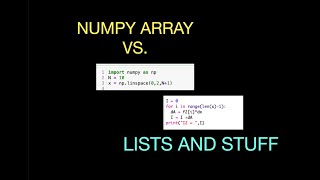
Python: Numpy Arrays vs. Lists
Explore numpy arrays and lists in Python, comparing their functionalities for physics calculations and data visualization through practical examples and coding exercises.
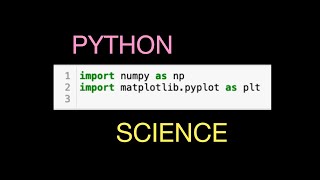
Physics Python Warm Up Questions Using Numpy
Master Python for physics: import libraries, create arrays, plot data, manipulate matrices, calculate eigenvalues, and handle complex data structures.
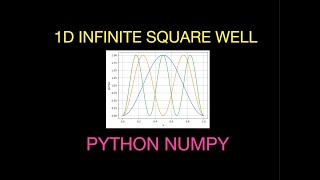
Solving Schrödinger's Equation as an Eigenvalue Problem with Numpy
Explore numerical solutions to the 1D infinite square well using Python's NumPy library and the finite difference method for Schrödinger's equation.
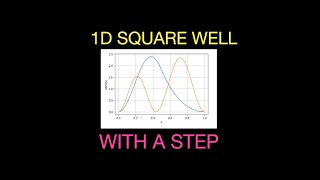
1D Square Well with Step Potential - Finite Difference Solution
Explore numerical solutions for 1D square well with step potential using finite difference method in Python. Learn eigenvalue problem solving and result normalization.
Optimizing Python Code Speed with Functools and NumPy Vectorize
Boost Python code performance using functools and numpy vectorization techniques for faster execution and improved efficiency.

Deep Dive: Array API Tests in Ivy - Tutorial 14
Explore the Array API test suite integration in Ivy's testing pipeline, covering standard implementation, test execution, and skipping methods.
AI for Everyone - Creating Checkerboard Pattern in OpenCV
Learn to create a checkerboard pattern using OpenCV and Python, mastering numpy slice functions and array manipulation for visual programming projects.
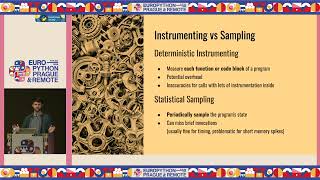
Profile, Optimize, Repeat: One Core Is All You Need - Boosting Data Analysis Pipeline Performance
Boost data analysis pipeline performance on a single core. Learn profiling tools, optimization strategies, and techniques using numpy, numba jit-ing, and pybind11 extensions.
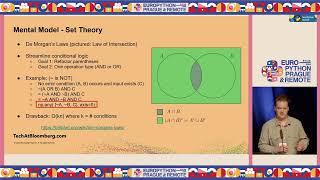
Vectorization Techniques for 1000x Python Speedups - No C or Spark Required
Discover techniques for achieving 1000x speedups in Python through vectorization, matrix operations, and creative optimization strategies. Learn to apply these methods to complex financial and ESG computations.
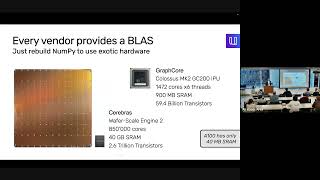
Fantastic Data Science Libraries and Where to Use Them
Discover high-performance alternatives to popular data science libraries, exploring GPU acceleration, distributed computing, and optimization techniques for faster data processing in Python.
Top 4 Python Libraries for Data Science
Explore four essential Python libraries for data science: NumPy, Pandas, Matplotlib, and Seaborn. Learn their key benefits and practical applications in fundamental data science concepts.
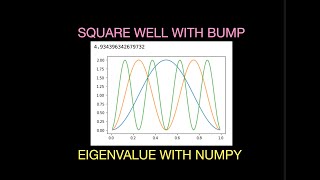
Solving the Square Well with a Bump Using Python and NumPy - Eigenvalue Problem
Solve the infinite square well with a bump potential using Python and NumPy. Learn finite difference method, matrix construction, and eigenvalue problem solving for quantum mechanics.
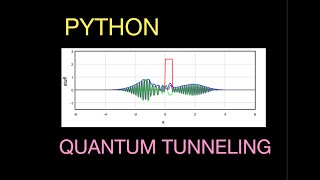
Quantum Tunneling: Modeling with NumPy and Python
Model quantum tunneling using Numpy and finite difference method. Learn theory, create potential, wave functions, and Hamiltonian matrices. Visualize results with Python animations.
The Missing Python Introduction for Scientists - Performance and Efficiency
Explore Python's internals, performance optimization, and essential scientific libraries. Learn to write efficient code and choose the right tools for scientific computing tasks.
Portable High-Performance Python on CPUs, GPUs, and FPGAs
Optimize Python for high performance on CPUs, GPUs, and FPGAs. Learn HPC-oriented extensions, automatic optimizations, and portable performance techniques across architectures.

Building a Data Visualization App for Mobile Phones Using Python
Learn to create mobile data visualization apps using Python tools like NumPy and Matplotlib, without needing specialized mobile development skills.