Small Big Data - Using NumPy and Pandas When Your Data Doesn't Fit in Memory
Techniques for processing data too big for memory but too small for Big Data clusters, using NumPy and Pandas: compression, batching, and indexing for efficient data handling.
Magical NumPy with JAX
Explore JAX's NumPy-compatible API for performant numerical modeling and gradient-based optimization. Learn functional programming, deterministic random number generation, and neural network integration.
From NumPy to PyTorch - A Story of API Compatibility
Explore PyTorch's approach to NumPy compatibility, its importance, challenges, and necessary divergences in this insightful discussion on API design and data science workflows.
Employing NumPy's NPY Format for Faster Than Parquet DataFrame Storage
Explore faster DataFrame storage using NumPy's NPY format, outperforming Parquet in read/write times while supporting all DataFrame characteristics and NumPy dtypes.

Getting Started with Object-Oriented Programming Through Signals and Waves
Explore object-oriented programming by modeling signals and waves, covering inheritance, delegation, magic methods, and the Iterator Design Pattern in Python.
Vectorize Using Linear Algebra and NumPy to Make Your Python Code Fast
Learn to optimize Python code using linear algebra and NumPy vectorization techniques. Discover how to replace inefficient loops with fast NumPy operations, significantly improving performance while maintaining readability.
Three Musketeers - Sherlock Holmes, Mathematics and Python
Explore how mathematics and Python can be used to solve crime mysteries, inspired by Sherlock Holmes. Learn to apply statistical concepts and Python libraries to tackle forensic puzzles and hypothetical cases.
Building NumPy Arrays from CSV Files, Faster than Pandas
Efficient CSV parsing and conversion to NumPy arrays with full dtype support and optional type discovery, outperforming Pandas for various DataFrame shapes and heterogeneity.
Exploring Eco Topics with Python
Learn to apply Python skills to pressing environmental issues, using tools like numpy, pandas, and matplotlib to analyze deforestation, wildlife trade, and carbon pollution data.
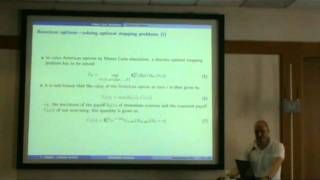
Derivatives Analytics with Python & Numpy
Explore financial derivatives analytics using Python and NumPy, focusing on efficient implementation and practical applications in quantitative finance.
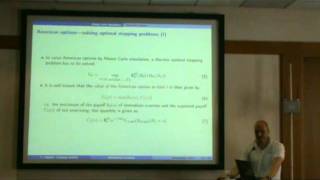
Derivatives Analytics with Python & Numpy
Explore financial derivatives analytics using Python and NumPy, focusing on efficient implementation and practical applications in quantitative finance.
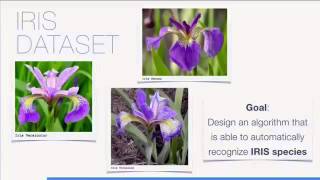
Scikit-learn to "Learn Them All"
Overview of Scikit-learn for machine learning in Python, covering supervised and unsupervised techniques, with code examples and insights on implementation. Includes comparison to other ML libraries and scaling to big data.
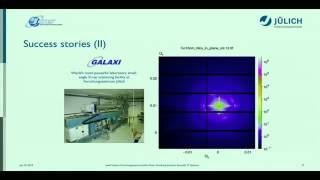
Scientific Visualization with GR
Explore scientific visualization with GR framework, covering 2D graphs to 3D scenes. Learn integration techniques, performance optimization, and real-world applications in this comprehensive overview.
Performance Python for Numerical Algorithms
Explore techniques for optimizing numerical algorithms in Python, including vectorization, multi-threading, parallelization, and dynamic compiling. Practical examples using NumPy, Numba, and other libraries.
PyPy Status Talk - No No, PyPy Is Not Dead
Explore PyPy's latest developments, including JIT compiler, garbage collection, NumPy, Python 3 compatibility, CFFI, and STM research, showcasing its continued evolution and performance improvements.
PySpark and Warcraft Data
Explore PySpark's capabilities for analyzing World of Warcraft auction data, comparing performance with other tools and demonstrating its application in processing large datasets efficiently.
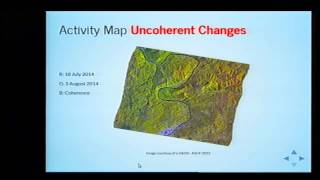
Activity Map from Space - Supporting Mine Clearance with Python
Satellite image processing with Python to detect ground activities and create maps for efficient UXO removal in minefields, using numpy, scipy, gdal, and IPython Notebook.
Everyone Can Do Data Science in Python
Learn essential data science techniques using Python, numpy, pandas, and sklearn. Explore real-world use cases with code snippets and live demos in IPython notebooks.
Numba - A JIT Compiler for Fast Numerical Code
Explore Numba, a JIT compiler for Python that accelerates numerical algorithms beyond Numpy capabilities, with CPU and GPU support. Learn its use cases, performance expectations, and inner workings.
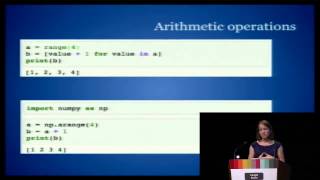
NumPy - Vectorize Your Brain
Learn essential NumPy idioms for efficient scientific computing in Python, covering array creation, broadcasting, universal functions, aggregations, slicing, and indexing to boost numerical computation speed.
Scale Your Data, Not Your Process - Welcome to the Blaze Ecosystem
Explore the Blaze ecosystem for scaling data processing across various technologies. Learn about tools for querying, migrating, and analyzing large datasets efficiently.