Surrogate Hessian Method for Geometry Optimization - QMCPACK Workshop 2023
Explore the surrogate Hessian method for efficient geometry optimization in quantum systems, presented by Jaron Krogel at the QMCPACK Workshop 2023.
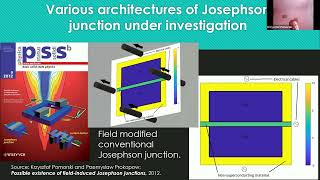
Hybrid Schrödinger-Ginzburg-Landau Approach in Study of Superconducting Integrated Structures
Explore a hybrid Schrödinger-Ginzburg-Landau approach for simulating superconducting lattices and integrated structures. Learn about relaxation algorithms and modeling techniques for superconducting devices.
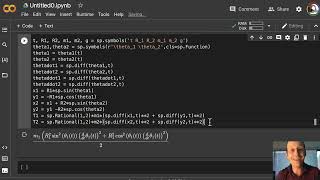
Modeling the Double Pendulum with Python and SymPy
Explore Python and sympy to model the double pendulum, from deriving equations to creating a 3D visualization.
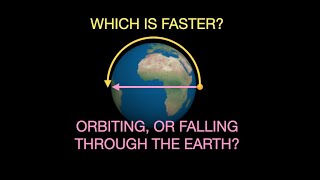
Is It Faster to Fall Through the Earth or Orbit Halfway Around?
Explore the physics behind falling through Earth vs. orbiting halfway around, comparing travel times and analyzing factors affecting motion in both scenarios.
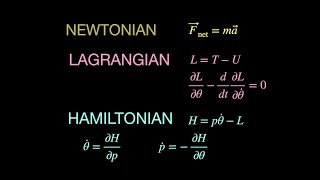
Newtonian, Lagrangian, and Hamiltonian Methods for Simple Pendulum Motion
Explore three methods for deriving pendulum equations of motion: Newtonian, Lagrangian, and Hamiltonian. Compare approaches and visualize results using Python.
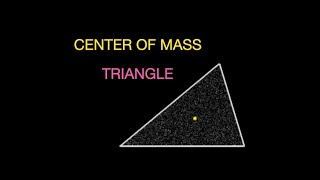
Finding the Center of Mass of a Triangle
Explore methods to determine a triangle's center of mass, including a Monte Carlo calculation using Python for added precision.
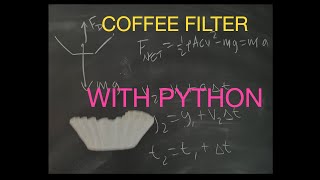
Very Simple Introduction to Numerical Calculations in Physics with Python
Learn to create numerical solutions in physics using Python, from basic coding to graphing and modifying code for practical applications.
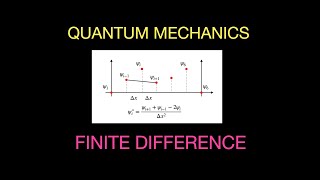
1D Infinite Square Well Solution Using Python and Finite Difference Method
Explore quantum mechanics using Python to solve the 1D infinite square well problem with finite difference method and visualize results through animations and graphs.
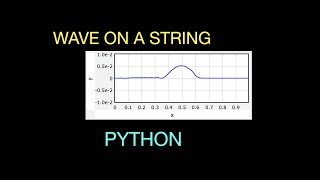
Modeling a Wave on a String - Finite Difference in Python
Model a wave on a string using finite difference calculations and Web VPython. Learn Python coding techniques for physics simulations and data visualization.
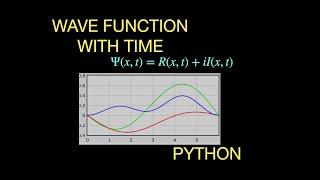
Solving the Time-Dependent Schrödinger Equation with Finite Difference Method in Python
Explore numerical solutions to the time-dependent Schrödinger equation using Python's finite difference method for 1D quantum systems.
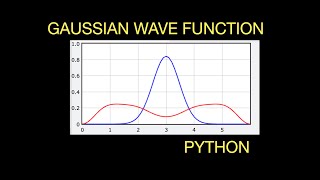
Time Evolution of a Wave Function in a Square Well with Superposition of States Using Python
Explore quantum mechanics through Python, simulating wave function evolution in an infinite square well using Gaussian initial conditions.
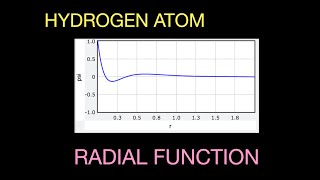
Solving the Radial Function of the Hydrogen Atom with Python and Shooting Method
Explore numerical solutions for the hydrogen atom's radial Schrödinger equation using Python and the shooting method. Gain insights into quantum mechanics and computational physics.
Modeling Free Charges in a Metal Sphere Using Python
Model free charges in a metal sphere using Python. Learn electric forces, momentum principles, Euler method, and Python coding for particle interactions and drag forces.
Ladder Physics: What Angle Does a Frictionless Ladder Leave the Wall?
Explore frictionless ladder physics, determining the angle at which it loses wall contact using Euler method and ball-spring simulations in Python.
Modeling a Flat and Spinning Solar System Using Python
Model a flat, spinning solar system with 100 masses using Web VPython and Python code. Explore advanced simulation techniques for celestial mechanics.
Modeling the Tri-Solar Syzygy with Python
Explore Python modeling of the Tri-Solar Syzygy from "The 3 Body Problem," simulating stable orbits and planetary positions in a three-star system.
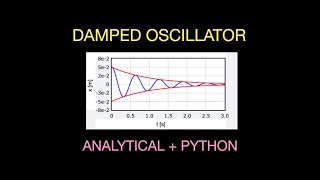
Solution for the Damped Harmonic Oscillator with Python Implementation
Explore the damped harmonic oscillator, including analytical and numerical solutions using Python, with practical examples and homework.
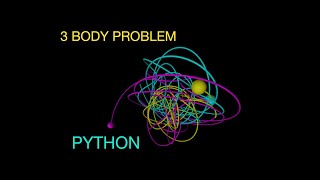
Calculate the Three-Body Problem Just Like the San-Ti
Explore the physics of the 3-body problem, its significance in "The Three-Body Problem" media, and learn computational methods to solve it.
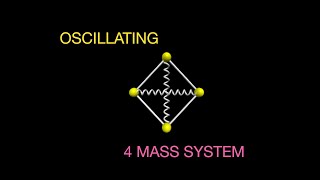
Three Ways to Solve a 4-Mass Oscillator: Energy, Python, and Lagrangian - Lecture
Explore three approaches to solving a complex 4-mass oscillator problem: energy analysis, Python simulation, and Lagrangian mechanics using SymPy.

PINNs for Inverse Problems in Scientific Computing
Explore Physics-Informed Neural Networks (PINNs) and their application in solving inverse problems in scientific computing and engineering.
Mixing Precisions in Numerical Algorithms - HPC Perspective with Modern Hardware Context
Explore mixed precision algorithms in HPC, focusing on convergence properties and performance considerations for modern hardware implementations of floating-point arithmetic.