Fundamentally Unpredictable Three-Body Systems
Explore chaotic gravitational three-body systems and their unpredictability, delving into groundbreaking research on irreversibility to the Planck length.

ITensorNetworks.jl - Introduction to Tensor Network Algorithms in Julia
Explore tensor network algorithms and their implementation in Julia using ITensorNetworks.jl for efficient quantum many-body simulations.

Computational Physics in the Classroom
Explore three approaches to integrating computational physics in education, using modeling techniques to illustrate key principles and functions.

ME3255 - Rocket Science Solutions with Python
Explore rocket science solutions using Python, covering advanced concepts and practical applications in aerospace engineering.
Solving Differential Equations in Scilab - First and Second Order ODEs
Learn to solve first and second order differential equations in Scilab using the ODE command, with practical examples from physics like radioactive decay, capacitor charging, and harmonic oscillators.
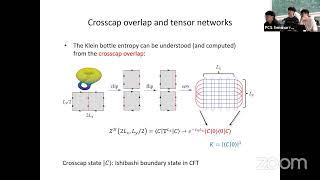
Klein Bottle Partition Function and Tensor Networks in 2D Conformal Critical Theories
Explore the combination of Klein bottle partition function and tensor networks to analyze 2D conformal critical theories and adjacent phases, including universal entropy and scaling functions.

Análisis de la Tasa de Transmisión Dependiente del Tiempo en Modelos Epidemiológicos
Explore el análisis matemático de modelos epidemiológicos SEIR, incluyendo problemas directos e inversos, regularización Tikhonov y aplicaciones con datos sintéticos y reales.
An Effective and Adequate Theory of Real Computation with Applications
Explore an effective theory of real computation, addressing inadequacies in current approaches and discussing applications in scientific and engineering disciplines.
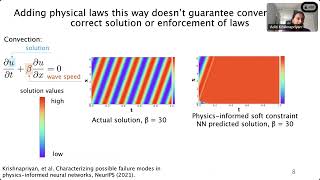
Bridging Numerical Methods and Deep Learning with Physics-Constrained Differentiable Solvers
Explore machine learning strategies for neural PDE solvers, focusing on self-supervised learning and simulation-in-the-loop approaches to enhance spatiotemporal modeling across various systems.
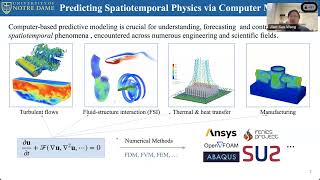
Neural Differentiable Physics: Unifying Numerical PDEs and Deep Learning for Data-Augmented Computational Physics
Explore Neural Differentiable Physics, unifying numerical PDEs and deep learning for enhanced computational modeling of complex physical systems. Learn innovative SciML approaches integrating physics principles with AI.
CFD Automation - AirShaper Course
Automate Computational Fluid Dynamics processes using AirShaper's innovative techniques. Enhance efficiency and accuracy in fluid flow simulations.

Introduction to Cosmological N-Body Simulations
Explore precision cosmology through N-body simulations, understanding their history, development, and key applications in unraveling the universe's mysteries.
Towards Data-Driven High Fidelity CFD - Lecture 2
Explore data-driven approaches for high-fidelity computational fluid dynamics in this advanced lecture on scientific machine learning and CFD techniques.
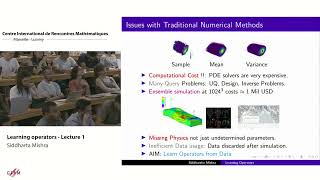
Learning Operators - Lecture 1
Explore learning operators in scientific machine learning, covering traditional methods, neural networks, and practical applications for mathematical problem-solving.
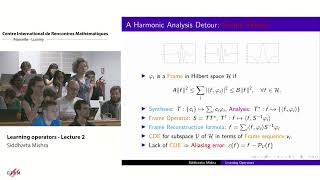
Learning Operators - Lecture 2
Explore advanced concepts in operator learning, focusing on mathematical techniques and applications in scientific machine learning.
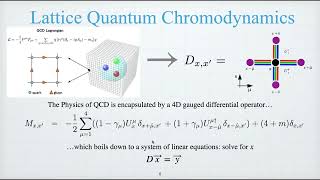
GPU Computing and Krylov Solvers
Explore GPU computing and Krylov solvers for advanced numerical computations, enhancing problem-solving skills in high-performance computing environments.
Diffusion Models for Solving Forward and Inverse Problems in PDEs - Tutorial 3
Explore diffusion models for solving forward and inverse problems in partial differential equations with expert Tony Zhuang.
Fixed Point Iteration Method for Finding Roots of Equations - Numerical Solutions
Master numerical solutions and fixed point iteration methods for finding roots of equations, with practical examples and step-by-step problem-solving techniques.
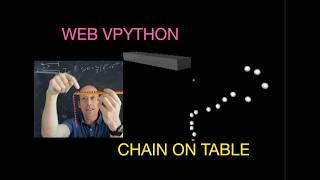
Python Physics: Numerical Modeling of a Chain Sliding Off a Table
Explore the physics of a sliding chain through numerical modeling in Python, demonstrating classical mechanics principles with practical code implementation and visualization.
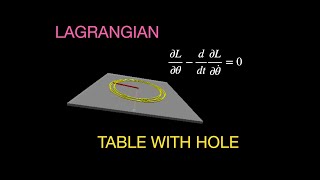
Lagrangian Mechanics - Two Masses Connected by String Through Table
Explore the dynamics of connected masses through a table hole using Lagrangian mechanics, featuring practical Python code implementation and motion equations.
Advection-Diffusion Problems on Polygonal Meshes
Explore advanced mathematical techniques for solving advection-diffusion PDEs on polygonal meshes, covering high-order finite elements, WENO methods, and practical applications in geosciences.