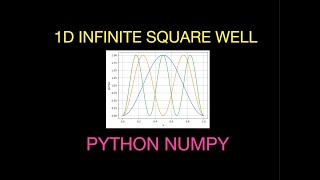
Solving Schrödinger's Equation as an Eigenvalue Problem with Numpy
Explore numerical solutions to the 1D infinite square well using Python's NumPy library and the finite difference method for Schrödinger's equation.
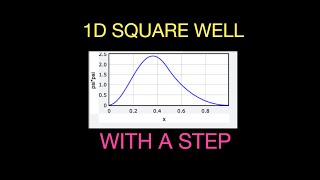
1D Square Well with Step Potential - Shooting Method
Solve 1D square well with step potential numerically using Python's shooting method. Explore infinite potential walls and half-step potential.
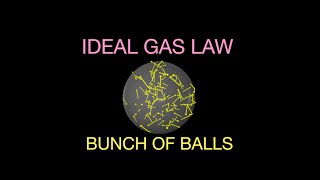
Using a Bunch of Balls to Model the Ideal Gas Law in Python
Model the ideal gas law with bouncing balls in Python and calculate pressure and temperature.
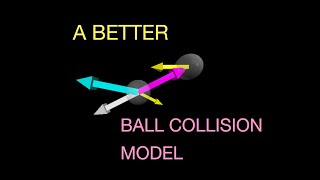
Building a Better Ball Collision Model for Solar System Simulation in Python
Improve ball collision modeling for a flat solar system simulation, focusing on conservation of momentum and angular momentum.
Two Ways to Calculate the Change in Potential Near a Dipole
Explore two methods for calculating potential change near a dipole: using electric field expression and numerical computation with Python.
Electric Field due to Uniform Sphere - Gauss's Law and Python Simulation
Explore electric fields of uniformly charged spheres using Gauss's law and Python simulation with 10,000 random points for precise calculations.
Solving a Boundary Value Problem with the Finite Difference Method - Python
Implement finite difference method in Python to solve boundary value problems for differential equations. Learn practical numerical techniques.
Modeling Projectile Motion: How Far Can a Football Be Thrown From a Building?
Explore projectile motion modeling, analyzing Peyton Manning's football throw from a building with and without air resistance using Python simulations.
The Eigenvalue Problem: An Example with Rigid Body Rotations and Python
Explore rigid body rotations using Python, solving the eigenvalue problem to find principal axes and animating results with Web VPython.
Python Physics: Modeling the Motion of a Coffee Filter with Air Drag
Model coffee filter motion with air drag using Python, breaking complex physics into manageable time intervals for accurate simulations.
Physics Informed Neural Networks - BC Incorporation
Explore Physics Informed Neural Networks and learn techniques for incorporating boundary conditions in these advanced machine learning models.
Offline Bayesian Estimation - MATLAB Demo
Explore offline Bayesian estimation techniques through hands-on MATLAB demonstrations and practical applications.
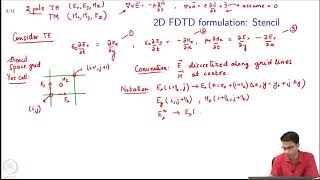
Finite Difference Time Domain Methods: 2D FDTD Formulation and Stencil
Explore 2D FDTD formulation and stencil techniques in finite difference time domain methods for electromagnetic wave simulation.
Code Walkthrough for PINNs in Burgers Equation
Explore Physics-Informed Neural Networks (PINNs) applied to the Burgers equation through a detailed code walkthrough.
Fun with Functions: Designing Fast Math Approximations with Python
Explore fast math approximation techniques for audio using Python. Learn Taylor polynomials, Padé approximants, and minimax methods to optimize computations while balancing accuracy and speed.

Integrating and Plotting Equations of Motion - CE2120 Homework 01
Integrate and plot equations of motion for engineering applications. Master techniques for solving and visualizing dynamic systems.
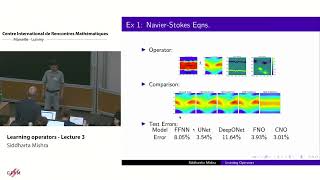
Learning Operators - Lecture 3
Explore learning operators for scientific machine learning, covering numerical experiments, generalization, and applications in inverse problems and imaging.
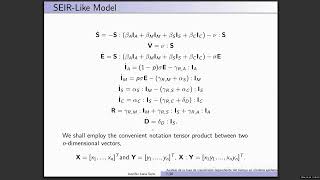
Análisis de la Tasa de Transmisión Dependiente del Tiempo en Modelos Epidemiológicos
Explore mathematical analysis of time-dependent transmission rates in SEIR-like epidemiological models, covering direct and inverse problems, Tikhonov regularization, and practical applications.
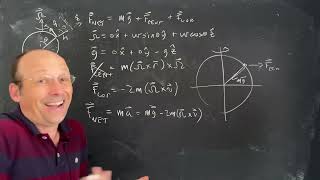
Free Fall with the Coriolis Force - Classical Mechanics Physics Problem
Explore the mathematical analysis of free-falling objects affected by the Coriolis force, including numerical calculations and Python implementation for real-world applications.
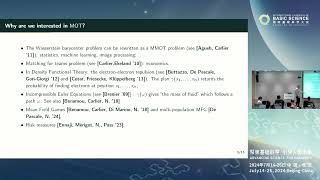
Entropic Optimal Transport: Convergence Rates and ODE Characterization
Explore recent advances in entropic optimal transport, focusing on convergence rates and a novel ODE-based numerical method for multi-marginal problems. Gain insights into theoretical bounds and practical applications.

Solving Integral Equations with Inti.jl - JuliaCon 2024
Explore Inti.jl for solving volume and boundary integral equations in mathematical physics. Learn about its user-friendly features, integration capabilities, and specialized routines for handling singular kernels.