
How Physical Systems Can Learn by Themselves - Kirk Lecture
Explore how physical systems can learn autonomously, inspired by biological neural networks, without external computation or top-down control.
The Essential Role of Philosophy in Cognitive Neuroscience and Psychology
Explore the crucial intersection of philosophy with cognitive neuroscience and psychology, gaining insights into interdisciplinary research and scientific inquiry.

Reinforcement Learning and Architectures of Intelligence - Part 3
Explore advanced reinforcement learning concepts and intelligence architectures with Microsoft Research's Ida Momennejad in this in-depth tutorial from IPAM's Mathematics of Intelligences series.
From McCulloch-Pitts to Retina: A Journey Through Neural Networks and Sensory Encoding
Explore the evolution of neural networks from McCulloch-Pitts to modern retina-inspired digital encoding, examining theoretical biophysics' impact on AI and signal processing breakthroughs.
Uncovering a Novel Molecular Therapeutic Target for HIV-Associated Neurocognitive Impairment
Discover groundbreaking research on molecular therapeutic targets for HIV-related cognitive disorders, exploring innovative treatment approaches and potential breakthroughs in neuroscience.
The Relationship Between Language and Thought - Episode 2
Explore the intricate connection between human language and cognitive abilities through expert discussions on evolution, intelligence, and the fundamental role of communication in human society.
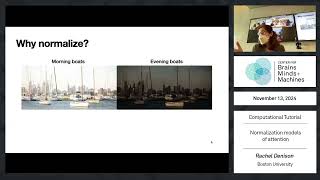
Normalization Models of Attention - From Neural Computation to Behavioral Goals
Explore how attention interacts with neural normalization to shape perception and behavior, featuring hands-on MATLAB exercises and computational modeling frameworks for cognitive processing.
What Do the Folds in Your Brain Say About You? - Understanding Brain Convolutions and Their Development
Explore the fascinating mathematics behind brain folding patterns, their development, and what these intricate structures reveal about brain size, evolution, and potential pathologies.
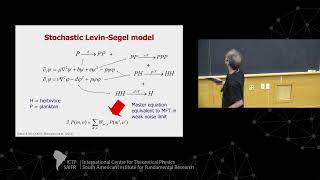
Stochastic Pattern Formation in Space and Time: From the Brain to the Biosphere - Class 5
Explore stochastic pattern formation principles across biological systems, from neural networks to ecosystem dynamics, with insights into spatial-temporal mathematical modeling.
Exploiting Compositional Structure in Deep Learning - Theory and Applications
Delve into high-dimensional function modeling and deep learning applications for heart digital twins, exploring theoretical frameworks and practical implementations in medical risk prediction.
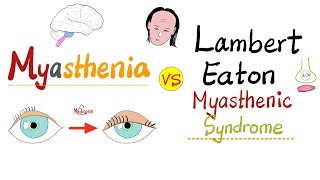
Myasthenia Gravis vs Lambert-Eaton Myasthenic Syndrome - A Neurological Comparison
Understand the key differences between Myasthenia Gravis and Lambert-Eaton Myasthenic Syndrome, exploring their causes, symptoms, diagnostic approaches, and treatment strategies.
Stochastic Pattern Formation in Space and Time: From the Brain to the Biosphere - Class 4
Explore stochastic pattern formation principles across biological systems, from neural networks to ecosystem dynamics, with insights into spatial-temporal mathematical modeling.
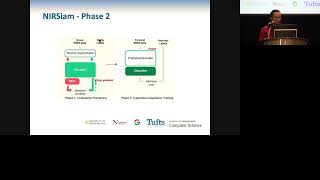
Empower Real-World BCIs with NIRS-X - An Adaptive Learning Framework for Unlabeled Brain Signals
Discover how NIRS-X adaptive learning framework enhances brain-computer interfaces by leveraging unlabeled brain signals for improved real-world applications and user interaction.

How Childhood Trauma Affects the Brain and Body - The ACES Study
Discover how adverse childhood experiences impact long-term physical and mental health through groundbreaking ACES research, revealing correlations with adult health outcomes and offering insights into trauma's lasting effects.
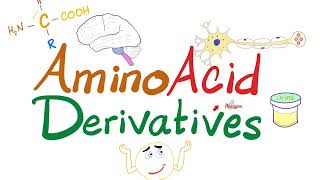
Amino Acid Derivatives: From Histamine to Epinephrine - A Biochemical Overview
Explore the biochemical pathways of amino acid derivatives, from histamine to epinephrine, understanding their crucial roles in neurotransmission and physiological functions.
Stochastic Pattern Formation in Space and Time: From the Brain to the Biosphere - Class 3
Explore stochastic pattern formation principles across biological systems, from neural networks to ecosystem dynamics, with insights into spatial-temporal mathematical modeling.

3D Sholl Analysis Using Python for Neuron Branch Mapping
Learn to perform 3D Sholl analysis in Python by creating concentric spherical shells around soma centers and calculating neuron branch intersections for detailed morphological analysis.
The Building Blocks of Mathematical Thinking
Explore the cognitive and emotional foundations of mathematical thinking, examining factors affecting math skill development and anxiety in children through behavioral and neuroimaging research.
Exploring the Human Mind Through AI, VR, and Neuroscience
Explore how AI, VR, and neuroscience intersect to advance our understanding of human cognition, perception, and behavior while developing more culturally-aware and intuitive technologies.
Exploring the Power of Thought with Brain-Computer Interfaces
Discover the groundbreaking world of Brain-Computer Interfaces (BCIs), exploring their technological innovations, medical applications, and ethical implications for human-computer interaction and healthcare advancement.
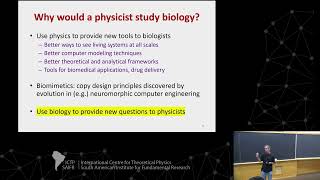
Stochastic Pattern Formation in Space and Time: From the Brain to the Biosphere - Class 1
Explore stochastic pattern formation principles across biological systems, from neural networks to ecosystem dynamics, with insights into spatial-temporal mathematical modeling.