Combining Historical and Philosophical Approaches to Understand the Concept of Information in Animal Behavior
Exploring how biologists use "information" in animal studies, examining experimental practices, historical context, and debates to clarify its meaning and implications for comparing animal and machine behavior.

Music, Brain, and Networks: A Search for Universality
Explore the intersection of music, neuroscience, and complex systems with experts discussing universal features and evolutionary perspectives across cultures.
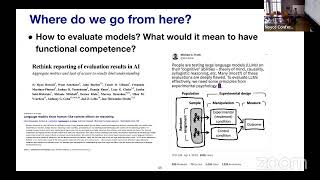
Formal and Functional Competence in Large Language Models - A Cognitive Perspective
Explore cognitive perspectives on large language models, examining formal and functional competence, linguistic confidence, and implications for AI development and evaluation.
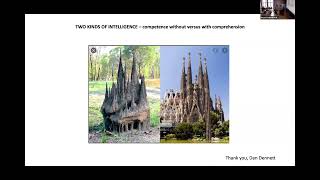
What Understanding Adds to Cambrian Intelligence - A Taxonomy
Explore the intersection of understanding and intelligence with John Krakauer, delving into a taxonomy that enhances our perspective on cognitive processes and artificial intelligence.
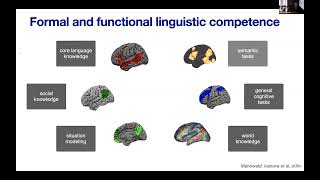
Language Understanding Goes Beyond Language Processing
Explore how language comprehension extends beyond traditional processing, delving into cognitive mechanisms and neural networks that shape our understanding of communication and meaning.
The Neuroscience and Philosophy of Curious Minds - Exploring Curiosity as a Network Phenomenon
Exploring curiosity as a networked phenomenon, bridging neuroscience and philosophy to reframe how we understand desire, wonder, and discovery in both the brain and society.
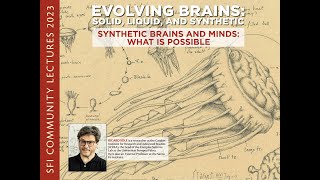
Evolving Brains - Synthetic Brains and Minds: What is Possible? - Lecture 2
Exploring synthetic biology, artificial life, and AI to understand cognitive complexity and the potential for creating synthetic minds different from human cognition.
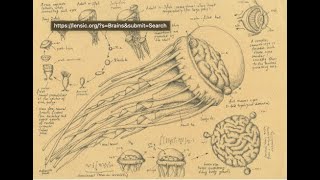
Evolving Brains: Solid, Liquid and Synthetic - Lecture 1: Liquid Brains and Solid Brains
Explore diverse intelligences across life forms, from cells to humans. Examine brain evolution, commonalities, and differences, and consider possibilities for new types of minds.
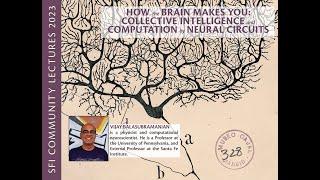
How the Brain Makes You - Collective Intelligence and Computation by Neural Circuits
Explore how billions of neurons collectively create intelligence, perception, memory, and imagination through electrical signals, revealing the mysteries of the mind's computational function.
Liquid and Solid Brains: Cognition, Criticality, and Terraforming the Biosphere
Exploring liquid and solid brains, cognitive scaling, criticality, and terraforming the biosphere through synthetic biology. Insights on collective intelligence and the future of technology in ecology and evolution.
Learning, Curiosity, and Consciousness in Human Cognition - Part 2
Exploring human uniqueness through neuroscience, comparing cognitive abilities with other animals, and examining curiosity in larger systems. Discusses learning, imagination, and consciousness in humans and beyond.
Taking Multiple Perspectives on The Brain - Part 1
Exploring diverse approaches to understanding the brain's complexity, emphasizing the importance of multidisciplinary perspectives and collaborative discourse in advancing neuroscience research.

The Smell of Inhibition - A Code in the Nose?
Explore the intriguing world of olfactory perception and the potential existence of an inhibitory code in the nose, uncovering new insights into how we process and interpret smells.
What Can Physics Tell Us About Ourselves?
Explore how physics explains human lifespan, brain capacity, and our connection to all life. Discover the physical limits of evolution and why we sleep.
Topology Shapes Dynamics of Higher-order Networks
Exploring how higher-order network interactions influence non-linear dynamics, synchronization, and percolation in complex systems like brain networks and climate patterns.

Nature of Intelligence - What is Intelligence? - Episode 1
Explore the concept of intelligence, comparing human and machine cognition, and discuss AI's potential impact on society with experts John Krakauer and Alison Gopnik.
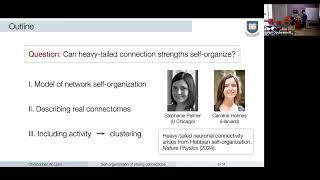
Self-Organization of Strong Connections in the Brain
Uncover how heavy-tailed connectivity in neural networks emerges from simple mechanisms. Explore a model of synaptic self-organization and its implications for understanding brain structure across species.

The Mathematics of Visual Illusions - Ian Stewart
Explore visual illusions and their mathematical underpinnings with Ian Stewart, uncovering how the brain processes ambiguous information and makes perceptual decisions.
Scaling the Maths of Life
Explore mathematical links between biological scales, from developmental biology to ecology and neuroscience, through real-life examples, games, and elegant mathematical concepts.
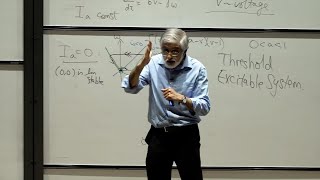
Mathematical Modelling in Biology - Neuronal Signalling
Explore Nobel Prize-winning neuronal signalling models, including Hodgkin-Huxley and Fitzhugh-Nagumo, to understand how neurons generate and propagate electrical signals vital for bodily communication.
How the Brain Creates Mind
Explore the fascinating journey of how neural activity gives rise to consciousness, cognition, and emotions through in-depth lectures on brain dynamics, electrical activity, and sleep.