Latest Advances in Stroke Treatment
Explore cutting-edge stroke therapies, risk factors, and the importance of rapid intervention. Learn how timely treatment can significantly impact recovery outcomes.
Sleep Should be Silent - Understanding and Treating Obstructive Sleep Apnea
Explore obstructive sleep apnea's symptoms, consequences, and treatments in this comprehensive update by Stanford's Dr. Rafael Pelayo.
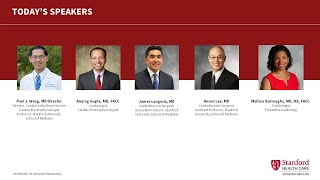
The Heart of AFib - Risk, Prevention, and Treatment
Comprehensive overview of atrial fibrillation, covering its mechanics, risks, prevention strategies, and cutting-edge treatments. Experts discuss medications, ablation techniques, surgical options, and lifestyle modifications for managing AFib.
Optimizing Your Sleep and Recognizing Serious Sleep Problems
Dr. Kushida explores sleep patterns, common sleep issues, and effective strategies for improving sleep quality. Learn to recognize serious sleep problems and discover practical tips for optimizing your rest and overall well-being.

Women's Brain Health - Optimizing Cognitive Function at Every Age
Discover daily tools to enhance nervous system health, improve learning, focus, and cognitive function. Dr. Huberman shares insights on optimizing brain performance and early Alzheimer's detection.
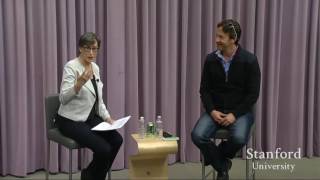
Stanford Seminar - A Brainy Approach to Innovation, David Eagleman
Explore innovative approaches to neuroscience, sensory perception, and technology with David Eagleman, delving into brain mysteries, legal implications, and future possibilities for human cognition.

Creating a Culture of Creativity - Conquering Fear and the Internal Censor
Explore neuroscience of creativity, overcome creative blocks, and boost confidence in your innovative abilities with Stanford Professor Bill Burnett's insights on fostering a creative culture.
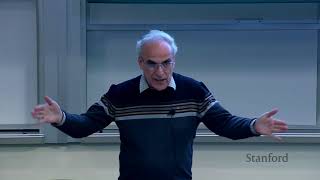
Information Theory of Deep Learning - Naftali Tishby
Explores the connection between deep learning and information theory, offering new insights into neural network design, generalization, and optimization through an information bottleneck framework.

Pivot Thinking - The Neuroscience of Design
Explore cognitive science and neuroscience findings behind design thinking, including "pivot thinking" - the ability to reframe problems and shift directions in problem-solving.
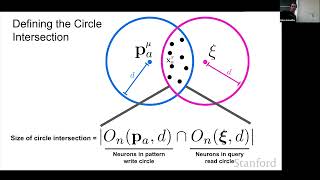
Stanford Seminar - Transformers United: Neuroscience-Inspired Artificial Intelligence
Explore neuroscience-inspired AI with insights on attention mechanisms and sparse distributed memory, bridging the gap between transformers and brain function in this Stanford seminar.
Neurology and Neuroscience - Session 1
Explore the latest advancements in neurology and neuroscience, delving into cutting-edge research and clinical applications in brain function and disorders.

SleepFM - Multi-modal Representation Learning for Sleep Across Brain Activity, ECG and Respiratory Signals
Explore SleepFM, a groundbreaking multi-modal foundation model for sleep analysis, leveraging brain, cardiac, and respiratory data to improve sleep stage classification and disorder detection.
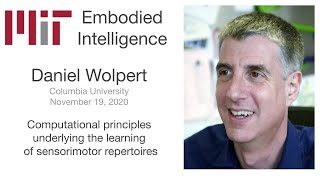
Computational Principles Underlying the Learning of Sensorimotor Repertoires
Explore computational principles of motor learning, focusing on context's role in memory activation and how statistical learning shapes object representations.

Evolution, Emotion, and Reason - Emotions, Part I
Explore the evolutionary basis of human emotions, their functions, and communication. Delve into case studies on happiness, fear, and familial emotions, with insights on infant emotional responses.
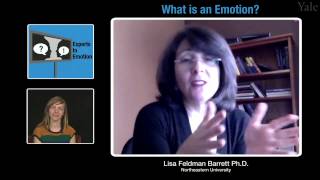
What is an Emotion - Interview with Lisa Feldman Barrett - Lecture 1.2
Dr. Lisa Feldman Barrett discusses the nature of emotions, her research findings, and future directions in emotion studies, offering insights for those interested in the field of affective science.
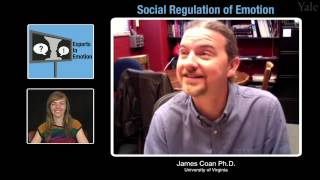
Social Regulation of Emotion - Dr. James Coan Interview - Lecture 14.3
Dr. James Coan discusses social regulation of emotion, exploring core themes in his research, future discoveries, and advice for those interested in the field of emotion studies.
Depression and Emotion in Adolescents - Experts in Emotion Series with Ian Gotlib
Explore depression and emotion in adolescents with Dr. Ian Gotlib. Learn about core research themes, future discoveries, and advice for entering the field of emotion studies.
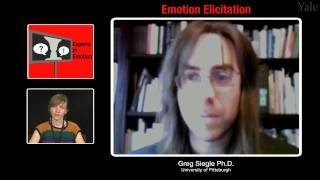
Emotion Elicitation: Research and Future Directions - Experts in Emotion Series
Dr. Greg Siegle discusses emotion elicitation research, sharing key discoveries, future prospects, and advice for aspiring emotion researchers in this insightful interview from Yale's Experts in Emotion series.

Emotion Regulation and the Brain - Experts in Emotion Series with Kevin Ochsner
Explore emotion regulation and the brain with Dr. Kevin Ochsner, discussing key research themes, future discoveries, and advice for those interested in studying emotions.

Cardiovascular Physiology - Electrical Conductivity in the Heart - Lecture 15
Explore heart electrical conductivity, ion channels, action potentials, and ECG interpretation. Understand the cardiac conduction system and its role in heartbeat regulation.

Cell Communication and Immunology in Biomedical Engineering - Lecture 8
Explore cell communication in nervous and immune systems, covering neural signal transmission, innate and adaptive immunity, and immune responses to foreign antigens.