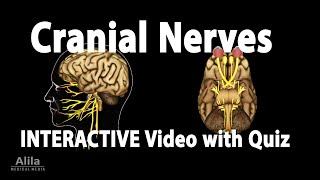
Cranial Nerves - Anatomy and Physiology with Interactive Quiz
Comprehensive overview of 12 cranial nerves: origins, functions, disorders. Includes interactive quiz for self-assessment. Ideal for medical students and healthcare professionals studying neuroanatomy.

AI to Detect and Manage Alzheimer's and Dementia - Part 2
Explore AI applications for early diagnosis and management of Alzheimer's and dementia, focusing on big data approaches to improve patient care and tackle key challenges.
There's Nothing 'Mild' about Mild Traumatic Brain Injury: Neuropsychiatric Aspects of Concussion
Explore neuropsychiatric aspects of concussion and mild traumatic brain injury with Dr. Durga Roy, challenging the notion of "mild" in these conditions.
Talent, Training and Technology in Stroke Recovery
Explore innovative approaches to stroke recovery through talent, training, and technology at Johns Hopkins' SKSI 2022 Conference.
Language Recovery in the Early Period After Stroke
Explore language recovery strategies post-stroke with insights on early intervention, innovative approaches, and cutting-edge research for improved rehabilitation outcomes.

Concepts in Brain Repair - Stroke Recovery and Innovations
Explore cutting-edge concepts in brain repair and stroke recovery with leading expert Dr. John W. Krakauer. Gain insights into innovative approaches and the latest scientific advancements.

Epidemiological Approach to Tau Propagation in Alzheimer's Disease
Explore an epidemiological perspective on tau protein propagation in Alzheimer's, uncovering insights into disease progression and potential interventions.
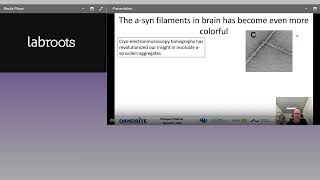
Alpha-Synuclein in Parkinson's Disease: Progression, Forms, and Neuronal Dysfunction
Explore alpha-synuclein's role in Parkinson's disease, its various forms, and potential therapeutic strategies to counteract neuronal dysfunctions and slow disease progression.
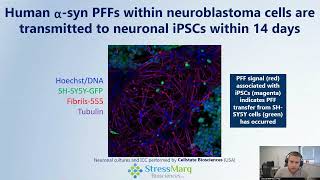
Novel Tools for Drug Discovery in Neurodegenerative Diseases
Explore novel molecular tools for Alzheimer's and Parkinson's drug discovery. Learn about in vitro generation of neurotoxic protein aggregates and their potential to accelerate research in neurodegenerative diseases.
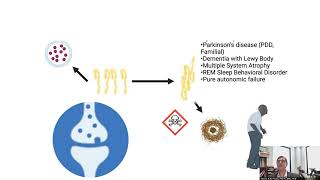
Improving Research Translation in Dementia: Humanized Mouse Models, Cognition and Imaging
Explore advancements in dementia research using humanized mouse models, cognitive assessments, and imaging techniques. Gain insights into translational approaches for understanding pathology and developing effective treatments.

Parkinson's Disease - Causes & Pathophysiology - Part 2
Explore the causes and pathophysiology of Parkinson's disease, focusing on its impact on the nervous system and the underlying mechanisms that lead to its characteristic symptoms.
Why is Functional Neurological Disorder So Poorly Understood?
Neuropsychologist Steph Blanco shares insights on Functional Neurological Disorder, exploring its prevalence, misunderstandings, and the importance of listening to patients' lived experiences to improve understanding and treatment.
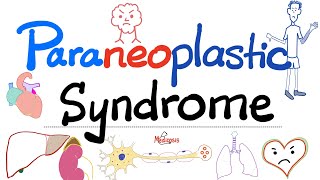
Paraneoplastic Syndromes in Cancer - Pathology Series
Comprehensive overview of paraneoplastic syndromes, exploring various cancer-associated symptoms and their underlying mechanisms. Covers key conditions and their impact on different body systems.

Basal Ganglia and Movement Disorders in Neurology
Comprehensive exploration of basal ganglia's role in movement control and disorders. Examines pathophysiology of chorea, dystonia, and tics, offering insights into voluntary and involuntary movement mechanisms.
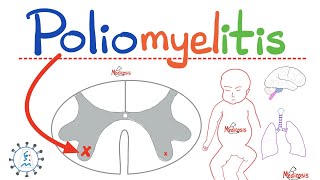
Poliomyelitis: Causes, Symptoms, and Neurological Effects
Comprehensive overview of poliomyelitis: viral transmission, vaccines, clinical manifestations, and neurological impact. Explores paralysis, anterior horn cell disease, and associated symptoms.
Antiepileptics - Nursing Pharmacology
Explore antiepileptic medications, their uses, and mechanisms in treating epilepsy and seizures. Learn key nursing considerations for safe and effective patient care.
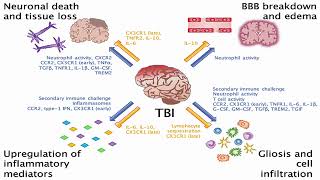
Circulating Biomarkers of Traumatic Brain Injury
Explore emerging non-invasive blood-based markers for traumatic brain injury, including proteins, nucleic acids, and extracellular vesicle-associated markers, and their potential for improved TBI management.
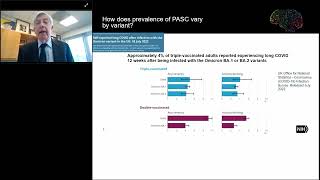
Advancing Toward Recovery from Post-Acute Sequelae of SARS-CoV-2 Infection - The NIH RECOVER Initiative
Explore the NIH RECOVER Initiative's efforts to understand and treat Long Covid, its similarities to ME/CFS, and potential long-term health impacts of the COVID-19 pandemic.
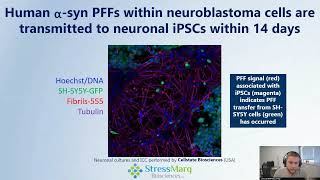
Novel Tools for Drug Discovery in Neurodegenerative Diseases
Explore novel molecular tools for Alzheimer's and Parkinson's drug discovery. Learn about in vitro generation of neurotoxic protein aggregates and their potential to accelerate research in neurodegenerative diseases.
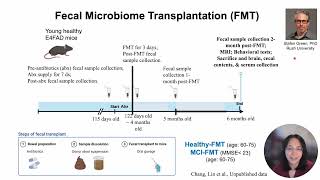
Targeting Gut Dysbiosis in APOE4 Carriers - Strategies for Mitigating Alzheimer's Disease Risk
Explore strategies for mitigating Alzheimer's disease risk in APOE4 carriers by targeting gut dysbiosis. Learn about the link between APOE4, gut health, and Alzheimer's from neuroimaging expert Dr. Ai-Ling Lin.
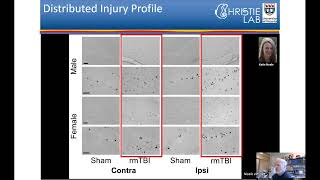
Accurately Modeling Mild Traumatic Brain Injury to Better Understand Function Mechanisms
Explore a novel awake closed-head injury model for studying mild traumatic brain injury, its effects on synaptic plasticity, and implications for learning and memory processes.