Learning Logical Relationships with Neural Networks - Part 3
Explore experimental evaluation of Differentiable Inductive Logic Programming for Structured Examples, examining its application in learning logical relationships using neural networks.
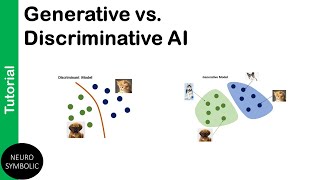
Generative vs. Discriminative AI - A Comparative Analysis
Explore the key distinctions between generative and discriminative AI approaches, understanding their unique characteristics and applications.
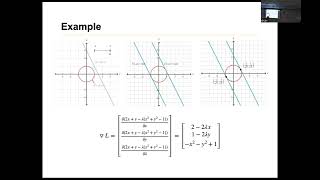
Training LNNs via Primal Dual Methods - Part 2 of 3
Explore primal-dual methods for training Logical Neural Networks in neuro-symbolic reasoning, continuing the analysis of Lu et al.'s 2021 IBM research paper.
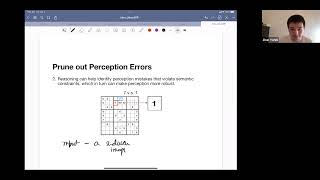
NeurASP: Experiments and Evaluation - Part 3
Explore experimental evaluations of NeurASP, a neuro-symbolic framework connecting ASP programs to neural architectures, enabling end-to-end training through gradient passage.
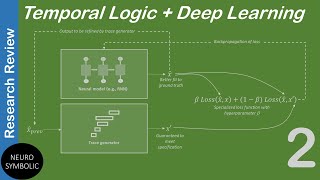
Neural Networks, Temporal Logic, and Verification with STL Net - Part 2
Explore STL Net for specification checking of RNN and transformer outputs. Learn about architecture, loss functions, and practical applications in neural networks and temporal logic.
Solving Difficult Reachability Problems in JuMP.jl
Explore advanced reachability analysis techniques for complex control systems using JuMP.jl, including temporal refinement and tools for nonlinear systems with neural network controllers.

Oceananigans - An Ocean-Flavoured Fluid Dynamics Library
Explore Oceananigans, a Julia-based fluid dynamics library for oceanic modeling, featuring flexibility, GPU performance, and easy integration of custom components like sea-ice and biogeochemistry.

Interpretable Hierarchical Calibration of Agent-Based Models
Explore scientific machine learning's fusion of traditional modeling and ML, focusing on neural network surrogates for agent-based models in epidemiology and automated hierarchical calibration.

Flux.1 ControlNet Union and Hyper-SD Performance in ComfyUI
Explore Flux.1's Union ControlNet in ComfyUI, featuring multiple control types and new LoRA models for enhanced image generation with cartoon-realism blend.

How LLMs Might Store Facts - Multilayer Perceptrons in Transformers
Explores how large language models potentially store factual information, focusing on multilayer perceptrons in transformers and the concept of superposition in neural networks.

Detecting Bone Fractures Using Deep Learning and YOLOv8 - Object Detection Tutorial
Implement object detection for bone fractures using YOLOv8 and Python. Learn to load models, process images, and visualize predictions with hands-on coding examples.
Prompting for Code Generation - Leveraging LLMs for Efficient Programming
Learn to leverage AI for efficient code generation using OpenAI's LLMs. Explore practical examples, from simple Fibonacci sequences to complex neural networks, and discover how to integrate AI tools into your programming workflow.

Handling Revision Prompts - Iterative Code Generation with LLMs
Explore interactive code generation with LLMs, focusing on refining prompts for PyTorch neural networks. Learn to guide AI for better results and adhere to coding standards.
Unveiling Meta's Impressive CV Model - SAM 2: Segment Anything in Images and Videos
Explore Meta's advanced CV model SAM 2, featuring unified architecture for image and video segmentation. Learn its capabilities through demos and code samples for enhanced visual understanding.

A Python Developer's Guide to AI in 2024
Comprehensive guide for Python developers on AI trends in 2024, covering machine learning, neural networks, computer vision, LLMs, RAG, and AI agents.

ChameleonAPI: Automatic and Efficient Customization of Neural Networks for ML Applications
Automatic customization of neural networks for ML applications, reducing incorrect decisions by 43% compared to commercial APIs without changing application code.
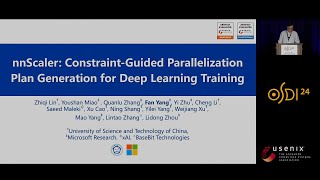
nnScaler: Constraint-Guided Parallelization Plan Generation for Deep Learning Training
Innovative framework for efficient deep learning training parallelization, using primitives and constraints to generate optimized execution plans, outperforming existing solutions for popular DNN models.

Determining AI Consciousness - Key Indicators and Limitations
Explores the minimal ingredients for consciousness and examines whether AI models like ChatGPT possess consciousness, discussing limitations of robot consciousness and implications for future AI development.
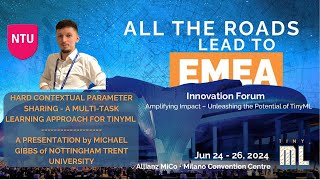
Next-Level Parameter Sharing - The Future of AI Collaboration
Explore cutting-edge multi-task learning techniques for tinyML, focusing on hard contextual parameter sharing to enhance AI collaboration and efficiency in resource-constrained environments.
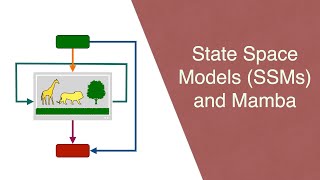
State Space Models and Mamba - Revolutionizing Large Language Models
Explore state space models, their application in language generation, and the Mamba architecture in this friendly, accessible introduction to cutting-edge AI concepts.
Easy Guide to Ultra-Realistic AI Images with Flux
Learn to create ultra-realistic AI images using FLUX.1 and LoRAs. Explore techniques for enhancing image quality and achieving lifelike results in AI-generated visuals.