Installing WSL with CUDA Support and PyTorch for Data Science and Machine Learning
Aprenda a instalar WSL con soporte CUDA y PyTorch para potenciar sus proyectos de aprendizaje automático y ciencia de datos en Windows.
Installing NVIDIA cuDNN and First Steps with NVCC in C++
Aprenda a instalar Cudnn y desarrolle aplicaciones de ML con soporte GPU en C++, utilizando la biblioteca de redes neuronales profundas de Nvidia.

Sum-of-Minimum Model: Joint Optimization of Specialized Models for Heterogeneous Data
Explore joint optimization of specialized models for heterogeneous data using the sum-of-minimum approach. Learn algorithm design, performance bounds, and applications in various machine learning tasks.
Towards General Purpose Vision: Insights from Multimodal AI Systems
Explore multimodal AI evolution, from GPT to Visual Programming. Gain insights on integrating text, images, and audio for advanced problem-solving in artificial intelligence systems.
Super Accessible No Math Intro to Neural Networks for Beginners
Discover neural networks through intuitive examples, understanding their purpose, functionality, limitations, and pitfalls to better grasp the AI/ML landscape.
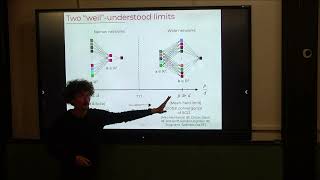
Phase Diagram of Stochastic Gradient Descent in High-Dimensional Two-Layer Neural Networks
Explore the phase diagram of Stochastic Gradient Descent in high-dimensional two-layer neural networks, focusing on its behavior and implications.
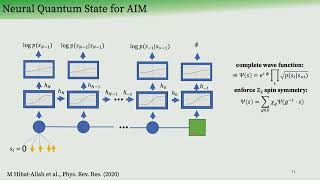
Is the Ground State of Anderson's Impurity Model a Recurrent Neural Network?
Explore the connection between Anderson's impurity model ground state and recurrent neural networks in condensed matter physics.
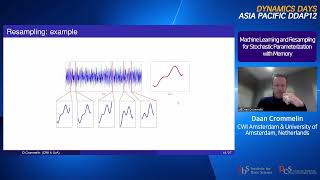
Machine Learning and Resampling for Stochastic Parameterization with Memory
Explore machine learning and resampling techniques for stochastic parameterization with memory in multiscale dynamical systems, focusing on overcoming challenges in long-memory scenarios.
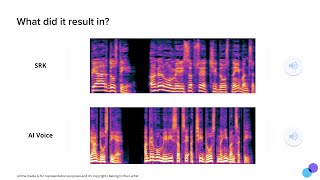
AI Generated Voices: Towards Emotive Speech Synthesis
Explore deep learning approaches for creating emotive AI-generated voices, focusing on Mel Spectrogram manipulation to enhance expressiveness without relying on large datasets.

Motion and Music Modeling in Hindustani Classical Music
Explore computational generative approaches in North Indian classical music, addressing unique challenges and presenting innovative modeling techniques for Hindustani improvisation.
Embeddings vs Fine-Tuning - Part 3: Unsupervised Fine-Tuning
Explore unsupervised fine-tuning techniques for embeddings, including dataset cleanup, Google Colab implementation, and expert tips for optimal results.
A Spline Tour of Deep Learning: The Scattering Way
Explore deep learning's progress, challenges, and theoretical foundations. Gain insights into the geometric interpretation of deep networks and spline approximation, with a focus on Scattering Networks.
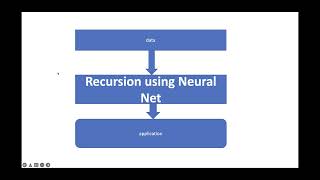
Learning about Machine Learning
Explore machine learning fundamentals with expert Roger D. Amos in this concise 25-minute lecture from QCHEM LAB at KNU.

Understanding o1: A Third Paradigm Model and Its Implications - 10 Key Insights
Explore o1's revolutionary approach as a 'large reasoning model', its unique features, and implications for AI's future. Delve into its workings, capabilities, and potential impact on the field.
Compressing Multidimensional Weather and Climate Data Into Neural Networks
Compress multidimensional weather and climate data into neural networks, achieving high compression ratios while preserving accuracy for climate change analysis and severe weather prediction.

Neural Graph Databases: Combining GNNs with Labeled Property Graphs
Explore neural graph databases, combining graph databases with graph neural networks using LPG2vec encoder for improved prediction accuracy in complex graph datasets.
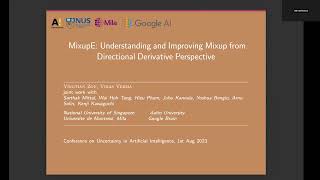
MixupE: Understanding and Improving Mixup from Directional Derivative Perspective - Oral Session 1
Explore MixupE, an improved data augmentation technique for deep neural networks. Gain insights into its theoretical foundations and practical applications across various domains.

The Rise of Neural Priors
Explore neural priors as a solution to AI challenges, including data scarcity and bias. Learn about their applications in augmented reality, autonomous driving, and signal recovery.
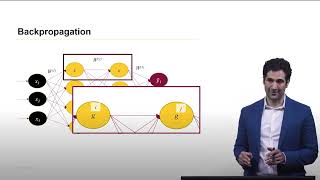
Backpropagation: Training Deep Neural Networks
Explore backpropagation, a crucial technique for training deep neural networks through gradient descent, with insights from ASU's Paulo Shakarian.
Technical Shortcomings of Deep Learning - Part 1
Explore technical challenges in deep learning, including data hunger, limited transfer capacity, open-ended inference, and explainability. Gain insights from Gary Marcus's critical appraisal.
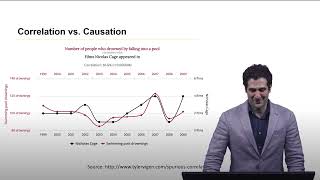
Technical Shortcomings of Deep Learning - Part 2
Explore technical challenges in deep learning, including integration with prior knowledge, correlation vs. causation, and data distribution issues. Gain insights into limitations and potential improvements.