Training StyleGAN2 ADA PyTorch Images with Low GPU Memory - NVIDIA GEFORCE RTX 3060 Ti
Learn to train StyleGAN2 ADA PyTorch on NVIDIA GEFORCE RTX 3060 Ti with limited GPU memory. Optimize settings, increase swap space, and adjust evaluation metrics for efficient 256x256 GAN training.
Training a GAN from Your Own Images - StyleGAN2 ADA
Learn to create custom GANs using your own images, from setup to training. Covers image collection, Docker setup, TFRecord conversion, and understanding GAN outputs for various projects like FishGAN and MinecraftGAN.
Training a GAN on Your Own Images - StyleGAN2 ADA PyTorch
Learn to install and use NVIDIA StyleGAN2 ADA for PyTorch on Windows 10, including setup, training, and image generation with new Ampere GPUs. Step-by-step guide for both beginners and advanced users.
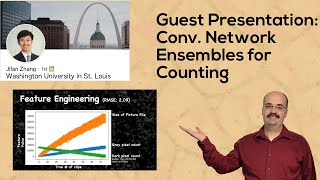
Cloud-Based Convolution Neural Network Ensembles for Computer Vision Counting
Explore ensemble CNN techniques for computer vision counting, featuring cloud computing evaluation and strategies for achieving low RMSE scores in competitive settings.
Exploring Style GAN2 Latent Vector - Controlling Facial Properties
Dive into StyleGAN2's latent vectors to control facial features in generated images, including a technique for adding glasses to faces.
Face Generation with NVIDIA StyleGAN2 and Python 3
Generate realistic faces using nVidia StyleGAN2 and Python. Learn to utilize pretrained weights, TensorFlow wrapper, and Google CoLab GPU for efficient face generation without extensive training.
Generating Faces with a Generative Adversarial Networks - GAN in Keras-Tensorflow 2.0
Learn to implement a Generative Adversarial Network (GAN) from scratch using TensorFlow and Keras to generate realistic human faces, with step-by-step guidance and practical code examples.
Multi-Variate Feature Engineering Presentation for Machine Learning
Learn advanced feature engineering techniques for machine learning, including feature importance, target coding, neural networks, and embedding layers to improve model performance and extrapolation.
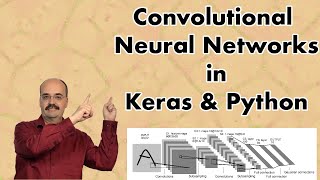
Keras Convolutional Neural Networks for MNIST and Fashion MNIST
Explore convolutional neural networks for image processing, focusing on MNIST and Fashion MNIST datasets. Learn about CNN architecture, training, and evaluation for advanced deep learning applications.

The Deep Learning Revolution
Explore the evolution of deep learning, from its origins to modern applications, covering key milestones, breakthroughs, and future prospects in AI and neuroscience.

MIT Introduction to Deep Learning
Comprehensive introduction to deep learning fundamentals, covering perceptrons, neural networks, loss functions, gradient descent, backpropagation, and regularization techniques.
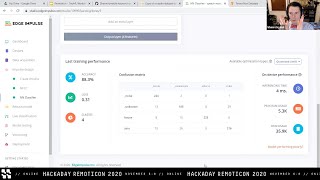
TinyML - Using Machine Learning on Microcontrollers to Recognize Speech
Learn to implement speech recognition on microcontrollers using TinyML. Train a neural network, convert it to TensorFlow Lite, and deploy it on an ARM board for real-time wake word detection.
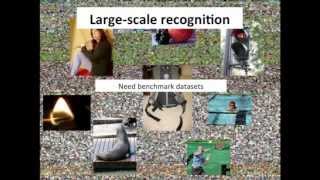
Analysis of Large-Scale Visual Recognition - Bay Area Vision Meeting
Explore large-scale visual recognition challenges, focusing on IMAGENET competitions, object classification, localization techniques, and advancements in computer vision for diverse object classes.

Deep Learning for Vision: Tricks of the Trade
Explore deep learning's evolution in computer vision, from unsupervised algorithms to modern object recognition systems. Learn practical tips and future challenges in this field.
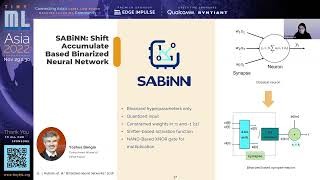
Power Efficient Neural Network Based Hardware Architecture for Biomedical Applications
Power-efficient neural network hardware architecture for biomedical applications, focusing on sleep apnea detection using ECG and SpO2 data. Introduces SABiNN technique for reduced power consumption and compact design while maintaining accuracy.
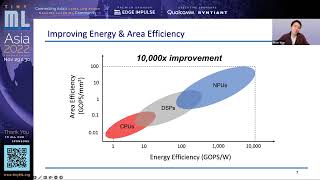
Software-Driven TinyML Hardware Co-Design for AI Power Smart Devices
Explore software-hardware co-design for efficient TinyML systems, focusing on processing-in-memory accelerators to reduce power consumption and enhance AI inference in smart devices.
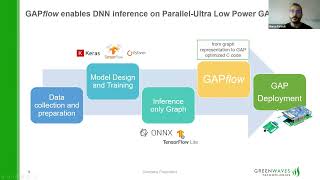
TinyML Auto ML Deep Dive: GAPflow - From TFLite and ONNX to Optimized C Code
Explore GAPflow: transform neural networks into optimized C code for ultra-low-power GAP processors. Learn quantization, validation, and memory allocation for efficient AI deployment on energy-constrained devices.
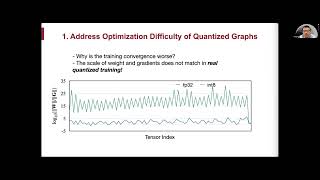
On-Device Learning Under 256KB Memory - Challenges and Solutions for IoT Devices
Explore on-device learning for IoT devices with limited memory. Learn techniques for efficient model adaptation, quantization-aware scaling, and sparse updates to enable continuous learning on tiny hardware.
TinyML Talks - The New Neuromorphic Analog Signal Processor Concept and Technology Platform
Explore neuromorphic analog signal processing technology for ultra-low power, high-accuracy neural network implementations in sensors, combining analog and digital components for efficient data processing.
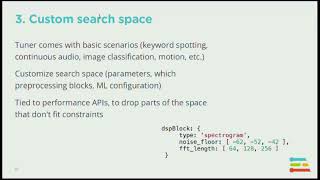
EON Tuner - AutoML for Constrained Devices in TinyML
Explore AutoML for constrained devices with EON Tuner, optimizing tinyML models through pre-processing, DSP, and ML combinations while considering device limitations and real-world performance.
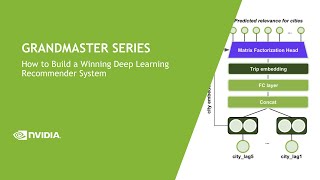
Building a Winning Deep Learning Recommender System - Grandmaster Series Episode 5
Learn how Kaggle Grandmasters built a winning Deep Learning Recommender System for Booking.com, using matrix factorization, ensemble models, and data augmentation techniques. Gain insights into GPU-accelerated recommender systems.