
Scalable AutoML for Time Series Forecasting Using Ray
Explore scalable AutoML for time series forecasting using Ray, covering feature generation, model selection, and hyper-parameter tuning. Learn from real-world applications and experiences in various industries.

Benchmarks and How-Tos for Convolutional Neural Networks on HorovodRunner-Enabled Apache Spark Clusters
Explore benchmarks and implementation techniques for distributed deep learning using HorovodRunner on Apache Spark clusters, focusing on CNN tasks and scaling efficiency for both GPU and CPU clusters.
Interpretable Machine Learning - Data Brew Season 2 Episode 7
Explore interpretable machine learning with Ameet Talwalkar, discussing its relation to data privacy, fairness, and practical applications in this insightful interview on cutting-edge ML research.
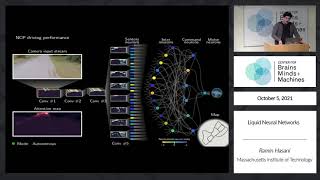
Liquid Neural Networks
Explore Liquid Time-Constant Networks, a novel continuous-time neural network model with superior expressivity and improved performance in time-series prediction tasks.
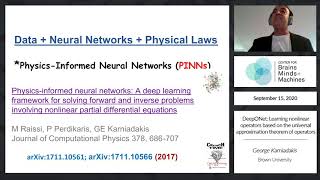
DeepOnet - Learning Nonlinear Operators Based on the Universal Approximation Theorem of Operators
Learn to approximate nonlinear operators using DeepONet, a neural network architecture based on the universal approximation theorem. Explore applications in differential equations, fluid mechanics, and multiphysics problems.
Deep Neural Network Autoencoders in TensorFlow and Keras - Part 1
Learn to create and implement autoencoders in Keras and TensorFlow, including denoising autoencoders, for deep neural network applications in image processing and function approximation.
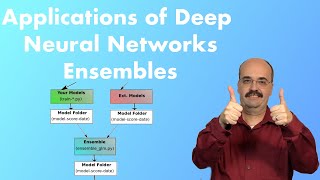
Neural Networks with Ensembles for TensorFlow and Keras
Learn to create and evaluate ensemble models using random forests and deep neural networks with TensorFlow, Keras, and scikit-learn. Explore feature importance and perturbation ranking techniques.
Early Stopping and Encoding a Feature Vector for Deep Neural Networks
Learn to implement early stopping, encode feature vectors, and use validation sets in Keras neural networks for improved deep learning model performance and efficiency.
Introduction to TensorFlow and Keras with Anaconda Python
Learn to build neural networks using TensorFlow and Keras for classification and regression tasks. Covers key concepts, data handling, model creation, training, and evaluation.
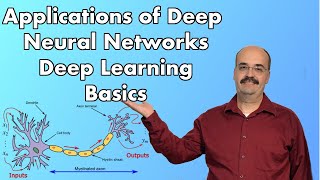
Deep Neural Network Basics for Keras and TensorFlow
Explore deep neural network fundamentals including activation functions, bias neurons, and output calculation for Keras and TensorFlow implementation.
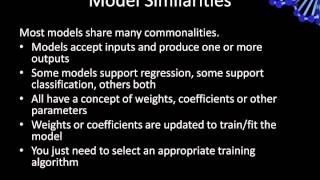
Detecting Cancer with RBF Networks Trained by Genetic Algorithms
Explore machine learning techniques for cancer detection using RBF networks and genetic algorithms, with practical insights on implementation and advanced concepts.
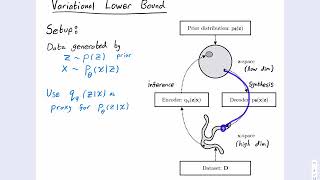
Variational Autoencoders
Explore generative models, autoencoders, and variational techniques in deep learning. Learn about architecture, optimization, and practical applications of variational autoencoders.
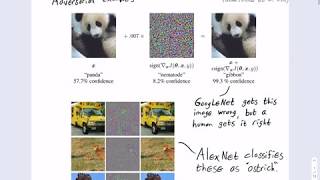
Adversarial Examples for Deep Neural Networks
Explore adversarial examples in deep neural networks, covering white/black box attacks, real-world scenarios, and defense strategies like adversarial training. Gain insights into various attack methods and their implications.
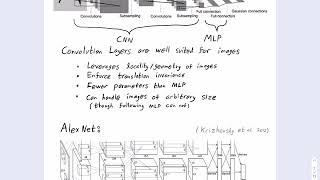
Neural Network Architectures for Images
Explore neural network architectures for image processing, including classification, segmentation, and enhancement. Learn about CNNs, ResNets, autoencoders, and their applications in various imaging tasks.
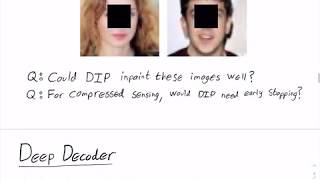
Unlearned Neural Networks as Image Priors for Inverse Problems
Explore unlearned neural networks as image priors for inverse problems in imaging, covering Deep Image Prior, Deep Decoder, and Deep Geometric Prior techniques and their applications.
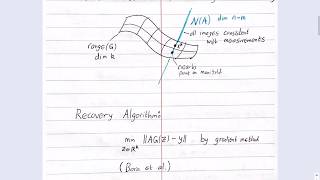
Theory of GANs for Compressed Sensing
Explore the theory of GAN priors in compressed sensing, covering key concepts, proofs, and optimization problems. Gain insights into visual representation and set restricted eigen value conditions.
VQ-GAN - PyTorch Implementation
Implement Vector Quantized Generative Adversarial Networks (VQGAN) using PyTorch, covering encoder, decoder, codebook, discriminator, and transformer stages for high-resolution image synthesis.
Convolutional Neural Networks - Deep Learning Basics with Python, TensorFlow and Keras
Learn to build and train a convolutional neural network for chess piece image classification using Python, TensorFlow, and Keras. Covers dataset preparation, model creation, and prediction testing.
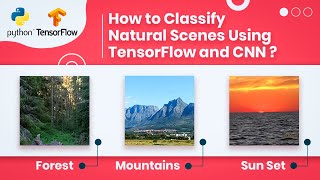
How to Classify Natural Scenes Using Tensorflow, Python, and CNN
Learn to classify natural scenes using TensorFlow and CNN. Build, train, and test a model for image classification with Python, covering dataset preparation, model creation, and prediction.
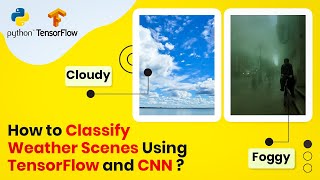
Deep Learning in Weather Images - Using TensorFlow and CNN
Learn to build a CNN model using TensorFlow and Keras to predict weather scenes from images. Covers dataset preparation, model creation, training, and testing.
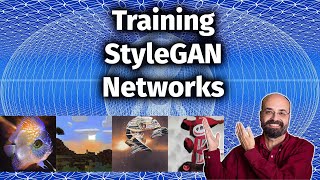
Train StyleGAN with Your Own Images
Learn to train StyleGAN with your own images using Colab, covering image preparation, training setup, and resuming training for both StyleGAN2 and StyleGAN3 models.