Deep Learning and Software Engineering - A Retrospective and Paths Forward
Explore deep learning's impact on software engineering, including code suggestion and program repair. Discover current research, challenges, and future directions in this emerging field.

Introduction to Neural Networks in Python - Tensorflow-Keras
Learn neural network basics, architecture, hyperparameters, and implementation in Python using TensorFlow/Keras. Includes hands-on coding examples for various classification tasks, from simple to complex datasets.
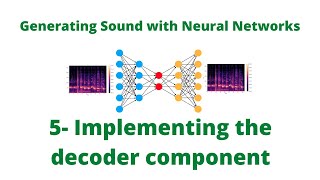
How to Implement Autoencoders in Python and Keras - The Decoder
Learn to implement the decoder component of autoencoders using Python, TensorFlow, and Keras. Covers building methods, layers, and architecture for generating sound with neural networks.
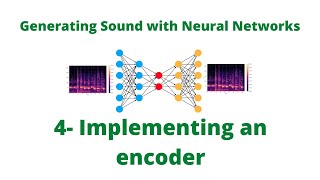
How to Implement Autoencoders in Python and Keras - The Encoder
Learn to implement autoencoders in Python and Keras, focusing on building the encoder component. Covers autoencoder class construction, convolutional layers, bottleneck creation, and practical implementation.

Autoencoders Explained Easily
Intuitive explanation of autoencoders, covering key concepts like representation learning and latent space, with applications in data generation, denoising, and anomaly detection.
Generating Melodies with a Neural Network
Explore neural network-based melody generation using LSTM, from data preparation to sampling with temperature, in this hands-on tutorial for AI music enthusiasts.
How to Create Melody Sequences to Train a Neural Network
Generate melody sequences for RNN-LSTM training: learn to create time series data, map songs to lists, and prepare inputs using one-hot encoding for neural network-based melody generation.
Long Short Term Memory Networks Explained Easily
Comprehensive explanation of LSTM networks, comparing them to simple RNNs and exploring their architecture and mathematical foundations for improved sequence learning.
Recurrent Neural Networks Explained Easily
Explore Recurrent Neural Networks: architecture, time series, and Back Propagation Through Time. Learn about simple RNN units and their applications in sequence processing tasks.
Implementing and Training a Neural Network with PyTorch
Build and train a feed-forward neural network using PyTorch to classify MNIST digits. Learn data management, network implementation, and training loop creation in this hands-on tutorial.
Generating Sound Digits with a Variational Autoencoder
Learn to generate audio spectrograms of sound digits using a trained Variational Autoencoder, then convert them into audio. Includes implementation, scripting, debugging, and result evaluation.
How to Implement a Variational Autoencoder in Python and Keras
Implement a Variational Autoencoder using Python, TensorFlow, and Keras. Learn to modify the encoder, update loss functions, train the model, and visualize the latent space for data generation.
From Autoencoders to Variational Autoencoders - Improving the Encoder
Explore the transformation from autoencoders to variational autoencoders, focusing on improved encoding using multivariate normal distributions for enhanced generative capabilities in AI and sound processing.
Generation with AutoEncoders - Results and Limitations
Explore image generation using autoencoders, analyze latent space representations, and understand limitations in generative tasks. Learn why variational autoencoders are necessary for improved generation.
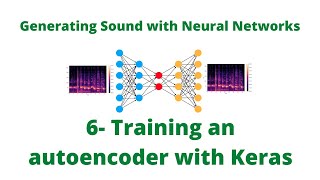
Building and Training an Autoencoder in Keras - TensorFlow - Python
Learn to build and train autoencoders using Python, TensorFlow, and Keras. Explore encoder-decoder architectures, implement training with the MNIST dataset, and gain practical insights into autoencoder development.
Neural Networks and Spurious Correlations
Explore neural networks' vulnerability to spurious correlations and strategies to enhance robustness, including reweighting, subsampling, and overcoming simplicity bias in machine learning models.
Optimal Transport and PDE - Gradient Flows in the Wasserstein Metric
Explore gradient flows in Wasserstein metric, continuity equations, and aggregation dynamics. Learn about two-layer neural networks and chi-squared divergence in optimization and sampling.
Quantum Machine Learning- Prospects and Challenges
Explore prospects and challenges in quantum machine learning, covering classification techniques, dimensionality reduction, data loading, and benchmarking for both optimistic and cautious perspectives.
Backpropagation and Deep Learning in the Brain
Explore deep learning in the brain, backpropagation, and credit assignment algorithms. Discover neuroscience evidence and new models of neurons in this computational brain theory talk.
Explaining Landscape Connectivity of Low-Cost Solutions for Multilayer Nets
Explore landscape connectivity in multilayer networks, focusing on low-cost solutions, equivalent local minima, overparameterization, and dropout stability. Gain insights into non-convex optimization and deep neural networks.
Recent Developments in Over-parametrized Neural Networks, Part I
Explore recent developments in over-parametrized neural networks, focusing on optimization challenges, theoretical problems, and strategies for achieving optimal results in deep learning.