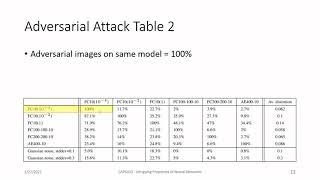
Intriguing Properties of Neural Networks - Spring 2021
Explore intriguing properties of neural networks, including adversarial attacks, transfer, training overlap, and semantic information in units. Analyze weaknesses and spectral instability.
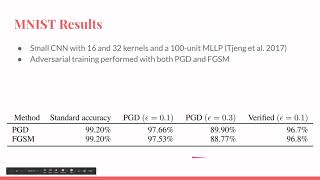
Fast Is Better Than Free: Revisiting Adversarial Training - CAP6412 Spring 2021
Explore adversarial training techniques, comparing PGD with newer methods. Learn about technical contributions, experimental results, and implications for machine learning security.
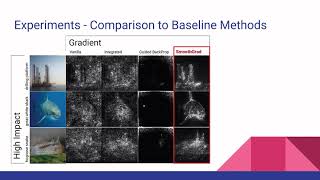
CAP6412 - SmoothGrad: Removing Noise by Adding Noise - Lecture
Explore SmoothGrad, a technique for enhancing neural network visualization by adding noise to input images and averaging resulting sensitivity maps.
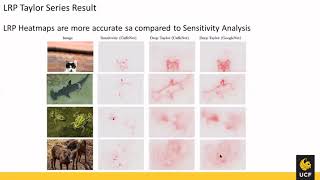
Unmasking Clever Hans Predictors and Assessing Machine Learning - Spring 2021
Unmasking clever predictors: Explore Layer-wise Relevance Propagation and SPRAY techniques to assess machine learning models' decision-making processes and identify potential biases or faults.
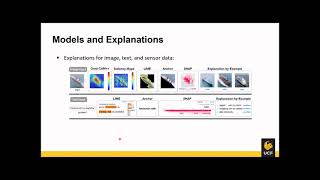
How Can I Explain This to You? An Empirical Study of Deep Neural Net Explanation Methods - Spring 2021
Empirical study comparing deep neural network explanation methods, examining usability, stability, and privacy risks across various visual explanation frameworks.
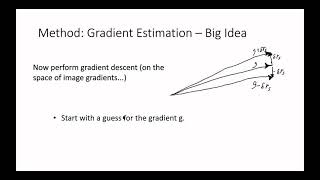
Motion-Excited Sampler: Video Adversarial Attack with Sparked Prior - Spring 2021
Explore video adversarial attacks using the Motion-Excited Sampler technique, covering problem formulation, methodology, gradient estimation, and results analysis.
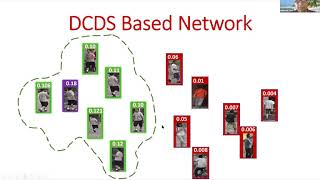
Person Re-Identification and Tracking in Multiple Non-Overlapping Cameras - Keynote
Explore person re-identification and tracking across multiple cameras, covering classification networks, loss functions, and innovative approaches for various camera configurations.
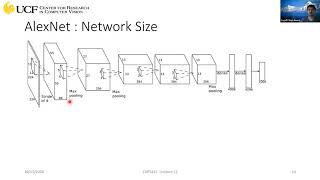
Computer Vision: Classification Techniques - Neural Networks and CNN Architecture - Lecture 12
Explore machine learning frameworks, neural networks, and CNN architecture, focusing on AlexNet and fully convolutional networks. Learn about activation functions and network composition.
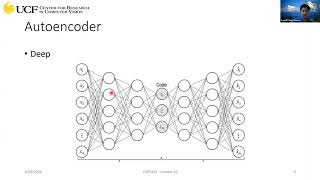
Autoencoder Architecture and Applications - Lecture 10
Explore autoencoders: architecture, comparison, applications in image retrieval, denoising, and anomaly detection. Gain insights into this powerful neural network technique.
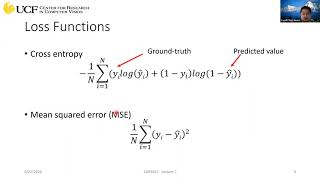
CAP5415 - Training Neural Networks Part 2 - Fall 2020 - Lecture 7
Explore advanced neural network training techniques, including loss functions, backpropagation, gradient descent optimization, and strategies to address common challenges in deep learning.
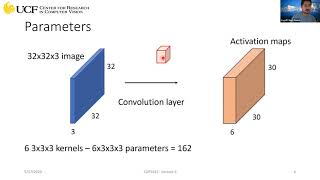
CAP5415 - Introduction to Convolutional Neural Networks Part 2 - Lecture 6
Explore convolutional neural networks' architecture, layers, and features. Learn about AlexNet, pooling, normalization, and the progression from low-level to complex features in deep learning.
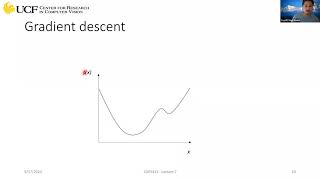
CAP5415 - Training Neural Networks Part 1 - Lecture 7 - Fall 2020
Explore neural network training techniques, including learning kernels, loss functions, and gradient descent, to enhance your understanding of deep learning fundamentals.
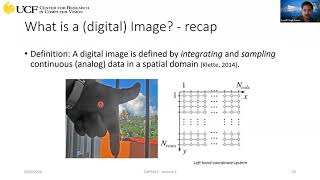
Introduction to Convolutional Neural Networks - Part 1 - Lecture 6
Comprehensive introduction to Convolutional Neural Networks, covering history, architecture, key concepts, and applications in image processing and beyond.
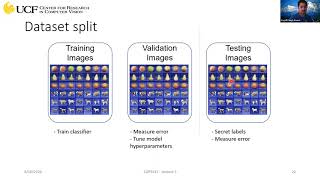
Introduction to Neural Networks - Lecture 5
Introduction to neural networks, covering object classification, image representation, and machine learning fundamentals. Explores biological inspiration, computational implementation, and practical applications in image recognition.
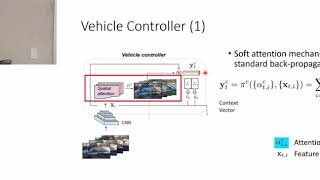
Textual Explanation for Self-Driving Vehicles
Explore self-driving vehicle technology through an explainable driving model, focusing on network architecture, preprocessing, and evaluation of vehicle control and explanation generation.
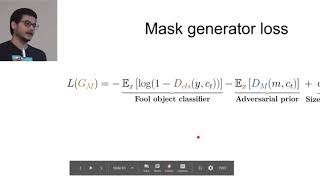
Adversarial Scene Editing: Automatic Object Removal from Weak Supervision
Learn to automatically remove objects from images using weak supervision, exploring mask generation and image inpainting techniques for seamless scene editing.
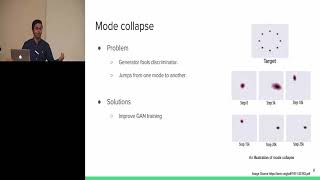
Multi-Agent Diverse Generative Adversarial Networks
Explore diverse generative adversarial networks, focusing on multi-agent systems, mode collapse prevention, and competing objectives in machine learning.
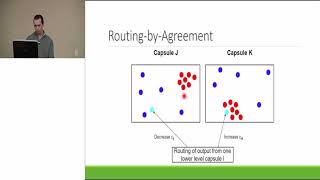
Dynamic Routing Between Capsules
Explore capsule networks, routing-by-agreement, and their applications in computer vision, with a focus on MNIST and multiMNIST datasets.
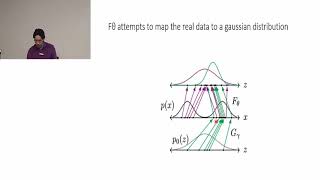
VEEGAN - Reducing Mode Collapse in GANs Using Implicit Variational Learning
Learn about VEEGAN, an innovative approach to reduce mode collapse in Generative Adversarial Networks (GANs) using implicit variational learning, with practical examples and results.
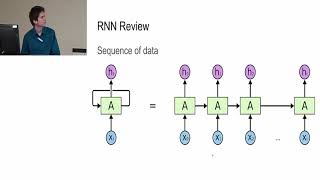
Pixel Recurrent Neural Networks
Explore cutting-edge image generation techniques, focusing on Pixel Recurrent Neural Networks. Learn about model architectures, RNN concepts, and LSTM equations for advanced AI applications.
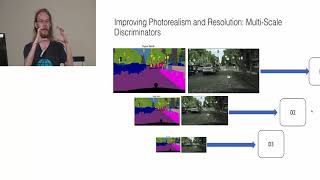
High-Resolution Image Synthesis and Semantic Manipulation with Conditional GANs
Explore high-resolution image synthesis and semantic manipulation using conditional GANs, covering advanced techniques like coarse-to-fine generation and multi-scale discriminators for improved photorealism.