
Building Human-Like Artificial Agents
Explore the development of AI agents that mimic human behavior and cognition, delving into cutting-edge research and potential implications for the future of artificial intelligence.
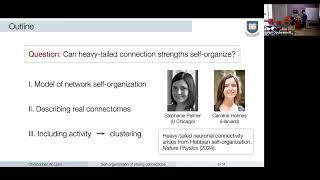
Self-Organization of Strong Connections in the Brain
Uncover how heavy-tailed connectivity in neural networks emerges from simple mechanisms. Explore a model of synaptic self-organization and its implications for understanding brain structure across species.

The Potential for AI in Science and Mathematics
Renowned mathematician Terry Tao explores AI's potential in advancing scientific and mathematical research, followed by a discussion with Po-Shen Loh on the future of AI in academia.
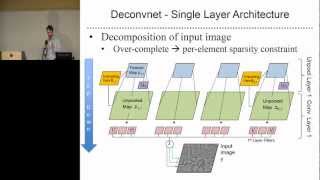
Regularization of Big Neural Networks
Explore regularization techniques for large neural networks, including DropOut, DropConnect, and stochastic pooling. Learn about deconvolutional networks and their applications in computer vision tasks.
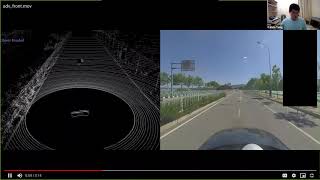
Trust Region Based Adversarial Attack on Neural Networks
Explore trust region optimization for adversarial attacks on neural networks, covering various attack methods and their applications in computer vision and object detection.
Why Can't I Dance in the Mall? Mitigating Scene Bias in Action Recognition
Explores scene bias in action recognition, proposing solutions like adversary training and human mask confusion loss to improve accuracy across different environments.
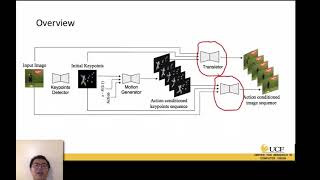
Unsupervised Keypoint Learning for Guiding Class-Conditional Video Prediction
Explore unsupervised keypoint learning techniques for guiding class-conditional video prediction, enhancing the accuracy and efficiency of video generation models.
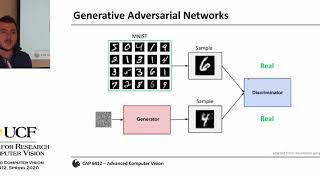
Generative Adversarial Minority Oversampling
Explore innovative techniques for addressing class imbalance in machine learning using generative adversarial networks and convex generators, with a focus on minority oversampling.

CapsuleVOS: Semi-Supervised Video Object Segmentation Using Capsule Routing
Learn semi-supervised video object segmentation using capsule routing, exploring capsule networks, video capsules, and advanced techniques for improved accuracy and efficiency in computer vision tasks.
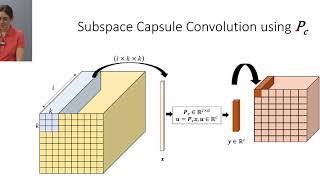
Subspace Capsule Network
Explore Subspace Capsule Networks: a novel approach to neural networks that preserves information, norms, and angles. Learn about its principles, applications, and advantages in image classification and generation.
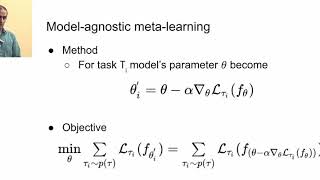
Unsupervised Meta-Learning for Few-Shot Image Classification
Explore unsupervised meta-learning techniques for few-shot image classification, including task construction, augmentation methods, and performance on benchmark datasets.
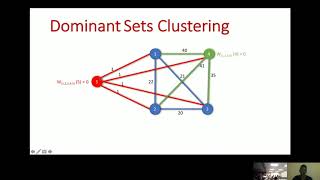
Deep Constrained Dominant Sets for Person Re-Identification
Explore advanced techniques for person re-identification using deep learning, including triplet loss, quadruplet loss, diffusion-based methods, and constrained dominant sets.
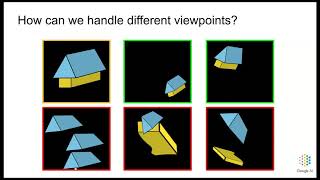
Capsule Networks for Computer Vision – CVPR 2019 Tutorial
Explore capsule networks for computer vision, covering architecture, challenges, applications, and advancements in this cutting-edge deep learning approach.
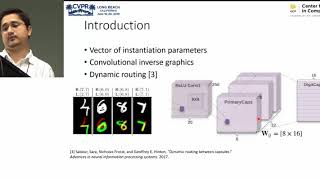
Capsule Networks - A Survey by Dr. Yogesh Rawat, UCF
Explore capsule networks in computer vision, covering dynamic routing, equivariance, and applications in segmentation, localization, and medical imaging.
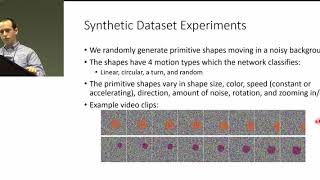
Generalization to Video Capsules - From Convolutional to Video Capsule Networks
Explore video capsule networks for action detection and object segmentation, including multi-modal approaches and semi-supervised techniques for improved performance in computer vision tasks.
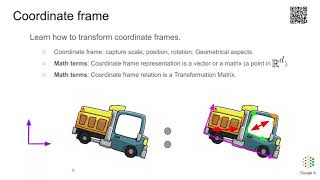
Introduction to Capsule Networks for Computer Vision
Explore Capsule Networks for computer vision, covering sparse pattern recognition, viewpoint equivariance, object detection, and dynamic routing techniques.
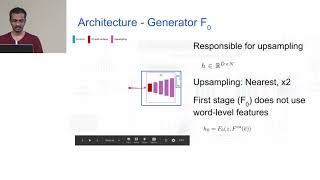
AttnGAN: Fine-Grained Text to Image Generation with Attentional Generative Adversarial Networks
Explore fine-grained text-to-image generation using attentional GANs, covering architecture, experiments, and novel scenarios in this technical deep dive.
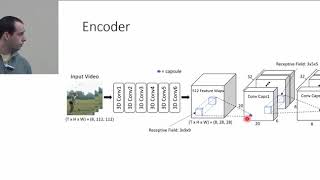
VideoCapsuleNet - A Simplified Network for Action Detection
Explore VideoCapsuleNet, a simplified network for action detection in videos. Learn about capsule networks, convolutional layers, and innovative techniques for improved video analysis.
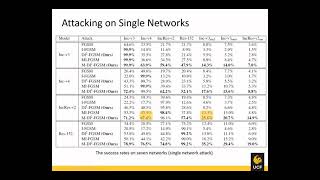
Improving Transferability of Adversarial Examples with Input Diversity - CAP6412 Spring 2021
Explore techniques to enhance adversarial example transferability using input diversity, including FGSM family methods and ensemble network attacks.
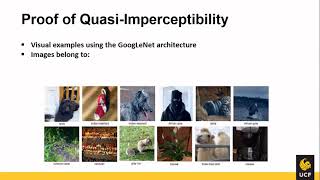
Universal Adversarial Perturbations in Machine Learning - Spring 2021
Explore universal adversarial perturbations in machine learning, covering definitions, contributions, experiments, and cross-model universality.
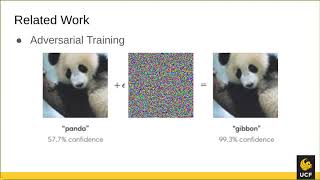
Explaining and Harnessing Adversarial Examples in Machine Learning - Spring 2021
Explore adversarial examples in machine learning, their impact on linear and non-linear models, and techniques like adversarial training to improve model robustness and generalization.