Understanding AI Agents as Neuro-Symbolic Systems
Explore the concept of AI agents as neuro-symbolic systems through an analysis of MRKL paper, examining their definition, evolution, and relationship with connectionism and modern AI architectures.
Distributed Training: Hybrid Parallelism and Gradient Optimization - Lecture 20
Delve into advanced distributed training concepts, covering hybrid parallelism, gradient compression techniques, and strategies for optimizing bandwidth and latency in ML systems.

EfficientML.AI - Introduction to Efficient Machine Learning
Master efficient machine learning techniques and optimization strategies for deploying ML models in resource-constrained environments, focusing on practical implementation methods and performance enhancement.
Distributed Training: Hybrid Parallelism and Gradient Optimization - Lecture 20
Delve into advanced distributed training concepts, exploring hybrid parallelism, gradient compression techniques, and strategies to overcome bandwidth and latency bottlenecks in ML systems.
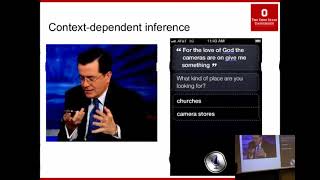
Automatically Deriving Adjectival Scales from Neural Network Language Models - 2013
Discover how computational linguistics can derive meaning from adjective scales, using web data and neural networks to understand gradable modifiers in everyday language and medical contexts.
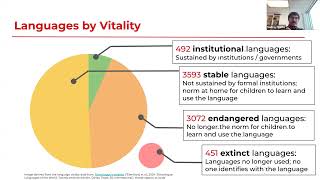
Multilingual Large Language Models - Fundamentals and Applications
Explore the capabilities and applications of multilingual language models through an in-depth technical lecture covering key concepts, challenges, and implementation strategies.
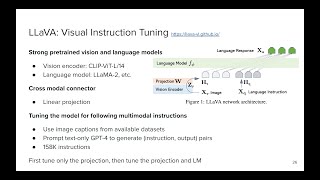
Vision and Language Large Language Models
Explore the intersection of vision and language in Large Language Models, understanding their capabilities, architectures, and real-world applications in AI systems.
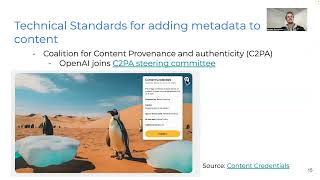
Detecting AI-Generated Content - Advances in Generative AI
Explore cutting-edge techniques for detecting AI-generated content, focusing on latest methodologies, challenges, and practical applications in content authentication and verification.

Memory Optimizations in Machine Learning
Discover essential memory optimization techniques for machine learning, from data quantization to model pruning, and learn efficient strategies for minimizing resource consumption across different hardware setups.
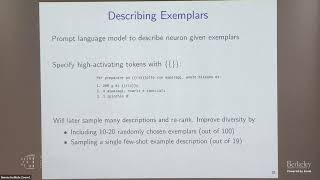
Scalably Understanding AI with AI - Using AI Systems for Model Behavior Analysis
Explore advanced techniques for analyzing AI systems, from behavior elicitation to neuron description, focusing on using AI tools to understand and improve AI model behaviors and representations.
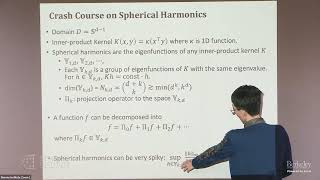
Toward Understanding the Extrapolation of Nonlinear Models to Unseen Domains
Explore advanced concepts in domain adaptation and model extrapolation, focusing on nonlinear models' behavior in unseen domains through theoretical and practical analysis.
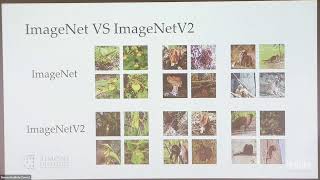
Language-Guided Domain Adaptation
Explore cutting-edge techniques in domain adaptation and language-guided methods with UC Berkeley expert Trevor Darrrell, focusing on advanced machine learning applications and methodologies.
Open-Source and Science in the Era of Foundation Models
Explore the critical role of open-source models in AI development, focusing on API access, open weights, and community-driven innovation for advancing foundation model research.
How Transformers Learn Causal Structure with Gradient Descent
Delve into the mathematical foundations of how transformer models learn and encode causal relationships through self-attention mechanisms and gradient-based training algorithms.
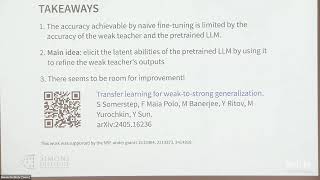
Transfer Learning for Weak-to-Strong Generalization in Language Model Alignment
Explore how to effectively transfer latent knowledge from weak to strong language models, focusing on alignment techniques and practical applications in LLM development.

Build a Python AI Image Generator - Local Installation Guide
Learn to create a local AI image generator using Python, generating custom images with minimal code in just 15 minutes - no advanced programming skills needed.
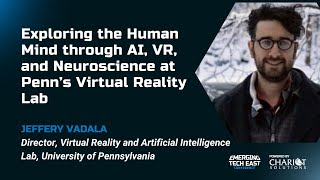
Exploring the Human Mind Through AI, VR, and Neuroscience
Explore how AI, VR, and neuroscience intersect to advance our understanding of human cognition, perception, and behavior while developing more culturally-aware and intuitive technologies.
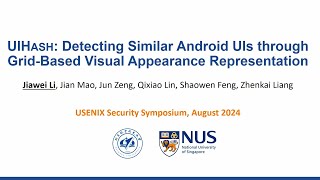
UIHash: Detecting Similar Android UIs through Grid-Based Visual Appearance Representation
Explore a novel grid-based approach for detecting similar Android user interfaces, focusing on security measures against UI spoofing and phishing through advanced visual appearance analysis.
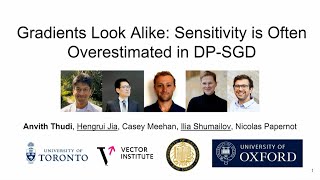
Gradients Look Alike: Sensitivity is Often Overestimated in DP-SGD
Explore how DP-SGD provides stronger privacy guarantees for similar datapoints in deep learning, revealing why common benchmarks leak less information than previously estimated.
Neural Network Extraction Through Physical Side Channels - A Systematic Review
Explore physical side-channel analysis attacks on deep neural networks, examining threat models, attack methodologies, and practical limitations for model extraction and input recovery on hardware accelerators.
Anticipation and Collective Surprise in Information Theory and Consciousness
Explore the intersection of consciousness theories, information processing, and surprise mechanisms in the brain, examining integrated approaches to understanding predictive cognition and sensory anticipation.