Introduction to Artificial Intelligence and Machine Learning
Discover the fundamentals of AI and ML, from core algorithms to real-world applications across industries, while exploring future trends and key challenges in modern technology.
Artificial Intelligence and Machine Learning - An Introduction to Core Concepts and Applications
Discover the fundamentals of AI and ML, exploring core components, real-world applications, future trends, and key challenges in technology transformation across multiple industries.

NVIDIA HYMBA: A Hybrid-Head Architecture for Small Language Models with MetaTokens
Explore NVIDIA's Hymba hybrid architecture combining transformer attention and state-space models, featuring innovative meta tokens and memory optimizations for enhanced language model performance and efficiency.

TokenFormer - Rethinking Transformer Scaling with Tokenized Model Parameters
Delve into an innovative approach to transformer architecture scaling that treats model parameters as tokens, enabling flexible parameter adjustments without complete retraining from scratch.
Deep Learning, Correlations, and the Statistics of Natural Images
Explore how Deep Neural Networks leverage statistical patterns in natural images and diverse datasets, examining their remarkable ability to identify and utilize robust correlational structures.
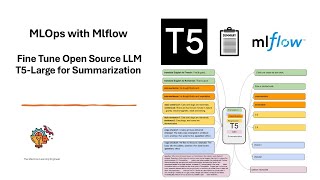
Fine-tuning T5-Large Model for Text Summarization with MLFlow
Master fine-tuning T5-Large models for text summarization using MLflow, covering model tracking, logging, and specialized training techniques for enhanced summarization capabilities.

Weakly Supervised Learning for Adaptive Language Learning Model Agents
Explore cutting-edge techniques for training adaptable LLM agents through weakly supervised learning, focusing on frameworks like Agent Lumos and innovative approaches to enhance generalization capabilities.
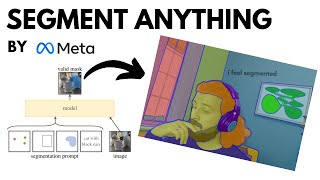
Segment Anything Model (SAM) - Deep Dive into Meta's Image Segmentation Foundation Model
Dive into Meta's Segment Anything Model (SAM), exploring its architecture, implementation, and zero-shot capabilities for advanced image segmentation tasks through detailed code analysis and practical demonstrations.

A First-Principles Approach to Understanding Deep Learning
Delve into the fundamental principles of deep learning through statistical physics, exploring connections between neural networks, Gaussian processes, and scaling laws with insights from a DeepMind researcher.

Installing ComfyUI - Complete Guide for Stable Diffusion and Flux Models
Master ComfyUI installation and setup, from basic AI image generation to advanced workflows using Stable Diffusion, Flux, LORAS, and ControlNets. Learn model management, custom workflows, and troubleshooting techniques.
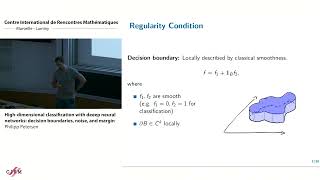
High-Dimensional Classification with Deep Neural Networks: Decision Boundaries
Explore high-dimensional classification theory, focusing on decision boundaries, noise, and margin conditions in neural networks, with applications to efficient approximation and learning rates.
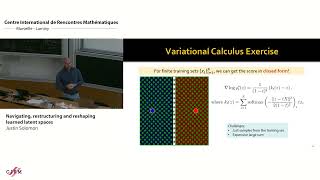
Navigating, Restructuring and Reshaping Learned Latent Spaces
Explore advanced techniques for manipulating learned latent spaces in machine learning, focusing on navigation, restructuring, and reshaping methods for improved model performance and efficiency.
Mixture of Transformers for Multi-modal Foundation Models
Explore Meta's Mixture-of-Transformers (MoT) architecture, a revolutionary approach to handling multi-modal AI tasks combining text, speech, images, and videos with enhanced efficiency and performance.
The Frontiers of Modeling Atoms with AI
Explore cutting-edge AI applications in atomic modeling, focusing on drug discovery and climate change solutions, with insights into machine learning potentials and renewable fuel synthesis catalysts.

EfficientML.AI - Introduction to Efficient Machine Learning
Master efficient machine learning techniques and optimization strategies for deploying ML models in resource-constrained environments, focusing on practical implementation and performance tuning.

Multimodal AI: Understanding Large Language Models with Vision and Audio Capabilities
Explore three key approaches to expanding Language Models beyond text, enabling them to process visual and auditory information, with practical demonstrations using LLaMA 3.2.
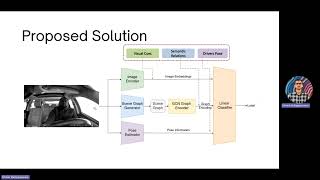
Towards Infusing Auxiliary Knowledge for Distracted Driver Detection
Discover how auxiliary knowledge and scene graphs enhance distracted driver detection systems, improving accuracy by 13.64% through innovative integration of visual cues and driver pose information.

The Elusive Role of High Dimensions in Modern Optimization and Generalization
Delve into the fascinating role of high-dimensionality in deep learning optimization, exploring how modern neural networks challenge traditional theoretical constraints and achieve unprecedented success.
Green Light SONATA - Training Traffic Controllers Using Collective Intelligence
Discover how AI-powered traffic control systems use musical improvisation principles to optimize vehicle movement, featuring innovative approaches to collective intelligence and neural network training.
Emerging Intelligence: From Neurons to Social Dynamics
Explore how internal psychological processes and social interactions shape collective behavior, from neural networks to group dynamics, through mathematical modeling and behavioral theory.
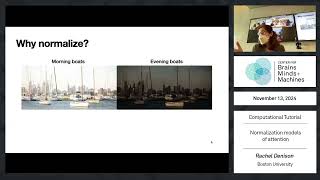
Normalization Models of Attention - From Neural Computation to Behavioral Goals
Explore how attention interacts with neural normalization to shape perception and behavior, featuring hands-on MATLAB exercises and computational modeling frameworks for cognitive processing.