Life is Not Fair, but Your ML Pipeline Can Be
Explore techniques to evaluate and enhance fairness in multi-cloud Kubeflow workflows, covering responsible AI, fairness aspects, and open-source tools for fair model learning and hyperparameter tuning.

Not a Magic - What to Expect from Machine Learning Projects
Practical insights on implementing machine learning projects, covering data handling, algorithm selection, training, evaluation, and deployment challenges in organizational settings.
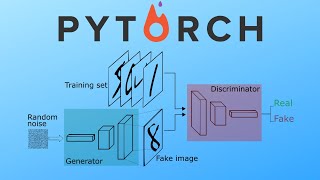
Building Our First Simple GAN
Learn to build a simple Generative Adversarial Network (GAN) using fully connected layers and train it on the MNIST dataset. Explore the architecture, setup, and training process for this fundamental deep learning model.

Classification of MNIST Sign Language Alphabets Using Deep Learning
Learn to classify hand sign language alphabets using deep learning, covering data preparation, model creation, and result analysis for 25 classes.
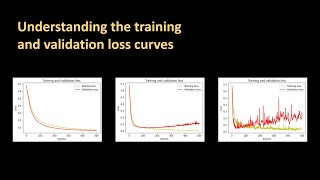
Understanding the Training and Validation Loss Curves
Interpret loss curves from neural network training using Wisconsin breast cancer dataset. Explore various scenarios including underfitting and good fit.
The Challenges and Opportunities of Continual Learning in Real-Time Machine Learning
Explore challenges and opportunities in continual learning, covering stages, training types, key issues, and solutions for feature monitoring and evaluation in machine learning ecosystems.
Evaluating Language Models - Challenges and Best Practices
Explore challenges and solutions for evaluating language models, including metrics, datasets, and continuous assessment in production. Learn to address biases and contribute to public evaluation efforts.

Building and Evaluating Prompts on Production Grade Datasets for Conversational AI
Master techniques for building and evaluating LLM prompts using production datasets, with practical insights for conversational AI applications and real-world implementation strategies.
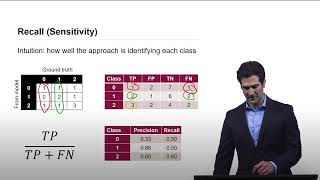
Performance Measurement for Machine Learning
Master essential metrics and techniques for evaluating machine learning models, from accuracy assessment to advanced performance measurements in AI applications.
Why We Pulled the Plug Out of a Perfect Working AI Model
Discover real-world insights into AI implementation challenges through a candid exploration of why a seemingly perfect AI model at Cerba Research Group had to be discontinued, revealing valuable lessons in practical AI deployment.
Delivering Delivery Time Prediction - Machine Learning Lessons and Model Optimization
Discover practical insights into ML model development, from handling unclear requirements to ensemble classification techniques and determining optimal probability cutoffs for delivery predictions.
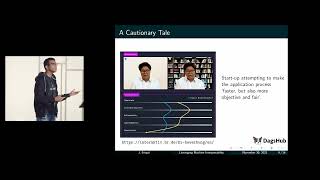
Interpretability Tools as Feedback Loops in Machine Learning Training
Explore machine learning interpretability techniques to optimize training sequences and develop more effective models without increasing compute or training time.
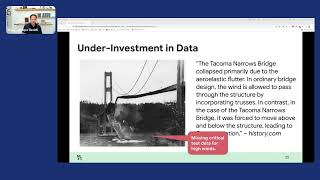
Why AI Needs New Data Benchmarks and Quality Metrics
Explore DataPerf, a benchmark suite for evaluating ML data quality and optimization algorithms. Learn about the need for data-centric AI benchmarks to advance research and improve real-world applications.
Getting Started with Gemini on Vertex AI
Explore Gemini on Vertex AI: Learn tools, techniques, and evaluation methods for building with foundation models in this introductory workshop.
Accelerating Generative AI with Vertex AI Studio - Put Your Prompts on the Fast Track
Optimize prompt management for AI models using Vertex AI Studio. Learn end-to-end lifecycle, rapid evaluation, and automatic improvements for faster production.
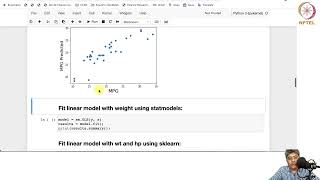
Hands-on Python: Fitting Regression Models with Sklearn and Statsmodels - Part 3
Fit regression models using sklearn and statsmodels in Python. Learn model setup, evaluation, and implementation techniques.
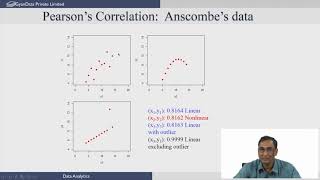
Predictive Modelling
Explore predictive modeling techniques and applications for data-driven decision-making and forecasting in various domains.

Introduction to Kaggle for Data Science Competitions - Lecture 8.1
Learn to navigate Kaggle competitions, understand public and private leaderboards, and prepare for a custom dataset assignment using Large Language Models in this data science and machine learning guide.
Evaluating LLMs for AI Risk - Techniques for Red Teaming Generative AI
Explore cutting-edge techniques for red-teaming generative AI and building validation engines to probe models for security, ethics, and safety issues. Learn a framework to manage AI risk across the model lifecycle.
Challenging Traditional Machine Learning Principles with LLMs - Part 2
Challenge traditional ML principles and explore how LLMs are reshaping methodology. Discover which rules still apply and which are becoming obsolete in the era of self-supervising, extrapolating models.

Fine-tuning Multi-modal Video and Text Models
Explore fine-tuning techniques for multi-modal video and text models, covering dataset generation, clipping, querying, and evaluation using IDEFICS 2 and Jupyter Notebooks.