
Instrumenting Weights & Biases for PII Data Detection - ML Pipeline Tutorial
Instrumenting W&B for PII detection: Learn to track experiments, analyze data, and perform error analysis in ML pipelines. Apply knowledge to a Kaggle competition using W&B Tables and Artifacts.

Deploying Trustworthy Generative AI - Ethical Considerations and Best Practices
Explore ethical considerations and best practices for responsible deployment of generative AI, focusing on real-world use cases, robustness evaluation, and strategies to build reliable AI applications.
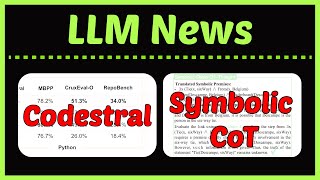
LLM News: xAI Series B, Codestral, LLM Guide, AutoGen Course, and Symbolic Chain-of-Thought
Explore latest AI developments: xAI funding, Codestral, LLM guide, AutoGen, and Symbolic Chain-of-Thought. Gain insights on cutting-edge research, tools, and applications in machine learning and natural language processing.
Shaping AI Benchmarks and Open-Source Development - Percy Liang Interview
Percy Liang discusses AI benchmarking advancements, HELM framework, open-source models' importance, and challenges in AI development. Insights on model selection, evaluation, and the future of AI technologies are shared.

Config-Based Development for LLMs: Versioning, Routing, and Evaluating LLMs
Explore config-based development for LLMs, covering versioning, routing, and evaluation techniques to transition Generative AI apps from prototype to production efficiently.
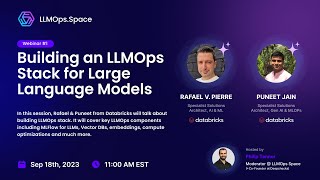
Building an LLMOps Stack for Large Language Models
Explore LLMOps architecture: MLFlow for LLMs, Vector Databases, RAG strategies, and prompt evaluation. Gain insights into optimizing and deploying large language models effectively.

Selecting the Right Cross-Validation Method in Machine Learning
Learn to choose the right cross-validation method for your machine learning model based on data characteristics, including hold-out, k-fold, time-split, and group-fold techniques.

Towards Good Validation Metrics for Generative Models in Offline Model-Based Optimization
Explore principled evaluation frameworks for generative models in offline model-based optimization. Learn about validation metrics, dataset challenges, and strategies for measuring extrapolation capabilities.

Supervised Learning Algorithms - Lecture 3
Explore supervised learning algorithms, model evaluation, and Python implementation for classification and regression tasks in petroleum engineering and energy transition.
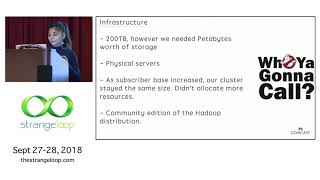
Resurrecting a Recommendations Platform
Explore the implementation of a deep learning model for recommendations while maintaining a legacy platform, focusing on data, machine learning, and A/B testing tiers in cloud migration.
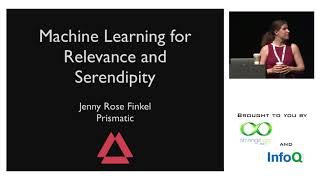
Machine Learning for Relevance and Serendipity
Explore machine learning for personalized content discovery, featuring real-time relevance models, topical classification, and targeted serendipity in news recommendation systems.

Graph Convolutional Network-Based Suspicious Communication Pair Estimation for Industrial Control Systems
Explore graph convolutional networks for detecting suspicious communication pairs in industrial control systems, enhancing security monitoring beyond traditional whitelisting methods.

Making & Breaking Machine Learning Anomaly Detectors in Real Life
Explore machine learning anomaly detectors in cybersecurity, their creation, implementation, and potential vulnerabilities. Gain insights into real-world applications and challenges in this cutting-edge field.
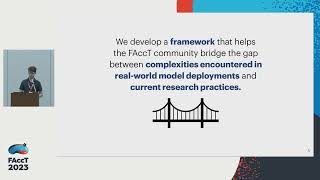
Model Evaluation
Explore cutting-edge techniques and methodologies for evaluating machine learning models in this comprehensive session on model assessment and performance analysis.
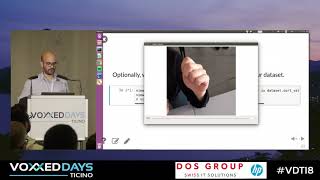
A Practical Introduction to Convnets for Image Classification
Practical guide to developing CNN-based image classification pipelines, covering dataset handling, architecture design, training, and evaluation. Explores real-world applications in robotics and biomedicine.

Data Science for Business - Repeatable and Objective Data Science Process
Explore the Team Data Science Process (TDSP) for efficient predictive analytics and AI integration in business processes, focusing on agile methodology and practical implementation strategies.
XGBoost para clasificación - construyendo modelos precisos y eficientes
Aprende a utilizar XGBoost para crear modelos de clasificación precisos y eficientes, explorando conceptos básicos, técnicas de construcción y evaluación, y ventajas clave de esta poderosa herramienta.
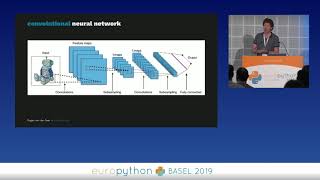
How to Train an Image Classifier Using PyTorch
Learn to build an image classifier using PyTorch in this hands-on tutorial. Covers data preparation, model selection, training techniques, and evaluation, with practical tips and code examples for immediate implementation.
Improving Data Analytics with Azure Machine Learning
Explore Azure Machine Learning for data analytics, from data classification to model selection, integration, and deployment in Data Factory pipelines, enhancing decision-making and insights.
Visualization Best Practices for Explainable AI
Explore machine learning visualization techniques for explainable AI across industries, covering model understanding, data analysis, and performance evaluation using Jupyter, Python, and Power BI.
Machine Learning in C# - Introduction to ML.NET
Discover ML.NET: Build machine learning applications using C# and .NET. Learn data preparation, model evaluation, and deployment techniques for integrating ML capabilities into your .NET projects.