How to Build a Climate Laboratory
Explore climate modeling with Met Office Chief Scientist Julia Slingo. Learn about processes controlling the climate system and their incorporation into models to understand and navigate future challenges.

Big Storms and Climate Change - A Discussion with Bill Nye
Bill Nye explores the link between climate change and extreme weather events, discussing the science behind increased natural disasters and potential solutions to combat future climate challenges.
Deep Dive: Lessons from Natural Disasters - Rebuilding and Mitigating Future Catastrophes
Lessons from natural disasters: Rebuilding strategies, private sector's role in recovery, and mitigating future catastrophes. Insights from Puerto Rico's recovery efforts and climate change impacts.
How Storm Develops as The Wind Blows by Gregory Falkovich
Explore the physics behind storm formation and wind dynamics with Gregory Falkovich. Gain insights into turbulence, fluid mechanics, and atmospheric phenomena in this theoretical physics lecture.
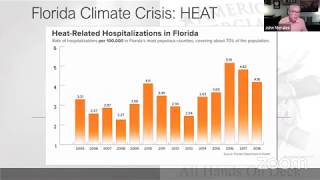
What to Expect When You're Expecting Climate Change
Award-winning meteorologist John Morales explores climate change impacts on Florida, offering insights into future environmental challenges and their implications for residents.
Hurricanes - Rainfall Patterns and Geospatial Analysis
Explore hurricane rainfall patterns and geospatial analyses with UF expert Corene Matyas in this engaging discussion at a local brewery, blending science and socializing.
The Weak Solar Cycle and Its Consequences
Explore the implications of the weakest solar cycle in a century on space weather, atmosphere, and climate with leading scientists discussing unprecedented observations and research findings.
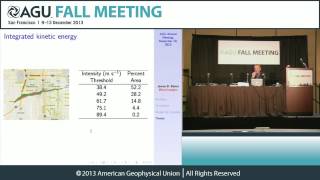
Are Tornadoes Getting Stronger - New Analysis Techniques
New analysis technique examines tornado strength trends by assessing damage paths. Research explores long-term patterns in tornado intensity, offering insights into potential changes in severe weather phenomena.
See Through Seas: Imaging the Planet's Hidden Interior
Scientists discuss groundbreaking 10-month mission using new technology to observe Earth's interior beneath oceans, providing unprecedented seismic data and insights into planetary processes.
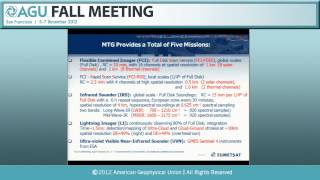
Geostationary Satellite Data Generation II - Fall Meeting 2012
Explore advancements in geostationary satellite technology, including GOES-R, Himawari-8/9, and Meteosat Third Generation. Learn about data generation, downlink specifications, and applications in weather observation and solar dynamics.
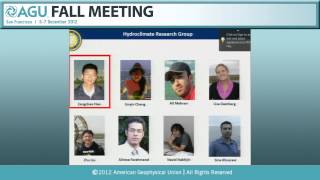
Advancing Drought Monitoring and Prediction - Part II
Explore cutting-edge drought monitoring and prediction techniques, including global information systems, seasonal forecasting, and climate change impacts, with applications for decision-making in water resource management.
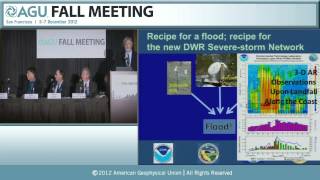
Improving Forecasts of Pineapple Express Storms - Fall Meeting 2012
Scientists discuss installation of atmospheric river observatories in California to enhance monitoring and prediction of powerful winter storms, aiding forecasters and resource managers in decision-making.
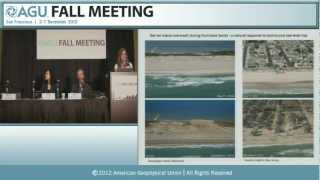
Superstorm Sandy, Black Swan Cyclones and Economic Impact - AGU Fall Meeting 2012
Experts discuss Superstorm Sandy's impact, future storm risks, and economic consequences. New data on coastal effects, forecasts, and the possibility of unprecedented cyclones in atypical regions are presented.
The Importance of Studying Clouds - NASA Cloud Science and Classroom Inquiry
Explore cloud science with NASA experts, covering topics like the water cycle, phase changes, and radiant energy. Engage in hands-on activities and learn to use NASA data for classroom projects.
Weather's Influence on Earthquakes - Press Conference
Explore the intriguing connection between weather patterns and seismic activity, featuring insights from experts on monsoons, icecap retreat, and their potential impact on earthquake occurrence.
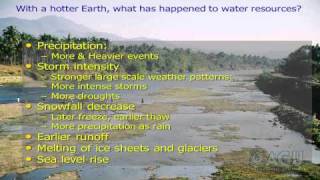
Climate Change: What's Going On and How Will It Affect Us
Explore the science behind climate change, its impacts on Earth systems, and potential future scenarios. Learn about evidence, models, and strategies for addressing this global challenge.
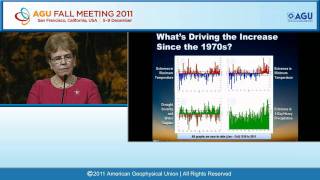
Predicting and Managing Extreme Weather and Climate Events - Fall 2011
Explore extreme weather prediction and management with NOAA's Jane Lubchenco. Learn about challenges in forecasting, monitoring, and mitigating impacts of various environmental events to enhance community resilience.
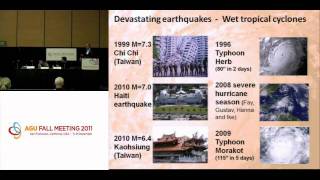
Weather's Influence on Earthquakes and Volcanoes
Exploring connections between weather patterns and seismic/volcanic activity, revealing how surface phenomena can influence underground events and potentially impact eruption timing.
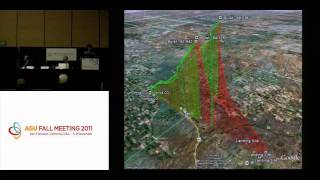
Innovations for Understanding Weather and Climate
New tools for weather and climate monitoring: mobile alerts for severe weather, advanced cloud radar systems, and high-altitude atmospheric gas sampling techniques to enhance forecasting and climate research.
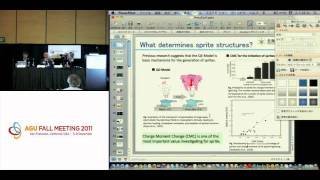
Sprites and Elves: 3D Observations of Upper Atmospheric Lightning Phenomena
Groundbreaking 3D observations of sprites and elves, mysterious luminous events in the upper atmosphere, reveal new insights into their formation and characteristics.
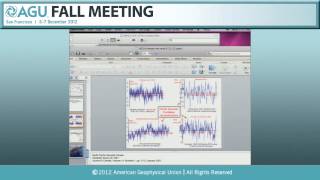
Nonlinear and Scaling Processes in the Atmosphere and Ocean at All Scales
Explore cutting-edge research on nonlinear and scaling processes in atmospheric and oceanic systems, covering climate reconstructions, sensitivity, long-range memory, megadroughts, turbulence, and micro-scale phenomena.