
El Niño and La Niña - Understanding the ENSO Phenomenon
Explore El Niño/Southern Oscillation: its impact on climate, ocean temperatures, and global weather patterns. Learn about ENSO indices, current data, and the role of ice in climate systems.

Climate and the Distribution of Life on Earth - Principles of Evolution, Ecology and Behavior
Explore how climate shapes life on Earth, from biomes to weather patterns, and learn about the impact of phenomena like El Niño on global ecosystems and biodiversity.
Climate
Comprehensive exploration of climate science, covering water security, species impact, human influence, modeling, and future projections. Experts discuss key topics in environmental studies.
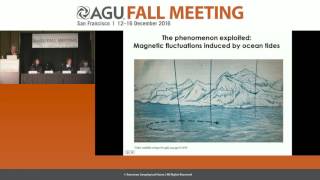
Ocean Heat Content Measurement and Impact - New Satellite Methods and Research Findings
Novel satellite method to measure ocean heat content, revealing impacts on ice melt and marine ecosystems. Explores magnetic field fluctuations, seafloor temperatures, and chlorophyll patterns to enhance climate change understanding and prediction.
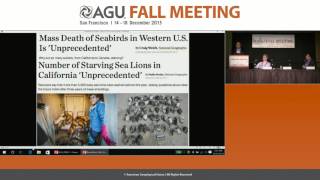
Ecosystem Impacts of Record Ocean Warming in the North Pacific - Fall 2015
Experts discuss "the blob," a warm water anomaly in the Northeast Pacific, its effects on marine ecosystems, unprecedented toxic algal blooms, and potential future impacts on ocean health and wildlife.
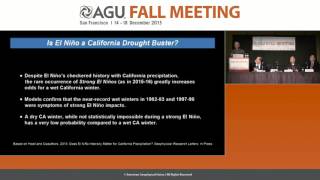
Global Impacts of the 2015-16 El Niño - NASA and NOAA Findings
Experts discuss global impacts of 2015-16 El Niño, including fire seasons, atmospheric changes, and potential drought relief, using NASA and NOAA satellite observations and research findings.
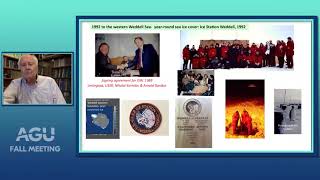
Tropical Ocean to Southern Ocean Coupling: Indonesian Throughflow and Weddell Sea Bottom Water
Explore the connection between Indonesian Throughflow and Weddell Sea Bottom Water, examining their interannual variability and potential coupling through atmospheric patterns like El Niño and Southern Annular Mode.
Climate Change and El Niño: Predicting Future Effects - Workshop
Experts discuss global warming's impact on El Niño and tropical oceans, using modern and ancient climate evidence to predict future effects on vulnerable communities and ecosystems.
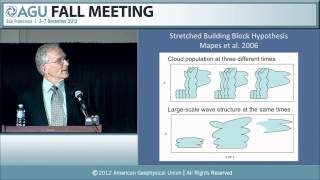
Tropical Convection: A Half Century Quest for Understanding
Exploring tropical convection's role in global climate, from field expeditions to satellite observations, revealing advances in understanding cloud-circulation interactions and their impact on weather patterns.
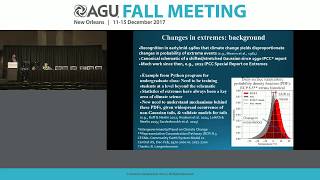
Bolin Lecture: Climate Extremes and Global Change - 2017 Fall Meeting
Explore climate change impacts on extreme weather events, focusing on precipitation patterns and El Niño dynamics. Gain insights into real-time attribution and global warming implications.
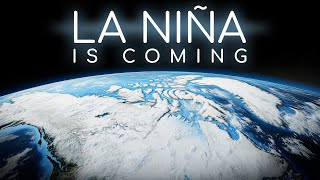
What La Niña Will Do to Earth in 2025
Explore La Niña's impact on Earth in 2025, examining extreme weather patterns and global climate shifts following El Niño's early conclusion.
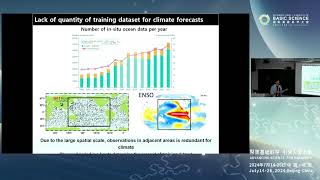
Deep Learning for Global Climate Monitoring and Predictions
Explore advanced deep learning techniques for climate prediction, including few-shot learning and data assimilation, to enhance accuracy in global climate monitoring and forecasting.
Dynamical Systems and Reservoir Computing - Lecture 1
Explore dynamical systems and reservoir computing applications in climate network analysis, focusing on methods for understanding and predicting climate patterns and phenomena.

Vida y obra de un meteorólogo. Metereología que puede salvar vidas | Enzo Campetella | TEDxBariloche
¿Cómo se decidía ser meteorólogo y crecer en una familia donde el tiempo definía todo?. Pronosticar el tiempo y adelantarse a los hechos ayuda a salvar vidas, potencia actividades económicas, pero también nos ayuda a a conocer cómo es el mundo en el que vivimos. El meteorólogo juega con la difícil t