
LLM as Next-Generation Operating System - Memory Augmented Systems and Continuous Chat
Explore how memory-augmented LLMs can revolutionize operating systems, focusing on multi-AI integration and continuous chat capabilities for next-generation computing architectures.
NVM Express Flexible Data Placement (FDP) - Architecture and Implementation
Dive into NVM Express® Flexible Data Placement (FDP) architecture, exploring data management techniques to optimize SSD performance, reduce write amplification, and extend device longevity.

NVMe Computational Storage Standards and Command Sets
Dive into NVMe architecture for computational storage, exploring command sets, subsystem local memory, and reachability architecture for enhanced storage device performance and functionality.
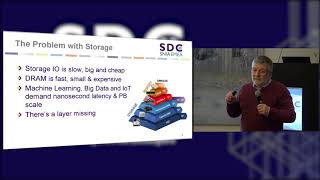
Introduction to Persistent Memory Technology - Lecture 5T112
Explore the revolutionary world of persistent memory technology, its hardware fundamentals, practical applications, and future impact on storage systems and application performance.
NVM Programming Model - Latest Developments and Challenges in Persistent Memory
Explore the latest developments in Persistent Memory Programming, focusing on SNIA NVM model evolution, operating system support, and emerging challenges in data center architecture.

Samba io_uring Status Update and Implementation Design
Discover how io_uring infrastructure in Linux kernel optimizes data handling, improves CPU core efficiency, and enhances network throughput performance in Samba implementations.
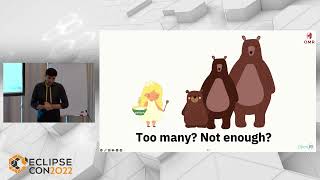
Adaptive Threading: The Goldilocks Dilemma with GC Parallelism
Dive into Eclipse OpenJ9's GC internals, exploring adaptive threading optimization and parallelism techniques to minimize garbage collection pause times and enhance Java application performance.
From Docker Push to Bytes on Disk - Inside Distribution
Explore the inner workings of container image distribution, from client-side operations to cloud storage, including API interactions, data structures, and garbage collection processes.
Implementing Anti-patterns: Kubernetes Cross-namespace Resource Ownership
Explore cross-namespace resource ownership in Kubernetes, its challenges, and potential solutions. Learn how to implement this anti-pattern while maintaining core services and garbage collection mechanisms.
Inspecting and Optimizing Memory Usage in Linux
Explore RAM management in Linux, focusing on allocation across areas and optimization techniques for restricted hardware platforms. Gain insights into kernel and user space memory usage.
An Introduction to the Workspace - Secrets of the Interpreter
Explore APL workspace internals, memory management, and optimization techniques to enhance application performance and efficiency.
Beyond RSS: Towards Intelligent Dynamic Memory Management - Work in Progress
Explore a novel trace-based simulation methodology for dynamic memory allocation, analyzing workload-allocator interactions using 2D bin packing to minimize fragmentation and optimize memory usage.
Heap Size Adjustment with CPU Control
Explore automatic heap sizing in JVM garbage collection, trading memory for computation based on CPU utilization. Learn about implementation in ZGC and its impact on performance and energy.

Reference Capabilities for Flexible Memory Management
Explore Verona's innovative approach to memory management using isolated regions and reference capabilities, enabling predictable and controlled memory use in concurrent programming.

MemPerf: Profiling Allocator-Induced Performance Slowdowns
Explore MemPerf, a novel profiler for identifying allocator-induced performance slowdowns. Learn about life-cycle based detection, thread-aware modeling, and unified methods for pinpointing memory access issues.
NUMAlloc: A Faster NUMA Memory Allocator
Explore a novel memory allocator designed for NUMA architecture, offering improved performance and scalability for multithreaded applications through innovative memory management techniques.
Concurrent GCs and Modern Java Workloads - A Cache Perspective
Explore the impact of concurrent garbage collectors on Java workloads, focusing on cache pollution and performance implications for modern server applications.
Targeted Static Analysis for OCaml C Stubs - Eliminating Gremlins from the Code
Explore a static analyzer for OCaml C bindings, addressing safety issues and aiding migration to OCaml 5. Learn about tools and techniques to improve code reliability.
Enhancing a Distributed SQL Database Engine - Performance Optimization Techniques
Explore optimization techniques for distributed SQL databases, focusing on benchmarking, performance analysis, and containerization strategies to enhance engine efficiency and scalability.
Polymorphic Reachability Types: Tracking Freshness, Aliasing, and Separation in Higher-Order Generic Programs
Explore polymorphic reachability types for tracking freshness, aliasing, and separation in higher-order generic programs. Gain insights into advanced type systems and their applications in programming languages.

DIY ChatGPT- Enhancing RAVEN's Long-Term Memories and Starting to Work on Self-Reflection
Explore techniques for enhancing AI memory, self-reflection, and learning through timestamps, knowledge bases, dream sequences, and heuristic imperatives. Gain insights into debugging and improving AI systems.