
Android Battery and Memory Optimizations
Explore Android's Doze and N-release optimizations for improved battery life and performance. Learn best practices, measurement tools, and APIs for efficient app development.
Make Shinier, Faster Mobile Games with Vulkan
Explore Vulkan's high-efficiency graphics API for mobile games. Learn porting techniques, performance optimization, and how to leverage Vulkan's unique features for enhanced mobile gaming experiences.

Deep Dive into the ART Runtime - Android Performance Optimization
Explore ART runtime internals, focusing on Kotlin performance and app startup improvements. Learn about compiler, garbage collector, and key optimizations across Android versions.

ART Runtime Improvements for Android Development
Explore ART runtime improvements over Dalvik, focusing on garbage allocation and collection performance, and their impact on Android development practices.

Best Practices for Building Android Apps for Billions of Users
Learn best practices for building Android apps for global users, focusing on connectivity, data costs, battery consumption, and device capabilities to improve performance and reach.

Android Application Architecture: Optimizing for Offline and Poor Network Conditions
Optimize Android apps for offline use and poor network conditions. Learn strategies for caching, prefetching, and adaptive content to enhance user experience globally.

Android Memory Management for Games - Google I/O 2019
Explore memory management challenges for mobile game developers, available tools, and Android Q improvements for optimizing game performance and resource allocation.
Understanding Android Runtime for Faster Apps
Explore Android Runtime improvements for enhanced app performance, including faster debugging, profiling, installation, launch times, and optimized garbage collection.

What's New in App Performance - Android Runtime and Tools
Explore tools and techniques for optimizing Android app performance, including startup metrics, benchmark libraries, baseline profiles, and garbage collection improvements.

Reach and Devices for Game Development: Targeting, Optimization, and Analytics
Explore game development strategies using Reach and devices for targeting decisions, and Android vitals for performance tracking. Learn about new features for monetization and stability troubleshooting.

The Proxy Pattern in PHP - Improving Performance and Reducing Complexity
Explore virtual proxies and ghost objects to enhance PHP application performance and reduce complexity, with practical examples and insights from Marco Pivetta.
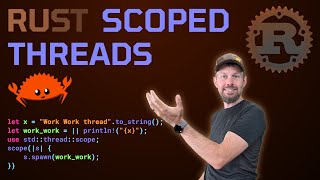
Rust Scoped Threads Tutorial
Explore Rust's scoped threads for efficient memory borrowing in concurrent programming. Learn to safely share data between parent and child threads without ownership issues.
Twitter's Quest for a Wholly Graal Runtime - Improving Java Performance
Explore Twitter's use of Graal to optimize Java performance, reduce CPU usage, and cut costs in their massive distributed system through improved machine code generation.

Native Script Engine: Integrating V8 JavaScript with Java - Jim Laskey
Explore integrating V8 JavaScript with Java, covering performance, memory management, and API adaptation. Insights on JVMV8, multi-threading, and Node.js integration included.
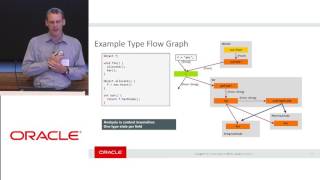
Polyglot Native: Ahead-of-Time Compilation for JVM Languages
Explore ahead-of-time compilation for JVM languages, reducing startup time and memory footprint. Learn about Polyglot Native's architecture and see a live demo of multi-language compilation.
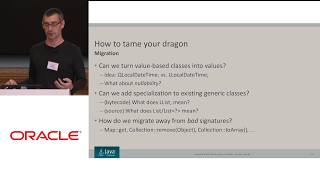
Programming with Minimal Values in Project Valhalla
Explore Project Valhalla's minimal values, an intermediary stage for Java value types. Learn about the programming model, declaration, and usage of these innovative constructs.

ZGC: The Next Generation Low-Latency Garbage Collector
Explore ZGC, a low-latency garbage collector for terabyte-sized heaps. Learn its functionality, use cases, implementation, recent improvements, and future development plans.
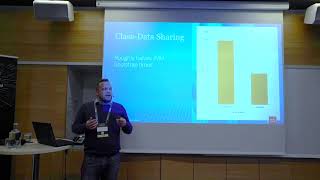
Heap Archiving in Java - Improving JVM Startup and Performance
Explore heap archiving in JDK 12+ for improved startup performance and reduced footprint. Learn about implementation, initialization optimizations, and future plans for dynamic class storage.
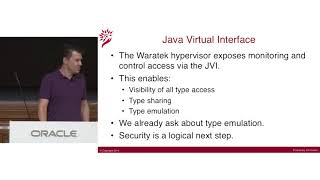
Securing the JVM - Java Virtualization and Security
Explore JVM security, virtualization challenges, and solutions for legacy Java applications. Learn about memory management and infrastructure benefits for enhanced Java performance.
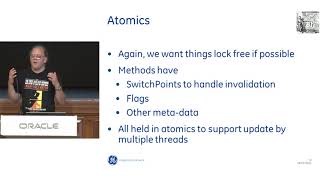
Optimizing Dynamic Codebases
Explore techniques for optimizing dynamic codebases, focusing on memory usage, functional composition, startup speed, and code coverage to enhance Java application performance.
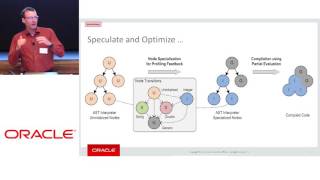
One Compiler - Graal VM and Substrate VM Overview
Explore advanced Java compilation techniques, including Truffle, Graal VM, and Substrate VM, for optimized performance and efficient execution of JVM languages.