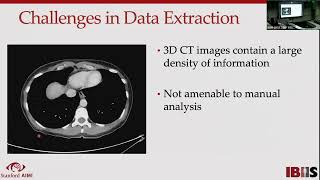
Disease Prediction Using Medical Imaging and Deep Learning - Summer 2022
Explore innovative techniques for predicting diseases using medical imaging and deep learning, focusing on opportunistic approaches with existing data for improved patient outcomes.
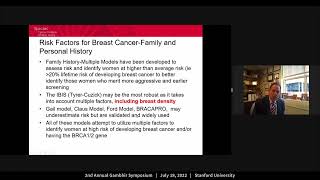
Genetic Factors in Breast Cancer Screening and Imaging
Explore genetic factors influencing breast cancer screening and imaging techniques with expert insights from Dr. Bruce Haffty, enhancing understanding of personalized risk assessment.

The Future of Radiology and Integrated Diagnostics - Building on Sam Gambhir's Vision
Explore the future of radiology and integrated diagnostics, building upon Sam Gambhir's visionary work in this keynote address by Dr. Garry Gold, moderated by Joe Wu.
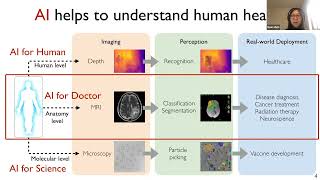
Time Before Birth: A Look at Developing Human Brain
Explore the developing human brain before birth through advanced imaging techniques and machine learning models, offering insights into fetal neurodevelopment and potential clinical applications.
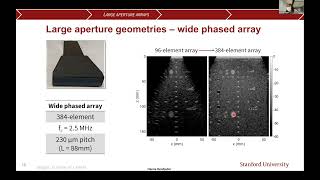
Theragnostic 3D Ultrasound Imaging System for High-Resolution Image-Guided Therapy - Winter 2022
Explore a theragnostic 3D ultrasound system for high-resolution image-guided therapy. Learn about ultrafast imaging, large aperture geometries, and optimizing image-guided gene delivery. Discover applications in breast imaging and beyond.
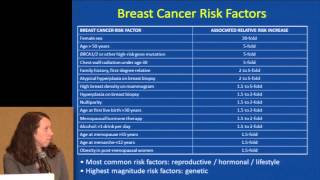
Breast Cancer Genetics, Risk, and Screening
Explore breast cancer risk factors, screening methods, and genetic considerations with Stanford experts. Learn about breast density, imaging technologies, and the latest recommendations for early detection and prevention.

Latest Advances in Lung Cancer Screening and Treatment
Stanford experts discuss new lung cancer screening guidelines for ex-smokers and innovative treatments like minimally invasive surgery, targeted therapies, and precise radiation therapy.

Latest Advancements in Breast Cancer
Explore cutting-edge breast cancer screening and treatment advances with Stanford specialists, covering genetic testing, imaging technologies, and innovative therapies for early detection and improved outcomes.

South Asian Coronary Artery Disease: Risk Factors and Prevention Strategies
Explore the unique cardiovascular risks for South Asians, their underlying mechanisms, and Stanford's SSATHI program aimed at reducing coronary artery disease in this population.
Early Detection of Breast Cancer in Black Women
Comprehensive exploration of breast cancer risks for Black women, covering screening methods, self-exams, and advocacy strategies to improve early detection and survival rates.
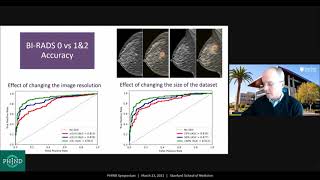
Imaging for Early Detection in the Era of Artificial Intelligence
Explore AI's impact on early disease detection through medical imaging, focusing on chest radiographs, coronary disease, and breast cancer, with insights from Stanford's Dr. Langlotz.
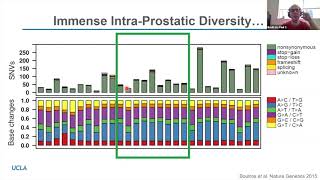
Origins and Detection of Lethal Prostate Cancer - Stanford Radiology CEDSS Fall 2020
Explore the origins and detection methods of lethal prostate cancer with Dr. Paul Boutros in this insightful seminar, offering valuable insights for researchers and healthcare professionals.
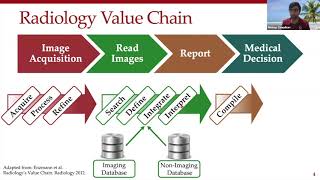
MRI as a Low-Cost High-Value Imaging Modality - Spring 2020
Explore advancements in MRI technology, focusing on improving cost-effectiveness, efficiency, and diagnostic capabilities for various medical conditions, particularly in orthopedics and cancer screening.

Dr. Jane Chueh on Prenatal Screening and Diagnosis
Explore advancements in prenatal genetic screening and diagnosis, including noninvasive tests, ultrasounds, and blood tests, to make informed decisions during pregnancy.

Virtual Colonoscopy
Explore virtual colonoscopy's role in cancer diagnosis, covering its history, benefits, and criticisms. Learn about colorectal cancer screening methods and the exam process.

Stanford Physicians on Controversies in Screening for Women's Cancer
Stanford physicians discuss recent changes in breast and cervical cancer screening guidelines, highlighting controversies, reviewing data, and providing expert insights on women's cancer screening recommendations.
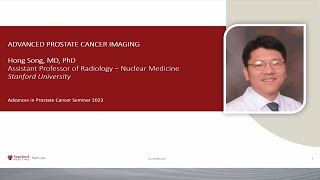
Advanced Prostate Cancer Imaging - Latest Techniques and Applications
Explore cutting-edge prostate cancer imaging techniques, including new radiotracers, genetics, PET/SPECT imaging, and AI-driven personalized management strategies.

Divide and Conquer - Concept-based Models for Efficient Transfer Learning
Exploring concept-based interpretable AI models for efficient transfer learning in healthcare, focusing on generalizability and minimal data requirements for domain adaptation in medical imaging.

AI's Role in Improving Health Care Services in Our Communities
Stanford experts discuss AI initiatives in healthcare, focusing on early disease detection, preventive care, and reducing provider burnout, while addressing privacy and equity concerns.
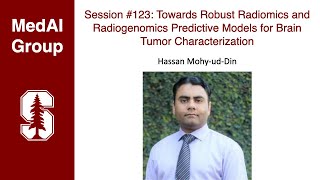
Towards Robust Radiogenomic Models for Brain Tumor Characterization - MedAI #123
Exploring stability of radiomics features in brain tumor segmentation and impact on predictive models. Investigates how stable, discriminatory features lead to generalizable radiogenomics for tumor characterization.
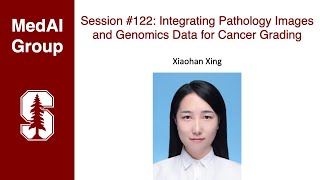
Integrating Pathology Images and Genomics Data for Cancer Grading
Innovative AI methods for integrating pathology images and genomics data to enhance cancer grading accuracy, addressing modality challenges and improving performance when genomics data is missing.