
Advances in Lung Cancer Screening and Treatment
Stanford doctors discuss new lung cancer screening guidelines, increasing incidence in non-smokers, and latest treatment approaches including minimally invasive surgery, targeted therapies, and precise radiation therapy.
Complications After Transplant - UCLA Liver Transplant Services
Overview of post-transplant complications for liver patients, including early signs of rejection or infection. Covers diagnostic procedures, lifestyle considerations, and care instructions for transplant recipients.
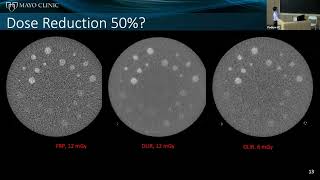
Image Quality Evaluation of Deep Learning Image Reconstruction and Denoising in Clinical CT
Explore advanced techniques for assessing image quality in CT scans using deep learning, focusing on reconstruction and denoising methods for improved clinical outcomes.
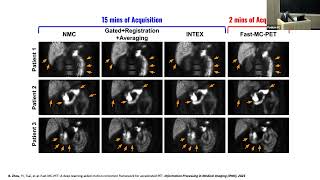
Deep Learning Guided Reconstruction and Processing for PET, SPECT, and CT
Explore advanced reconstruction techniques using deep learning for medical imaging modalities, enhancing image quality and diagnostic accuracy in PET, SPECT, and CT scans.
Thoracic Imaging of CVID and GLILD
Explore thoracic imaging techniques for CVID and GLILD, focusing on radiological findings and diagnostic approaches in these rare immunological disorders.
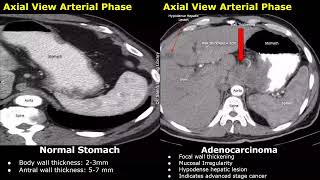
CT Scan Comparison: Normal Stomach vs Gastric Adenocarcinoma - Early and Advanced Stage Cancer Cases
Explore CT scan images comparing normal stomach to gastric adenocarcinoma, examining key features and differences in early and advanced cancer stages.
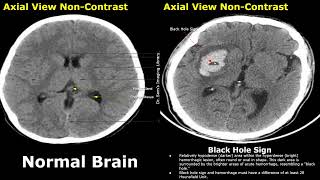
CT Scan Brain: Normal vs. Hemorrhagic Stroke - Identifying Key Signs
Explore CT scan images of normal brain vs hemorrhagic stroke. Learn to identify key signs like swirl, black hole, blend, spot, and island for accurate diagnosis and patient care.
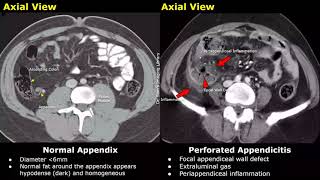
Appendix CT Scan: Normal vs Appendicitis - Acute, Gangrenous, and Perforated Types
Explore CT scan images of normal appendix vs. appendicitis, including acute, gangrenous, and perforated types. Learn key signs and characteristics for accurate diagnosis.
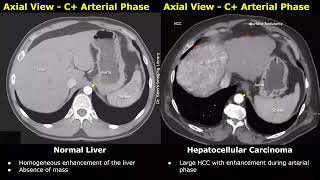
CT Scan Liver - Normal vs Hepatocellular Carcinoma (HCC) Images for Liver Cancer Diagnosis
Explore CT imaging of normal liver vs hepatocellular carcinoma. Learn risk factors, tumor markers, and key diagnostic features for accurate liver cancer identification and diagnosis.
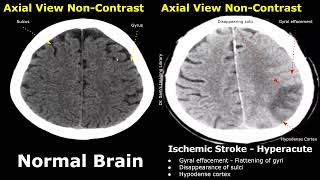
CT Scan Brain: Normal vs. Ischemic Stroke Images - Non-Contrast Hyperacute, Acute, and Chronic Infarction
Explore CT brain imaging for ischemic stroke, from hyperacute to chronic stages. Learn to identify key signs and changes in brain tissue over time, enhancing diagnostic skills.

Gastrointestinal Causes of Fever - EMCert Module Mastery
Comprehensive review of gastrointestinal fever causes, covering peritonitis, appendicitis, diverticulitis, and biliary infections. Includes diagnostic approaches and key pathogens for emergency medicine certification preparation.
Visual Diagnosis Challenges - Part 1 - The 2020 EM & Acute Care Course
Enhance visual diagnosis skills through challenging case studies, improving ability to interpret CT scans, MRIs, and other imaging modalities for accurate emergency medicine assessments.

Cervical Spine Physical Exam vs X-Rays vs CT Scan – 32nd Annual EM & Acute Care Course
Explore cervical spine injury assessment, comparing physical exams, X-rays, and CT scans. Learn about radiation risks, cost considerations, and diagnostic accuracy to improve emergency care decision-making.
Myths in Emergency Medicine - EM & Acute Care Course
Debunking emergency medicine myths with evidence-based insights on kidney stones, ultrasound, UTIs, and more. Practical recommendations for improved diagnosis and treatment in acute care settings.
Lung Nodules: Detection, Classification, and Management - WVCTSI Project ECHO
Explore lung nodule detection, classification, and management techniques for improved patient care and cancer screening.
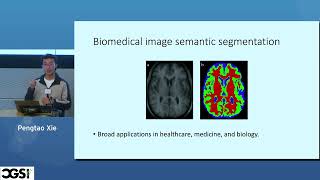
Training Highly Generalizable Biomedical Image Segmentation Models with Very Few Annotations
Learn highly generalizable biomedical image segmentation techniques using minimal annotations, focusing on efficient model training and performance optimization for medical imaging tasks.
Aortic Dissection: Pathology, Diagnosis, and Treatment - Medical Lecture
Explore aortic dissection's pathology, symptoms, diagnosis, and treatment. Learn classification, management, and complications for USMLE and NEETPG exam preparation.

The Future of Reproducible Research - Powered by Kubeflow
Explore the future of reproducible research using Kubeflow, an open-source platform that streamlines data science workflows and enhances scientific collaboration through easily shareable and replicable pipelines.
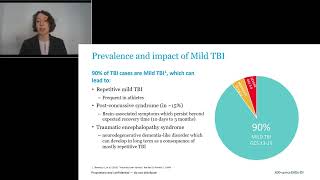
Delivering Patient-Centric Care in Assessing Mild Traumatic Brain Injury Through Novel Brain Biomarkers
Explore novel brain biomarkers for assessing mild traumatic brain injury (mTBI), improving patient care, reducing unnecessary CT scans, and enhancing emergency department efficiency.
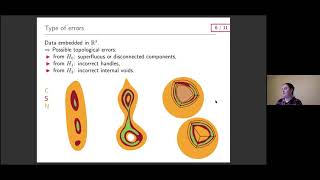
Topological Simplification of Voxelized Data
Explore topological simplification of voxelized data, focusing on homological methods to enhance graphical data analysis in scientific fields like medicine and biology.
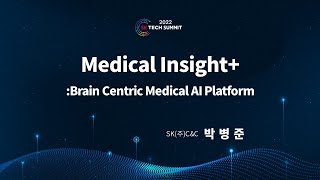
Medical Insight+ - AI Medical Device for Rapid and Accurate Diagnosis of Emergency and Severe Brain Diseases
Discover how Medical Insight+ AI medical device revolutionizes emergency brain disease diagnosis through rapid CT image analysis, supporting healthcare professionals across Korean hospitals for accurate patient care.