Qubit-Efficient Randomized Quantum Algorithms for Linear Algebra
Explore quantum algorithms for matrix sampling and linear algebra operations using minimal qubits, focusing on efficient methods without quantum data structures for practical quantum computing applications.
Electric Flow Sampling and Quantum Walks on Trees
Explore electric flow sampling (elfs) in quantum walks, examining their connection to random walks, hitting times on trees, and applications in quantum algorithms for distribution sampling.
Quantum Algorithms and the Power of Forgetting - The Welded Tree Problem
Explore quantum algorithms and the welded tree problem through groundbreaking research that reveals why quantum computations must sometimes "forget" their paths to achieve exponential speedup.
Quantum Policy Gradient Algorithms for Reinforcement Learning
Delve into quantum policy gradient algorithms and their application in reinforcement learning, exploring quantum-classical speed-ups and parameterized quantum circuits for AI advancement.
Sample-Optimal Quantum Process Tomography with Non-Adaptive Incoherent Measurements
Delve into quantum process tomography theory, exploring sample complexity bounds for learning quantum channels using non-adaptive incoherent measurements and diamond norm approximations.
Quantum Theory in Finite Dimension Cannot Explain Every General Process
Explore groundbreaking research demonstrating how certain finite-dimensional processes in quantum theory require explanations beyond classical probability and quantum mechanics frameworks.
Quantum Mass Production Theorems - Implementing Multiple Copies of Quantum Circuits
Delve into quantum circuit optimization through mass production theorems, exploring efficient implementations of multiple copies of quantum transformations and their theoretical implications.
Efficient Tomography of Non-Interacting Fermion States
Delve into quantum state tomography algorithms for non-interacting fermion systems, exploring efficient methods for state reconstruction and measurement through theoretical frameworks and error analysis.
Doubling the Order of Approximation via the Randomized Product Formula in Quantum Computing
Discover how randomized corrections in Hamiltonian simulation can double error order accuracy from 2k to 4k+1, with practical applications in quantum chemistry using Pauli strings.
A Unified Graph-Theoretic Framework for Free-Fermion Solvability
Explore a unified graph-theoretic framework that connects quantum spin systems with free-fermion solutions through frustration graphs, extending Jordan-Wigner transformations and four-fermion model solutions.
Tight Cramër-Rao Type Bounds for Multiparameter Quantum Metrology Through Conic Programming
Delve into advanced quantum metrology concepts, focusing on Cramër-Rao bounds and conic programming for optimal measurement strategies in estimating incompatible parameters with maximum precision.
Universal, Deterministic, and Exact Protocol to Reverse Qubit-Unitary Operations
Discover a deterministic protocol for reversing qubit-unitary and qubit-encoding isometry operations through semidefinite programming and quantum circuits, featuring a novel SU(2)×SU(2) symmetry approach.
Improved Approximations for Extremal Eigenvalues of Sparse Hamiltonians
Discover advanced approximation techniques for eigenvalues in sparse Hamiltonians, exploring new methods for quantum systems with q-local terms and improved mathematical approaches for k-sparse configurations.
Uniform Observable Error Bounds for Trotter Formulae in Semiclassical Regime
Delve into advanced quantum computation theory exploring uniform observable error bounds for Trotter formulae in semiclassical regimes, focusing on simulation efficiency and multiscale properties.
Improved Product-state Approximation Algorithms for Quantum Local Hamiltonians
Delve into advanced algorithms for approximating ground state energy and free energy in quantum local Hamiltonians, exploring new techniques for dense systems and sparse graphs with fixed minor exclusions.
Quantum Algorithm for Path-Edge Sampling
Explore quantum algorithms for path-edge sampling in graphs, focusing on efficient query complexity and applications in path finding and cut finding between nodes, with practical implementations.
Influences of Fourier Completely Bounded Polynomials and Classical Simulation of Quantum Algorithms
Delve into quantum query algorithms through new polynomial characterizations, exploring influential variables in Fourier completely bounded polynomials and their implications for classical simulations.
A Graphical #SAT Algorithm for Formulae with Small Clause Density
Explore a novel graphical approach to solving #SAT problems using ZH-calculus, focusing on Boolean satisfiability with small clause density and its applications in quantum circuit analysis.
Approximate Degree Lower Bounds for Oracle Identification Problems
Delve into quantum computing theory through an exploration of approximate degree lower bounds in oracle identification problems, focusing on ordered search and hidden string challenges.
On the Power of Nonstandard Quantum Oracles - Complexity Theory and Oracle Models
Delve into quantum oracle complexity theory and its impact on property testing, exploring how different oracle designs affect quantum algorithms and verification protocols in graph analysis.
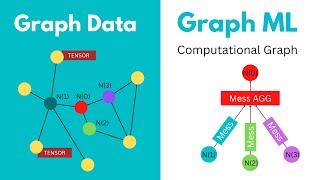
Unlocking the Potential of Message Passing - Exploring GraphSAGE, GCN and GAT Networks
Dive into message passing techniques in Graph Neural Networks, exploring GraphSAGE, GCN, and GAT architectures for effective graph-based learning and network analysis.