Text-to-Graph with Large Generative Graph Models
Explore cutting-edge research on large generative graph models and their applications in biomedicine and cybersecurity through diffusion-based technology and text-to-graph conversion.
Node Classification with Graph Convolutional Networks for Graph Machine Learning
Master Graph Convolutional Networks (GCN) implementation in PyG for node classification, featuring practical coding examples and theoretical foundations of spectral graph convolutions.

JAX vs PyTorch 2 - Converting Stateful to Stateless Operations in Neural Networks
Explore functional programming in JAX through hands-on comparison with PyTorch 2, focusing on neural network implementation and stateless operations for gradient descent.
Using AI to Solve Complex Business Problems: Optimizing Fashion Industry Markdowns
Discover how AI-powered markdown optimization helped fashion retailers tackle inventory challenges during Covid-19, combining demand forecasting and linear programming for profitable stock clearance.
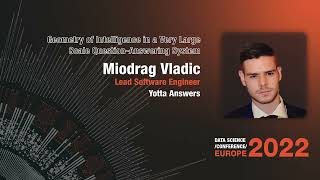
The Geometry of Intelligence in Large Question-Answering Systems
Explore the architectural principles behind large-scale QA systems, focusing on vector representations of natural language and practical implementation through the yottaanswers.com platform.
Machine Learning Algorithms for Student Success Prediction in Higher Education
Explore how machine learning algorithms predict student academic performance by analyzing attendance patterns, responsibility factors, and generational differences across IT studies.
Delivering Delivery Time Prediction - Machine Learning Lessons and Model Optimization
Discover practical insights into ML model development, from handling unclear requirements to ensemble classification techniques and determining optimal probability cutoffs for delivery predictions.
Container Tracking and Demand Forecasting for Bosch Tools Supply Chain Operations
Discover how BOSCH Power Tools leverages neural forecasting models in AWS cloud to optimize demand forecasting, reduce inventory costs, and enhance supply chain stability for millions of product time series.
Towards the Universal Law of Robustness for Deep Neural Networks
Explore fundamental developments in neural network robustness, focusing on overparametrized models and the BLN Conjecture through geometric visualization and practical applications.
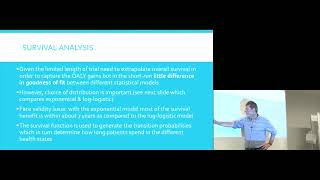
Economic Evaluation of Health Technologies: Survival Analysis - Lecture 2
Delve into survival analysis methods for evaluating health technologies, focusing on modeling time spent in different health states and predicting resource outcomes.
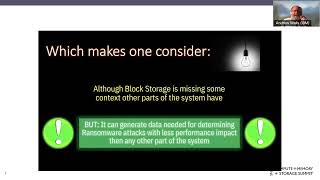
Computational Storage: Detecting Ransomware Using Flash Control Modules
Discover how computational storage in SSDs can detect ransomware attacks through IBM's Flash Control Modules, exploring key statistical indicators and security implementation across different system layers.

Making Sense of Tristate Numbers (tnum)
Explore tristate numbers (tnum) and their applications in Linux systems with expert insights from YU, Shung-Hsi.
On-The-Fly Static Analysis via Dynamic Bidirected Dyck Reachability
Explore a novel dynamic algorithm for bidirected Dyck reachability, optimizing on-the-fly static analysis with superior performance and efficiency for continuous code updates.
SSA as Freyd Categories - Categorical Semantics for Compiler Design
Explore the connection between Static Single Assignment (SSA) and Freyd categories, examining their graphical syntax and applications in compiler design and optimization.
A Better Approximation for Interleaved Dyck Reachability
Explore a novel approach to interleaved Dyck reachability, offering improved precision for context- and field-sensitive static analyses through refined CFLs and on-demand application.

Octagons Revisited - Elegant Proofs and Simplified Algorithms
Explore simplified algorithms for Octagon domain closure, featuring elegant proofs, efficient computations, and improved abstract transformers for affine assignments in program analysis.
Capturing Types: A Calculus for Tracking Free Variables in Type Systems
Explore a calculus representing captured variables in types for enhanced safety, enabling effect implementation via scoped capabilities and guiding practical capture checking in programming languages.
Implementation and Synthesis of Math Library Functions
Explore MegaLibm, a domain-specific language for implementing, testing, and tuning math library functions. Learn how it enhances safety, modularity, and tunability in mathematical software development.
Incremental Computation: What Is the Essence? - Lecture 24
Explore incremental computation's essence through incrementalization, a systematic method for efficient algorithm and program design. Gain insights into high-level abstractions for developing optimized solutions.
Parameterized Algebraic Protocols
Explore parameterized algebraic protocols for defining protocol templates and session types, enhancing expressiveness and modularity while enabling efficient type checking in linear time.
ODINN.jl - Multi-language Geoscientific Machine Learning for Glacier Evolution Modeling
Explore ODINN.jl, a global glacier evolution model using Julia's SciML capabilities for geoscientific machine learning, combining differential equations with Python tools for flexible, multi-language modeling.