Faster Matroid Intersection - Winter 2020 Theory Seminar
Explores faster algorithms for matroid intersection, improving exact and approximate solutions using independence and rank oracles. Advances in runtime complexity for this classic problem in combinatorial optimization.
Innovations in Theoretical Computer Science 2020 - Session 5
Explore cutting-edge research in theoretical computer science, including secure computation, communication protocols, coding theory, and fault-tolerant algorithms presented at ITCS 2020.
Innovations in Theoretical Computer Science 2020 - Session 9
Cutting-edge research in theoretical computer science, covering topics like distribution testing, random object sampling, probability distribution learning, agreement expansion, neural networks, and influence maximization.
Innovations in Theoretical Computer Science 2020 - Session 10
Explores cutting-edge research in theoretical computer science, covering topics like computational hardness, random strings, decision trees, and pseudorandomness. Features presentations from leading experts in the field.
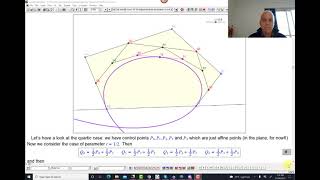
The Midpoint Hierarchy and Dynamics on a de Casteljau Bezier Polygon - Algebraic Calculus and dCB Curves 10
Explores midpoint hierarchy and particle dynamics on de Casteljau Bezier curves, focusing on t=1/2 value and quartic curves. Introduces discrete motion concepts like velocity and acceleration for control points.
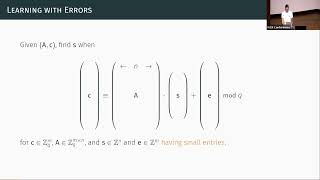
Estimating the Difficulty of Breaking Lattice-Based Cryptography
Explore cutting-edge research on lattice-based cryptography security, focusing on difficulty estimation techniques for breaking these advanced encryption systems.
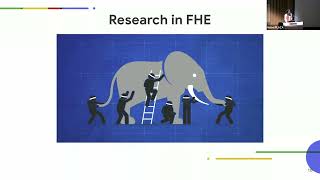
Fully Homomorphic Encryption and Multi-Party Computation Session
Explore advanced cryptographic techniques: Fully Homomorphic Encryption (FHE) and Multi-Party Computation (MPC). Learn their applications and implications for secure data processing.

Diffusion, Probability, and the Age of Creative AI
Explore diffusion models in AI art generation, their information-theoretic foundation, and improvements in density estimation, interpretability, and sampling speed.
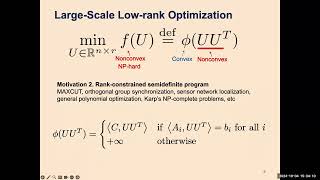
Rank Overparameterization and Global Optimality Certification in Low-Rank Matrix Estimation
Explore rank overparameterization in nonconvex optimization, its impact on spurious local minima, and methods for certifying global optimality in large-scale problems.

Test Time Compute: Verifiers and Parallel Sampling - Part 2
Explore advanced inference techniques using verifiers, parallel sampling, and prompt optimization to enhance language model performance and accuracy.
OpenTelemetry's Path to Observability's Future
Explore OpenTelemetry's role in shaping observability's future. Learn core concepts, instrumentation, data collection, and industry adoption for enhanced system monitoring and troubleshooting.
Chaos Engineering in Action - Building Fault-Tolerant Systems
Explore chaos engineering principles and practices to build resilient systems. Learn to plan, execute, and analyze experiments for improving fault tolerance and system reliability.
Prediction, Generalization, and Complexity: Classical Statistical Theory Revisited - Part 1
Explore classical statistical decision theory's insights on prediction error, generalization gap, and model complexity. Examine fixed-X perspective limitations and extend concepts to random-X settings in machine learning.
Towards Understanding Generalization Properties of Score-Based Losses
Explore score-based losses as alternatives to maximum likelihood in generative models, examining their statistical efficiency and connections to diffusion algorithms for improved model design.

Asparagus: Automated Synthesis of Parametric Gas Upper-Bounds for Smart Contracts
Explore automated synthesis of parametric gas upper-bounds for smart contracts using novel geometric approaches, enhancing blockchain security and efficiency.
Scalable Linear Invariant Generation with Farkas' Lemma
Explore scalable linear invariant generation techniques using Farkas' Lemma, improving efficiency and accuracy for affine programs without compromising completeness.
Semantics I - Session Preview for POPL 2023
Explore key concepts in semantics, including type-based approaches, rewriting, game semantics, and category theory, with expert Ugo Dal Lago.
Probabilistic Inference - Session Preview at POPL 2023
Explore probabilistic inference concepts with expert Alexandra Silva in this POPL 2023 session preview, enhancing accessibility of advanced programming language topics.

Synthesizing Precise Static Analyzers for Automatic Differentiation
Explore Pasado, a technique for synthesizing precise static analyzers for Automatic Differentiation, improving precision in nonlinear operations and demonstrating applications in various domains.

Algebro-geometric Algorithms for Template-Based Synthesis of Polynomial Programs
Explore algebro-geometric algorithms for template-based synthesis of polynomial programs, offering a scalable approach to program sketching without sacrificing completeness.

Functional Collection Programming with Semi-Ring Dictionaries
Explore semi-ring dictionaries, a versatile collection type for functional programming. Learn about SDQL language and its optimizations for efficient database and linear algebra processing.